
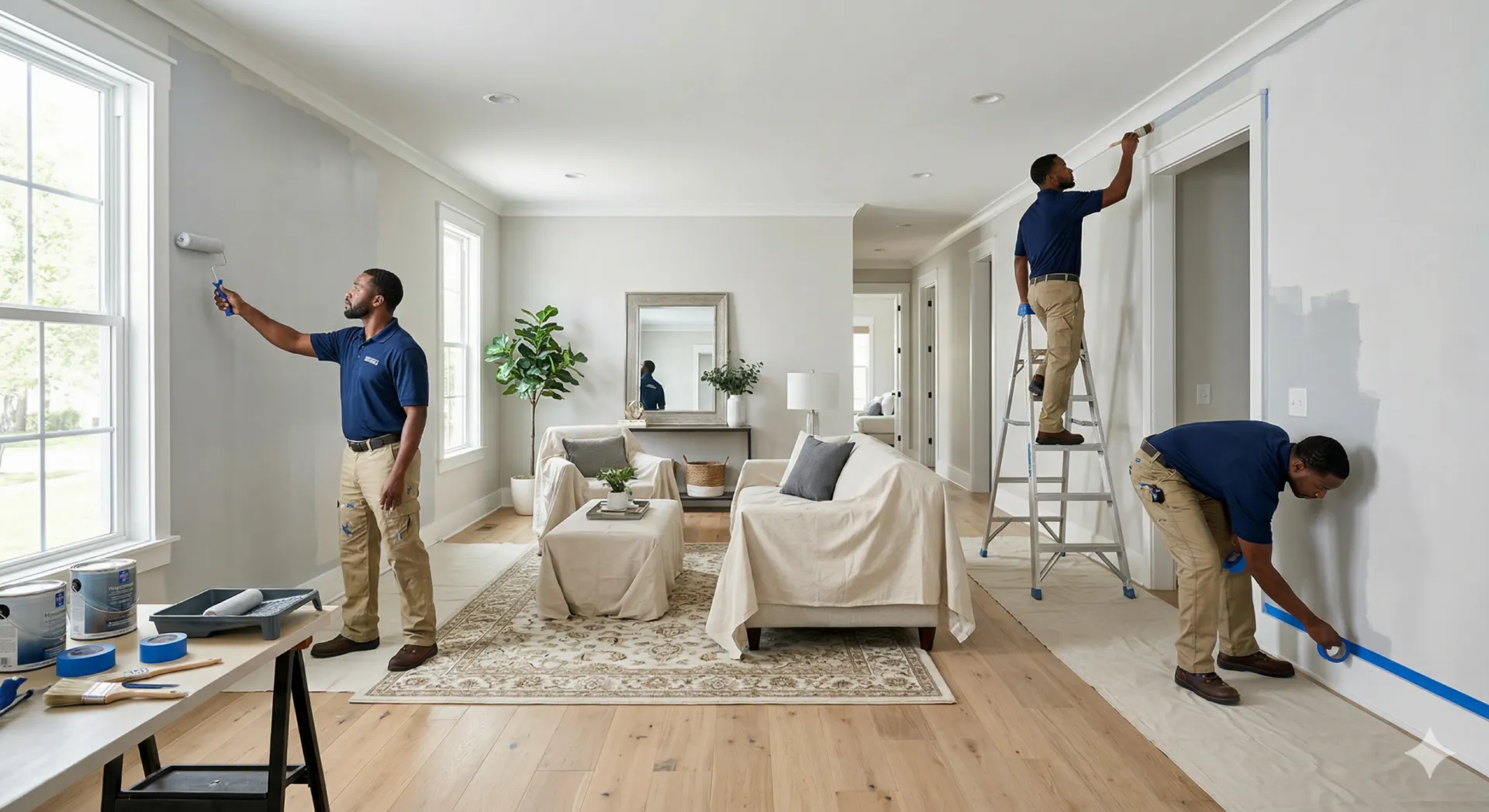
Fresh walls, far west of Atlanta
Interior Painting Temple GA Homeowners Can Plan Room by Room
Temple is a small Carroll County city where most people own the house they live in and most of those houses are now a generation old. That makes it a town of first and second repaints, where the prep decides how the job looks.
Temple at a Glance
- Location
- 36.7 miles west of central Atlanta (straight line)
- County
- Carroll County
- Population (2023 estimate)
- 6,360
- Housing units
- 1,974
- Median year homes were built
- 2002
- Owner-occupied homes
- 85%
- Detached single-family homes
- 84%
- Built before 1970
- 12%
- Built 2010 or later
- 7%
Sources: US Census Bureau 2023 Gazetteer, Vintage 2023 population estimates, and American Community Survey 2023 5-year estimates for the place. County is taken at the place’s center point; some communities extend into other counties.

A town of owners, repainting builder walls
Only a handful of the communities we serve around Atlanta have an ownership rate as high as Temple’s. Census estimates put owner-occupied homes at 85% and detached houses at 84%, across fewer than 2,000 housing units. Sixty-eight percent went up between 1990 and 2009, which matches the town’s population growth: general records show it rising from 2,383 in 2000 to 4,228 in 2010. The median home was built in 2002.
What does that mean for paint? Many houses here were finished with whatever the builder specified, often one neutral color throughout and frequently a flat finish that doesn’t take scrubbing well. By now, those walls have had 20 or more years of hands, furniture and sunlight, and they may have been touched up by an owner or two. Nothing is seriously wrong. But the people living there tend to stay, so a careful repaint is a reasonable thing to invest in. An owner who plans to remain will look at those walls every day.
We should say this up front: at about 37 miles from central Atlanta, Temple is near the outer part of the 40-mile radius Twelve25 Construction serves. It is covered, but it is worth talking through scope and scheduling at the start of any conversation, and we won’t make promises about timing here.
Going through the house, one room at a time
Different rooms fail in different ways, so a single paint and a single approach rarely suits the whole house.
Kitchen
Grease film stops new paint from bonding, so walls near the range need degreasing before anything else. A scrubbable satin or similar finish is common here. Look above the range and around the sink for discoloration that may signal moisture.
Bathrooms
Peeling near the ceiling, or mildew that returns, usually means a ventilation problem. The EPA’s moisture guidance suggests running a fan or opening a window while showering, and notes that if mold keeps coming back, you should increase ventilation. Fix that first, and paint second.
Stairwells and halls
This is where flat paint shows its age, because hands, bags and furniture all rub the same spots. A more washable finish holds up better. High walls over a staircase also need planning for safe access, which is a good reason to hand this part off.
Bedrooms
These usually see the least wear and are the easiest place to change color. Children’s rooms may have anchors and tape damage to patch. A lower sheen tends to hide wall imperfections more kindly than a shiny one.
Living areas and two-story rooms
Tall spaces and strong afternoon light show every flaw. Test color samples on more than one wall, and look at them at different times of day before settling. Painted ceilings in big rooms may need a separate plan.
Trim and doors
Builder trim paint often yellows or chips. Sanding and using an enamel suitable for trim makes a bigger visible difference than many people expect, and doors are a good candidate when walls alone do not lift the room.
Marks that are telling you something
Not every wall mark is a paint problem. Before you cover something, consider what caused it. These are the patterns worth a second look in a house of this age.
- Nail pops: small round bumps in a line usually come from framing movement over time, and they are common in houses that have been through decades of seasonal change. They should be reset and patched, not painted over.
- Long straight cracks at corners or tape joints: tape may be letting go. Our drywall repair service handles these before paint.
- Brown ring on a ceiling: usually a sign of water from a roof, a pipe, or a condensation line. Find the source first, since a stain-blocking primer only hides it. If it is the roof, look at leak repair.
- Bubbling or peeling low on an exterior wall: this could indicate moisture coming in from outside. Check gutters and grading. Our gutter cleaning is one easy place to begin.
- Dark specks in a corner or behind furniture: this may be mildew rather than dirt, and painting over it won’t resolve the humidity. EPA guidance is to keep indoor humidity below 60 percent, ideally 30 to 50.
- Doors that suddenly stick or cracks that keep widening: these point to something other than cosmetics, and they call for someone to look at the structure.
Prep is where a repaint succeeds or fails
Good paint on a poorly prepared wall still looks bad. Whether you hire this out or do it yourself, the sequence below is what you are paying for, and it is fair to ask how each step will be handled.
Clear and protect
Move furniture to the middle of the room, cover it, and mask floors. Taking off outlet covers looks more careful than painting around them.
Repair
Reset popped fasteners, fill holes, re-tape loose joints, and sand patches smooth. On a wall lit from the side, patches that were not feathered out will still show through.
Clean
Wash kitchens and bathrooms especially. Paint sticks poorly to grease, soap residue or dust from sanding.
Prime where needed
Spot-prime patches and stains. Use a stain-blocking primer on marks that have been dealt with at the source. A big color change may also call for a full primer coat.
Paint in order
Ceilings, then trim if it is being done, and walls last, is a common order, though painters may vary it. Two coats are typical, and the product’s recoat time matters.
Keep notes
Write down color names, finishes and the date. Keep a labeled quart for later touch-ups, stored away from freezing temperatures.
Sheen, color and living through the job
A paint’s finish often matters more than its shade, because it controls how much a wall shows and how well it cleans. In broad terms, a flat or matte finish hides patches and uneven drywall but tends to mark more easily. Eggshell and satin wipe down better, while semi-gloss is usually kept for trim, doors and damp rooms, where it cleans well but highlights every bump. Choose the finish room by room, rather than buying one for the whole house.
If you are moving away from the original builder neutral, sample before you commit. Paint two large swatches on poster board and move them around the room over a couple of days, because a color next to a north window can read quite differently from the same color across from a west-facing one. Keep floor and countertop colors in mind, too, as those are harder to change than a wall.
Since most people in Temple own the home they live in, they are usually living there during the work. Plan one floor or a few rooms at a time if you can, and keep windows open or fans running for ventilation as the product label directs, particularly for anyone sensitive to odors, small children and pets. Decide where furniture will go and how you will get to closets and bathrooms. Label the outlet covers and hardware you remove so that they go back in the right places.
The older houses, the permit office, and what comes next
Not everything in Temple is young. The town’s railroad-era roots go back to 1883, and about 12% of homes predate 1970, with another 13% built from 1970 to 1989. If your home was built before 1978, the paint matters beyond its color. Under the EPA’s Renovation, Repair and Painting rule, firms working on pre-1978 homes must hold EPA or state credentials and follow lead-safe practices when disturbing old painted surfaces. Sanding is precisely the sort of step that creates hazardous dust, even from paint that is decades old. Ask about this before scraping begins, particularly if children spend time in the home.
Painting walls on its own is not usually where people run into permit questions, but the projects next to it can be. Removing a wall, adding a door or changing wiring is a different matter. Check the details on the City of Temple website. Published permit guidance describes permit packets issued through Community Development at City Hall, 240 Carrollton Street, 770-562-3369, with Carroll County also involved in review and inspections. Treat that as a pointer, and call before relying on it. A very small portion of the city also extends into Haralson County, so ask if you are close to that edge.
It is also common for a paint job to reveal what the owner actually wants. Once walls are fresh, worn flooring or a dated kitchen may stand out. If you are considering one of those, do the dusty work first and painting last, so that new walls aren’t scuffed by floor installers. Our home remodeling team can sequence those together.
Our interior painting service comes with a free estimate and a written scope, and Twelve25 Construction is licensed and insured. If you would like to talk about your house, request an estimate. Temple’s nearest neighbor on our list is Villa Rica, about six miles east, where the page focuses on plumbing instead.
Sources for Local Facts
Let’s Build Something Great Together.
Ready to start your next construction or remodeling project? Tell us about your space and request a free estimate.