

Beauty, Durability and Value
Flooring Installation
A squeak, a soft spot or a board that has lifted is usually telling you something about what sits underneath. Here is how to read it, what can wait, and how to choose the right floor when the old one has to go.
Start With What the Floor Is Doing
Most people start thinking about their floors because something changed: a noise that was not there last year, a dip near the tub, a seam that has opened up. Others simply cannot decide what to put down. This page works through both. Sound flooring installation begins with finding out why the old floor is misbehaving, because a new surface laid over the same cause tends to fail the same way.
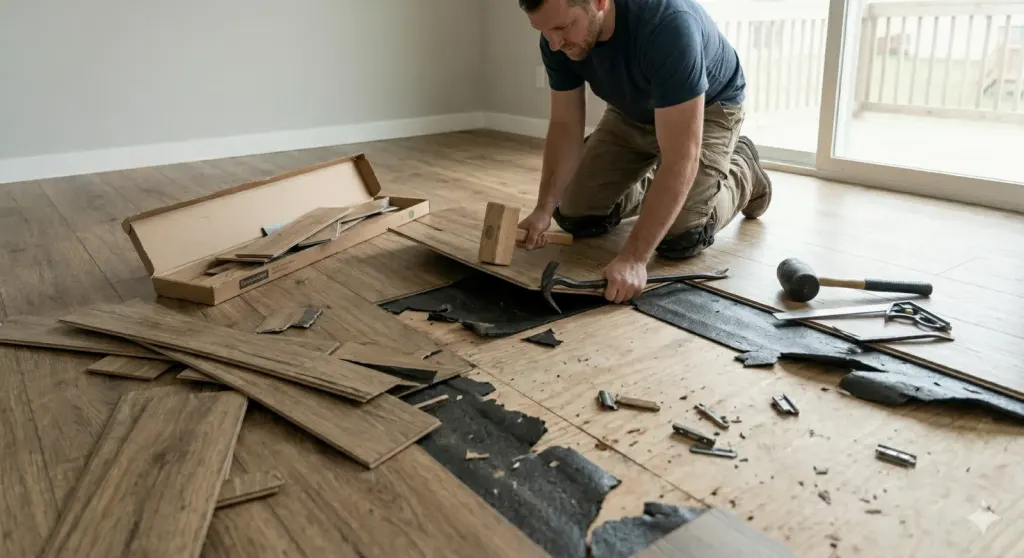
It squeaks every time you cross the room
A squeak means two things are moving against each other. Usually that is a subfloor panel rubbing on a joist, a loose nail sliding in its hole, or wood boards shifting as the seasons change the moisture in the air. It is annoying rather than dangerous, so it can wait until the timing suits you.
The repair is mostly re-fastening. That can happen from below when a basement or crawlspace gives access, or from above when the finish floor is coming up anyway. A finished ceiling underneath makes the job slower, which is why the cheapest moment to quiet a floor is during replacement, when the subfloor is exposed and can be screwed down properly. A squeak alone is no reason to buy new flooring. A squeak that comes with bounce is a different conversation.
A soft or springy spot underfoot
Take this one more seriously. A patch that gives under your weight points to a subfloor that has been wet, panels coming apart in layers, or framing that was damaged or cut into during earlier plumbing work. Where it sits is the clue. A small spot beside a toilet, tub, dishwasher or exterior door usually means water reached the subfloor. A broad slope or a bounce across most of a room points lower, toward the joists or beams.
- Soft near plumbing: do not wait. Find the leak first, with a plumbing check if the source is not obvious, since new material over a live leak is wasted money.
- Flexes but stays dry: have it inspected soon and keep heavy furniture off it in the meantime.
- Floor sagging, with big new wall cracks, or a beam that looks bowed: stop and call a professional. That is a structural question for a qualified contractor or engineer, and it is not a do-it-yourself repair.
- Musty smell with visible growth that is widespread or spreading: leave it undisturbed and call a mold professional before any flooring comes up.
For the common local case, the fix means cutting out damaged subfloor back to sound material, repairing any framing involved, setting a new panel and then restoring the surface. A patch works when matching flooring is still available and the damage is contained. If the product was discontinued or the patch would sit in the middle of an open room, replacing the whole area usually looks far better.
When the Surface Itself Starts to Fail
Boards cupping, buckling or lifting
Moisture is nearly always behind this. Wood that cups, with edges higher than the center, is taking on water from below. A floor that heaves up off the subfloor has swollen with nowhere left to go. Floating floors can also lift when they were pinched by cabinets or tight trim and could not expand. Hot, humid summers make the problem worse wherever a crawlspace stays damp.
Ask whether this was one event or an ongoing condition. After a single dishwasher leak, cupped wood can sometimes flatten as it dries, so it pays not to rush. Fix the source, let things dry, confirm with a moisture meter, then decide. Active water cannot wait. Cosmetic cupping can. Replacement makes sense when boards have cracked or pulled loose, or when the subfloor beneath stayed wet long enough to be damaged.
Gaps opening up between boards
Some gapping is simply wood being wood. Solid boards shrink in dry, heated winter air and close again when summer humidity returns. Even, narrow gaps that come and go are normal, and filling them usually backfires because the filler gets crushed when the boards swell.
Be more suspicious of gaps that grow each year, gaps limited to one section, or gaps near a heat register or above a damp crawlspace. Those suggest a local moisture problem or fasteners that have let go. Steadier indoor humidity helps the seasonal kind. Individual boards can be replaced where damage is isolated, while a floor that has lost its grip across a whole room is a candidate for removal. Vinyl plank seams have their own causes, covered on our LVP and tile page.
Doors rub, transitions trip you, and nobody knows how many layers are down there
Older houses often carry several generations of flooring stacked up: vinyl over tile over wood. Each layer raises the height at doorways and adds places for movement. Humps and dips may come from those layers, from high spots in the subfloor, or from framing that has settled over time.
Before anyone scrapes, sands or tears out old sheet vinyl, vinyl tile or dark adhesive in an older home, have it tested for asbestos. Do not disturb it until you have the result. Removal then depends on what the test shows, how many layers exist and how stubborn the adhesive is. Overlaying can be reasonable over one flat, sound layer. Over several layers, or over a surface that moves, tearing out and starting fresh is nearly always the better call. Our removal work covers taking up old material, disposing of it and getting the subfloor inspected, repaired and leveled.
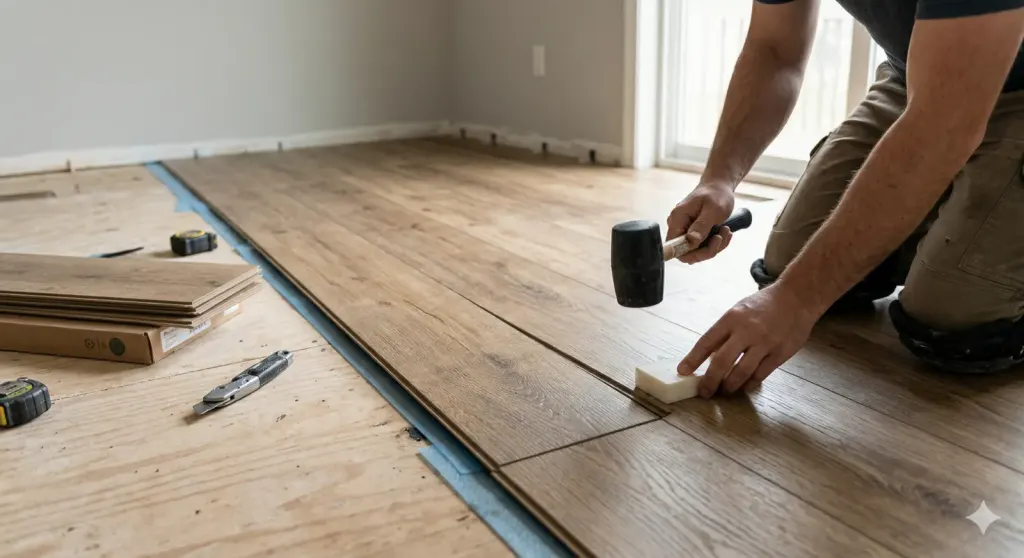
Which Floor Belongs in Which Room
If nothing is wrong except that you are tired of what you have, the choice comes down to water, traffic, what sits below, and how the room feels to stand in. Warm wood tones, modern luxury vinyl, classic tile and high-performance flooring for heavy use can all be right somewhere.
Kitchen
Spills and long hours standing. Luxury vinyl is kinder on the feet and on dropped dishes. Ceramic tile shrugs off water and wear but feels harder underfoot.
Bathroom and laundry
Water wins here eventually, so ceramic tile is a timeless pick for moisture-prone rooms. Think about the flooring and any leak risk together.
Basement
Slab moisture rules the decision. Test before choosing, and avoid materials that trap dampness or suffer from it. Our basement finishing page covers damp lower levels.
Entry and mudroom
Grit, wet shoes and dragged bags. Pick something hard-wearing and easy to clean, and plan the transition into the next room.
Bedrooms and living areas
Comfort and looks count most. A wood-look surface carried through connecting rooms can make the home feel larger and calmer.
Commercial space
Rolling carts, foot traffic and cleaning chemicals change the math. Ask how the floor will be maintained, and whether work can be phased around business hours.
Two questions settle many of these decisions. Will this room ever get wet? And what is the subfloor made of? Concrete and wood framing behave differently and suit different products. Also take home a sample and look at it in morning and evening light, next to your cabinets or trim, before committing.
What Moves the Cost and the Schedule
No two floors price the same, and the material is only part of it. These are the things that change the number and the calendar:

- How much old flooring comes out, how many layers there are, and any test results
- Subfloor condition, and how much leveling or panel replacement it needs
- Moisture readings, and whether a barrier is called for
- Room shape, stairs, closets and the number of doorway transitions
- Moving furniture and appliances, and disconnecting fixtures
- Whether baseboards are reused, replaced or painted afterward
- Layout and material waste, especially with patterned or diagonal designs
- Coordination with other trades on the same job
That last factor is often where the savings or the headaches live. New floors are frequently part of a kitchen project, a bathroom remodel or a commercial improvement, and we plan the flooring together with the rest of the work so it goes down at the right point and does not get damaged by the trades that follow.
Before You Hire Someone to Install a Floor
Flooring bids can look alike and cover very different work. Compare them on these points:

- Does the price include removal and disposal, or only the new material going down?
- How will the subfloor be checked for flatness and moisture, and who pays if repairs are needed once it is exposed?
- Will the product acclimate on site if its maker calls for that, and will installation follow the manufacturer’s written instructions?
- Who moves furniture and appliances, and who handles the toilet or other fixtures?
- How are doorways, stairs and height changes finished? Ask to see the planned transition pieces.
- What happens to baseboards and door bottoms when the floor height changes?
- Will leftover material be left with you for future repairs?
Twelve25 Construction is licensed and insured, and estimates are free. You get a detailed scope of work and clear pricing before anything starts, with project managers keeping the sequence together. If you already know the job involves a subfloor repair, say so when you request an estimate and include photos.
Flooring Questions People Ask
Can new flooring go right over my old floor?
Sometimes. It depends on how flat and sound the existing layer is, how much height you can spare at doors, and what the new product’s maker allows. If the old floor moves, holds moisture or might contain asbestos, an overlay is the wrong shortcut.
Do I need to replace the whole floor because of one damaged section?
Not always. A contained repair can work if matching material is available and the cause has been fixed. When the product is discontinued, or when the patch would be obvious in an open room, replacing the connected area usually gives a cleaner result.
How do I know whether the problem is the floor or the structure?
Surface trouble stays in the surface: scratches, gaps, a loose board. Deeper trouble shows up as sag, bounce, doors going out of square or cracks in the walls above. If you see those together, stop and have a qualified professional look at the framing before any floor work.
How long will installation take?
That depends on removal, subfloor repairs and the size and shape of the area. A clean room with a sound subfloor moves far faster than one with several layers to take up. You will get a realistic picture once the existing floor has been looked at.
Do I have to move out during the work?
Often not, though you will lose the use of the rooms being worked on, and removal can be noisy and dusty. Tell us about pets, children or anyone with breathing issues so the plan can account for them.
What floor holds up in a house with kids and dogs?
Look for a surface that handles scratches and spills without fuss. Scratch-resistant luxury vinyl is a common answer, and tile works well in entries and kitchens. Sample it against your own life: drop a toy on it, and scrape it with a shoe.
Serving the Nashville and Atlanta Areas
We provide flooring within 40 miles of Nashville, TN and within 40 miles of Atlanta, GA. See the areas we serve, or call (615) 478-5705 in Nashville or (770) 669-1314 in Atlanta.

Let’s Build Something Great Together.
Ready to start your next construction or remodeling project? Tell us about your space and request a free estimate.