Curb Appeal and Protection
Siding and Exterior Remodeling
Soft trim, tired siding, a front door you can feel the wind through. When the outside of a house starts letting you down, here is how to tell what needs attention now and what can be planned.
When the Outside of the House Starts Letting You Down
The outer shell of a building does two jobs: it keeps weather out and it shapes how the place looks from the street. Trouble with one usually leads to trouble with the other. Exterior home remodeling covers everything on that shell, so it helps to look at the whole building before spending on one part of it. Our work includes exterior siding, roofing, windows and doors, for homes and commercial buildings around Nashville and Atlanta. For new decks, porches or outdoor kitchens, ask us and we will tell you what can be included.
Hot, humid summers and heavy spring storms are hard on any exterior in either area. Damp wood stays damp longer, paint wears faster and wind-driven rain finds gaps. Walk around the building after a good rain with a phone camera. Look for the same things you will read about below, and note which side of the house has them.
Trim that feels soft or paint that will not stay on
Press a screwdriver gently into the wood at the bottom of a door frame, a window sill or a corner board. If it sinks in, you have rot. Trim usually fails where water sits: at horizontal ledges, end cuts that were never sealed, or where a board touches the roof or the ground. Paint that keeps blistering in one spot is often a moisture sign, not a paint problem.
A small section can wait a short while if nothing behind it is wet. Rot that continues into the wall, or that reappears after a repair, should not wait. The fix is to cut back to sound wood, replace the piece with something suited to the exposure, seal and paint it, and correct whatever was putting water there. Replacing a lot of trim on one elevation is sometimes a sign that re-siding that wall is the more sensible move. If the wetting comes from the roof, look at the flashing where roof meets wall first.
On a pre-1978 home, old exterior paint may contain lead, so scraping, sanding and cutting call for lead-safe practices.
Siding That Has Given Up
Warped, cracked or loose boards
Vinyl warps from heat, including reflected sunlight off a neighbor’s windows, and it cracks from impact as it ages. Wood rots and splits. Hardboard swells at the bottom edges when water gets in. Fiber cement can crack if it was fastened badly or if it is sitting too close to the ground. A gust that peels off a panel can also mean nails or clips are working loose all over that wall.
- Check now: anything loose after a storm, gaps that expose the wall behind, and any soft spot you can push into
- Keep an eye on: a slight fade, small hairline cracks and one or two chalky boards
- Do not ignore: staining on inside walls, a musty smell in one room, or paint bubbling indoors on an exterior wall
If you pull back a section and find widespread or spreading mold on the sheathing, stop and call a professional. Do not try to clean it yourself. The same goes for bowed walls or big new cracks in the structure: those call for a structural review before any siding goes on.
Patch the siding or re-side the house?
A repair is usually enough when damage is on a few boards, the wall behind is dry and a matching profile is still available. Replacement starts to make more sense when damage shows up on several sides, a matching product no longer exists, the color gap would look obvious or the wall needs new water-resistant barrier throughout. Re-siding also gives a chance to deal with flashing and insulation while the wall is open.
Material, wall height, the number of corners and openings, the state of the sheathing, and removal of the old layer all shape cost and time. Very old cement-type siding may contain asbestos and should be tested before it is cut or taken off. Repainting can be a third option if the boards are still sound, so ask about it when you request your estimate.
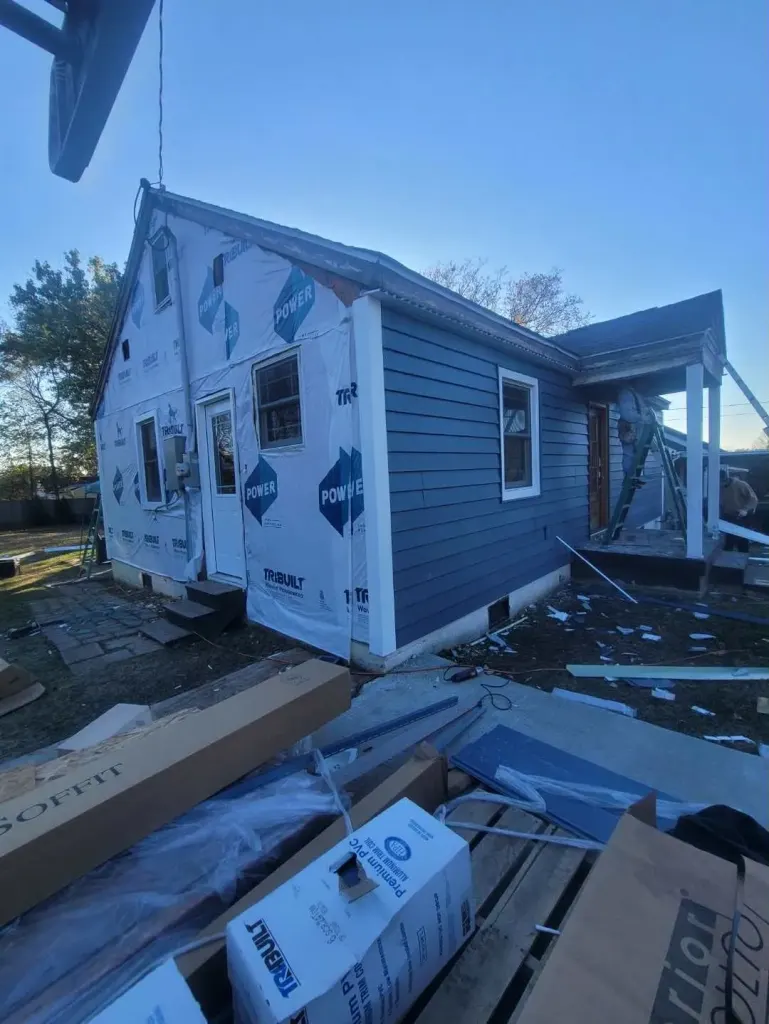
Drafty Doors and Windows
You feel air at the window on a windy day, you see condensation between the panes, or a door has to be slammed to latch. A few different things can be at work, and only some of them mean replacement.
Air at the edges
Worn weatherstripping and failed caulk are the least costly place to start. Often it can be solved without replacing anything.
Fog between the panes
The seal in the glass unit has failed. It is mostly an efficiency and appearance problem, so it can wait, and a replacement sash or glass unit may be available.
Rot around the frame
Soft sills and wet wall below a window mean water is getting past the unit. Do not put this off. The fix may involve repairing the opening and replacing the window.
Doors that bind
Humidity can swell a door, and hinges can loosen. If doors begin sticking along with big new cracks or sloping floors, stop and have someone qualified check the structure.
Replacing a window or door usually makes more sense when the frame is rotten, the unit is difficult to operate, or you are after a real gain in comfort or looks. The key to a lasting job is what happens around the unit: sill pan, flashing tape and integration with the wall’s water barrier. Ask about those details by name. Old window sashes on a pre-1978 home often carry lead paint, so replacement should follow lead-safe practices.
Unit type, whether the existing frame stays or goes, the size of the opening, exterior trim and any special order times are what drive cost and scheduling.
A House That Looks Tired From the Curb
Nothing is failing, but the place looks dated or worn, and you notice it each time you pull in. There is no rush here, which makes it the easiest kind of problem to plan properly. Stand across the street and look at what stands out: the front door, porch, trim color, a roofline dominated by faded shingles, or a mix of materials that never quite worked together.
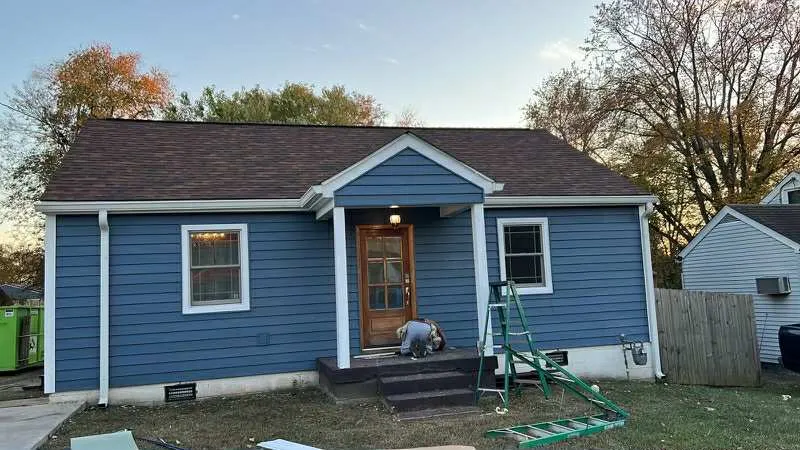
A few focused changes often accomplish a lot. Replacing a front door, adding a porch element or painting and refreshing the trim can shift the whole impression. Going further means changing siding or adding an outdoor living space, and those are worthwhile only if the shell underneath is sound. Fix the moisture problems before spending on anything cosmetic. See real exterior work in our project gallery to help figure out what you like. If interior work is also on the horizon, our whole-home remodeling page can help you decide what to do in what order.
Decks, Porches and Outdoor Kitchens
Soft boards, wobbly railings and a shaky set of stairs are safety problems, so keep people off them until they are repaired. Our page on repairing a worn deck covers those in detail.
On the larger side, ask us about new decks, porches and outdoor kitchens, and we will tell you plainly what we can take on. The common planning questions: how a new structure attaches to the house without trapping water, where footings go, and how much shade or sun the space will actually get. An outdoor kitchen brings in electrical, plumbing and possibly gas lines, which are jobs for licensed trades. Any time you smell gas, leave the area and call the gas utility or 911. Structures like these usually need permits, though rules vary, and we can help with that process.
Water spilling over the gutters
Gutters overflowing in a storm send water straight down the walls and trim, which feeds most of the problems on this page. Start by checking for clogs, since debris is the usual reason, and look to our gutter cleaning page if that is the case. If sections sag, leak at the seams or simply cannot keep up, gutter installation might be the next question. Mention it in your estimate request and we will confirm whether it can be included.
Before You Hire for Exterior Work
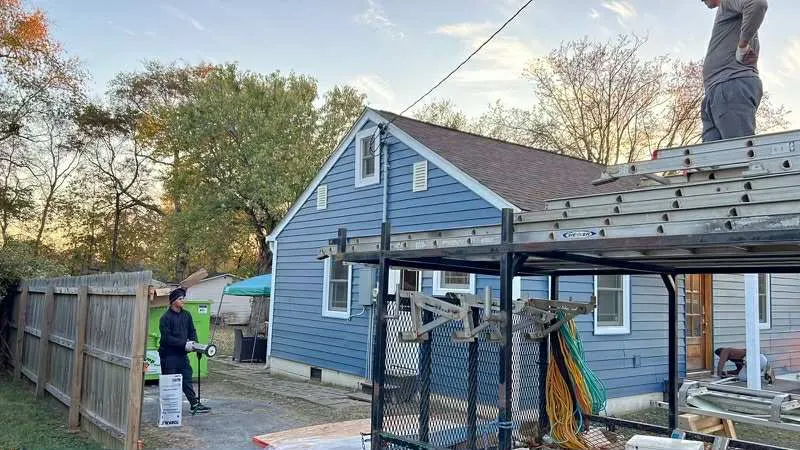
Exterior jobs fail at the joints between trades, so what you want to know most is how one contractor’s work will connect with another’s.
- Who is responsible for the water barrier and flashing where siding, roof and windows meet?
- What happens when rotted sheathing is found behind the old siding, and how is the extra work priced?
- Is the removal of old material, including lead-safe practices or asbestos testing where relevant, included in the scope?
- Does anyone need to check for a permit or association approval first?
- Can you see a sample of the actual siding or trim product on your own wall?
- Is the color you picked still going to look right next to the existing roof?
Twelve25 Construction is licensed and insured, has decades of combined experience, and gives you free estimates with a detailed scope of work and clear pricing before work starts. Project managers keep the trades in order, and we can help with permits along the way.
Exterior Remodeling FAQs
Can new siding go over old siding?
Sometimes, but it can hide rot and trap moisture, and it can change how window and door trim sit. Removing the old layer lets you see the wall, so ask for a reason if someone proposes covering it.
Which should come first, the roof or the siding?
Usually the roof, because roof flashing laps over or behind the siding and water runs from the top down. Plan both together if you can, even if you do them separately.
Do you install gutters?
We offer gutter cleaning. For gutter installation, mention it in your estimate request and we will confirm whether it can be included.
Do I need new windows, or just better sealing?
If the frames are sound and the sashes operate, try weatherstripping and caulking first. Rot, broken mechanisms or a real push for comfort and appearance point toward replacing them.
Is there a right time of year for exterior work?
Weather plays a part. Paint, caulk and some materials have temperature and moisture limits, and open walls need dry days. Tell us your deadlines and we will work out the timing together.
Do you work on commercial building exteriors?
Yes. We handle residential and commercial work, and the scope is planned around how the building is being used.
Serving the Nashville and Atlanta Areas
We provide exterior work within 40 miles of Nashville, TN and within 40 miles of Atlanta, GA. See the areas we serve, or call (615) 478-5705 in Nashville or (770) 669-1314 in Atlanta.
Let’s Build Something Great Together.
Ready to start your next construction or remodeling project? Tell us about your space and request a free estimate.