
Interior Improvements
Drywall Installation, Finishing and Repair
A doorknob hole, a crack that came back, a brown ring on the ceiling, a patch you can spot from the couch. Here is what is behind each one, and how to tell a cosmetic repair from something that needs a closer look.
Holes, Dents and Popped Fasteners
Most wall and ceiling damage looks worse than it is, and a small share looks minor and is not. For drywall repair Nashville and Atlanta area property owners can plan around, the first job is sorting those apart. Painted walls that simply look tired belong on our painting page. Everything here concerns the board itself and the joints and finish on it.
A hole from a doorknob, a move or a stray elbow
Small holes come from wall anchors, picture hooks and furniture. Mid-size ones usually come from door handles and accidents during a move. They are nearly always cosmetic and can wait, unless the opening is letting pests in, or you can see damaged wiring or a pipe inside. If there are wires or plumbing in the opening, stop and have a licensed trade look before anyone closes it up.
How it gets fixed follows the size. Tiny dents take compound and a light sanding. Medium holes get a mesh or backing patch. Anything bigger is cut square back to framing or fitted with backing, a new piece of board is screwed in, and the seams are taped and coated in several thin passes with drying time between each. Finish level, ceiling height and any texture all influence time.
If a door keeps doing the damage, add a stop as part of the repair, or the same hole will return.
Round bumps in a neat row
Those small circles or raised dimples are nail pops or screw pops. The fastener has backed out or the board has moved away from it, usually because framing lumber dried and shrank, or because the fastener missed the stud or the panel was never pressed tight. They are common in newer houses as framing settles in during the first few seasons.
They are purely cosmetic, so wait until you are repainting. The fix is to drive a new screw just above and below, reset or remove the old fastener, then coat, sand and spot prime. A scattering of pops is ordinary. Dozens across a ceiling, or a line of them along with a visible sag, deserves more attention, as covered below.
Cracks: When to Patch and When to Stop
Most drywall cracks run from the corners of doors and windows, or along a taped seam. Houses move a little with seasonal swings in humidity, and hot, humid summers followed by dry, heated winters give the framing plenty of reason to shift. Hairline cracks in these places are usually tape joints showing that movement.
Usually cosmetic
Hairline cracks at door corners or along a straight seam that stay about the same width from one year to the next.
Worth watching
A crack that reopens soon after repair. Mark the ends with a pencil and date them, and see if it travels.
Stop and call
Big new cracks, stair-step patterns, cracks wider at one end, doors that suddenly will not close, sloping floors or a sagging beam. These can signal a structural issue.
If you are in that third group, do not patch it and do not paint it. Call a qualified contractor or structural engineer. A repaired surface only hides the information someone will need to judge the problem. We can help coordinate the work through our general construction services, and permit rules for structural repair vary, so check with the local permit office.
For ordinary cracks, the reliable fix is cutting out loose compound and failed tape, retaping with mesh or paper, feathering the coats wide and letting them dry. Filling a crack with caulk or a dab of compound usually fails within a season. A crack that returns after a proper retape tells you the movement is still going on, and that the cause needs a look before anyone repairs it a third time.
Ceilings: Water and Sag
A stain, bubble or bulge overhead
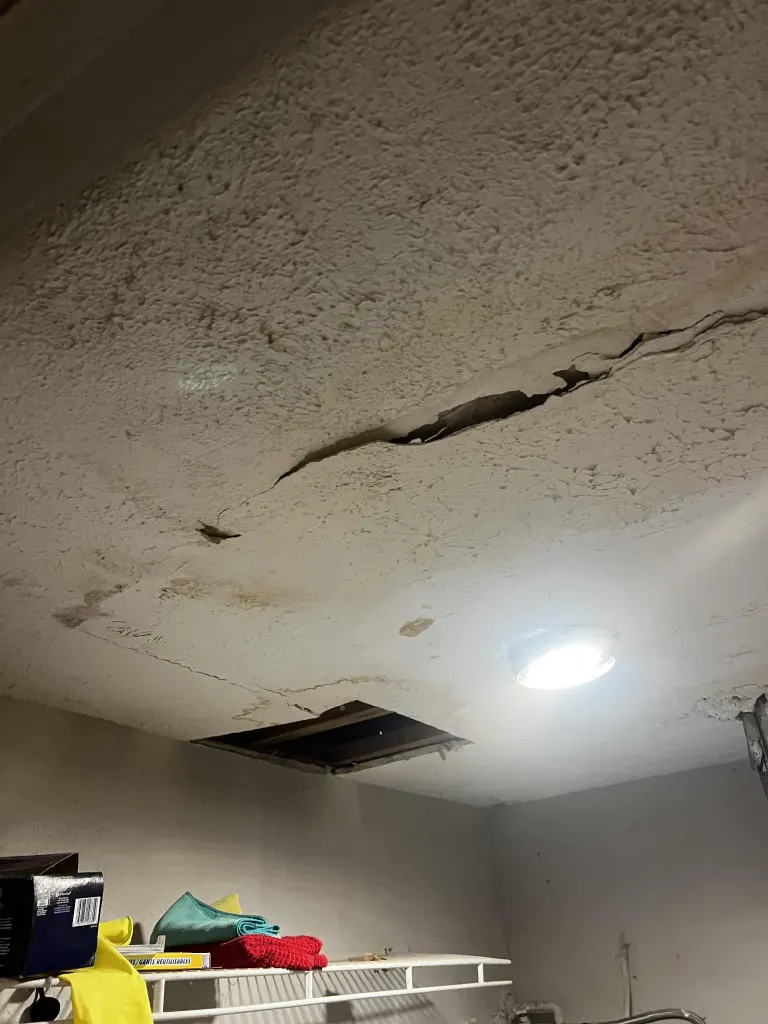
Water on a ceiling comes from a roof, a bath above, an HVAC drain line or a plumbing connection. A dry brown ring from an old leak is one thing. A soft bubble, a bulge or dripping is another, because wet board gets heavy and can come down without much warning.
- Keep people and pets out from under a bulging ceiling, and move what you can.
- If water is near a light fixture, fan or anything electrical, stay clear, do not touch switches in the wet area, and call a licensed electrician or your utility.
- If water is pooling, shut off the main water if a plumbing line could be the source.
- Photograph it before anything is removed, in case you want the images for an insurance claim.
Repair waits until the source is fixed, whether that is a roof leak or a plumbing line. After that, the question is whether the board stayed firm. A surface that dried hard with no sag can be sealed with stain-blocking primer and painted. Board that went soft or crumbly, or insulation above that got soaked, has to come out, and the opening has to dry before new material goes up.
Mold needs a straight answer. Spots that are widespread or spreading, or a musty smell around wet board, should stop the job. Call a mold professional before opening it up further, so the spores stay contained.
A ceiling dipping between the joists
A slow, wavy sag across a whole room usually comes from board that is too thin for the joist spacing, fasteners that were too few, the weight of blown insulation above, or humidity over the years. You can spot it by looking across the ceiling with a flashlight held flat, which throws shadows into the dips.
This is a call-soon problem. Fasteners letting go across a large area can eventually drop a panel. A sag that follows a joist or beam, or that comes with cracks at the wall line, is a framing question, so stop and call a professional rather than adding screws.
Options include re-securing sound panels, adding furring and a second layer, or removing the board and starting fresh. Popcorn or older textured ceilings add a step: have that texture tested for asbestos before it is scraped or cut.
Bad Patches and Mismatched Texture
An old repair you can see from across the room
A patch that shows has usually been left too narrow. Compound builds up to a hump, and raking light from a window finds it immediately. Other giveaways are a ring where tape telegraphs through, a dull flat spot where primer was skipped, and a change in texture. Correcting it means feathering much wider than feels necessary, sanding between coats and priming the repair so paint absorbs the same way everywhere.
When the patchwork takes up most of a wall, or the previous repairs are lifting, a fresh skim coat or new board can be quicker and cleaner than chasing each spot. Old painted surfaces in a pre-1978 home need lead-safe practices before any of that sanding begins, so have them tested first.
New texture that does not match the old
Orange peel, knockdown and hand-applied textures can be surprisingly hard to blend, since the old pattern was made with a particular mix, pressure and tool, and paint layers have softened it over the years. Spray cans rarely match on a large area. Sample boards help you judge, and blending out into the surrounding wall hides the edge.
If a blend still shows under strong light, retexturing the whole surface, corner to corner, is what makes it disappear. On a ceiling this is often the practical answer. Ask to see a test area before the full wall gets done.
Finishing new walls
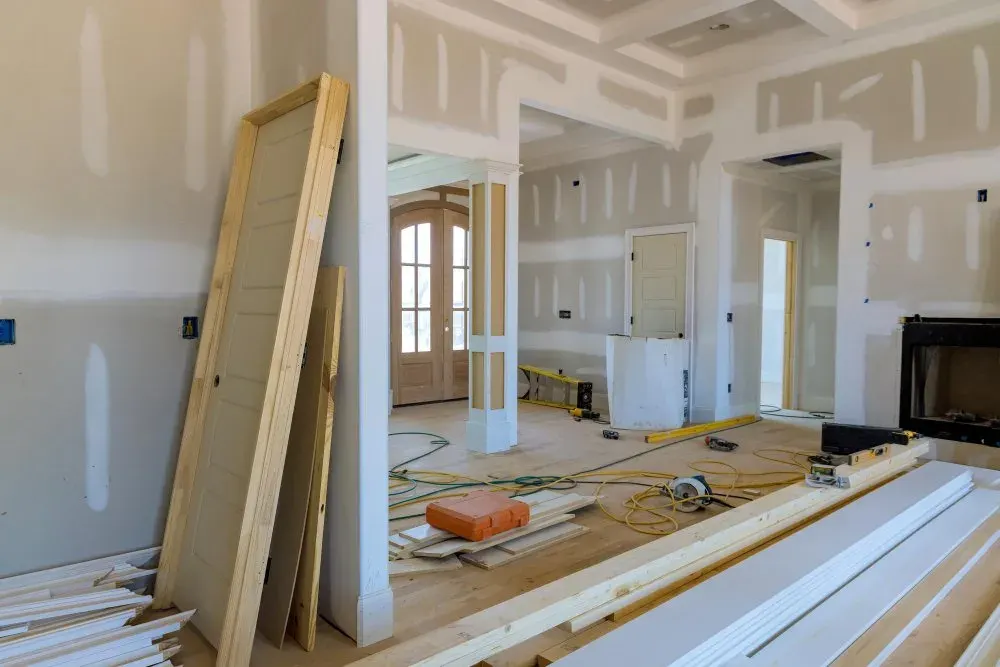
New board is part of our basement finishing, home additions and remodeling projects. Long seams, butt joints and tall walls under bright windows reveal poor finishing faster than anything else, so ask how the seams will be laid out. Moisture-resistant board has its place in damp rooms, but rules and products vary, and it is not a stand-in for fixing a water problem.
Planning the Repair and Choosing Who Does It
Time and cost depend on the size and number of areas, the height and access, the texture, whether insulation or wiring is involved, how long the coats need to dry and how the room gets painted afterward. Humid weather slows drying. Expect dust as well as a return visit or two, since compound goes on in stages.
Before you hire anyone for drywall, ask:
- What finish level will the wall get, and is that suited to the paint sheen and light in the room?
- How many coats, and how will dust be contained?
- Is priming and painting included, or does the job end at sanded compound?
- How will you match my existing texture? May I see a sample first?
- If a leak or crack caused this, who is confirming that the cause has been dealt with?
- Who hauls off the old board and the debris?
Twelve25 Construction is licensed and insured, and we prepare surfaces so they are ready for paint. You get a free estimate, along with a detailed scope and clear pricing before work starts, plus help with permits if the job calls for them. Send us photos of the damage when you request your estimate.
Drywall Questions
Can you repair just part of a wall, or does the whole thing need replacing?
Most damage is repaired locally. A full wall or ceiling only needs replacing when the board stayed wet, the damage is scattered everywhere, or earlier repairs have failed across most of the surface.
Why does the crack over my door keep coming back?
Door corners are where movement concentrates, and a shallow filler cannot hold against it. A proper retape usually lasts longer. If the crack widens each time, or the door starts binding, have someone check the framing.
Will the repair show after painting?
It should not, if it was feathered wide, sanded and primed. Glossy sheens and strong side light are the hardest conditions, so a flat or low-sheen paint helps. Plan to paint at least the whole wall for an even result.
Do I need to replace a ceiling that had a leak?
Not always. If the board dried firm and flat, sealing and painting may do. If it sagged, crumbled or soaked the insulation above, that section should come out once the leak is fixed.
How long does a repair take?
Compound dries between coats, so even a small patch can take more than one visit. Thick coats, humid air and texture all add time. Your scope will lay it out.
Does a small repair need a permit?
Simple patching often does not, while larger work, or anything touching framing, wiring or plumbing, may. Rules vary, so ask your local permit office. We can help with permits when they apply.
Serving the Nashville and Atlanta Areas
We provide drywall within 40 miles of Nashville, TN and within 40 miles of Atlanta, GA. See the areas we serve, or call (615) 478-5705 in Nashville or (770) 669-1314 in Atlanta.

Let’s Build Something Great Together.
Ready to start your next construction or remodeling project? Tell us about your space and request a free estimate.