Outdoor Living
Deck Repair
A board that gives underfoot, a railing that moves when you lean on it, a gap opening up where the deck meets the house. Weather wears decks out from the top down and the ground up, and some of these signs matter far more than others.
Get Off the Deck If You See Any of These
Most deck wear is cosmetic or slow. A few signs are not, and they point at the structure holding people up. If you notice one, stop using the deck, keep children and guests off it, and call a professional. Do not try to jack it up, brace it or tighten your way out of it.
- A gap opening where the deck meets the house, or the deck pulling away from the wall
- A sagging beam, a leaning or cracked post, or a section that sits lower than it used to
- Bouncing or swaying that is new or getting worse
- Posts or joists that are soft enough to push a screwdriver into from the side
- Connectors or bolts that have rusted through or gone missing
The same applies to anything wired or plumbed into the deck. If outdoor lights, an outlet or a fan is sparking or hot, leave it alone and call a licensed electrician. If you smell gas near a grill line or fire feature, leave the area and call the gas utility or 911.
When you are not sure whether a deck is safe, stay off it until someone has looked at it. Check it at least once a year, and take any movement seriously.
Ledger Trouble: Where the Deck Meets the House
The ledger is the board that fastens the deck to the house, and a deck that fails often fails right here. Trouble usually starts with water: flashing that was skipped or has failed lets rain sit behind the board, which softens the wood on both sides. Nails where bolts belonged and old fasteners rusting away make it worse. Look for dark staining, a visible gap, wet or crumbling wood, or stains on the ceiling or wall inside the house just behind that spot.
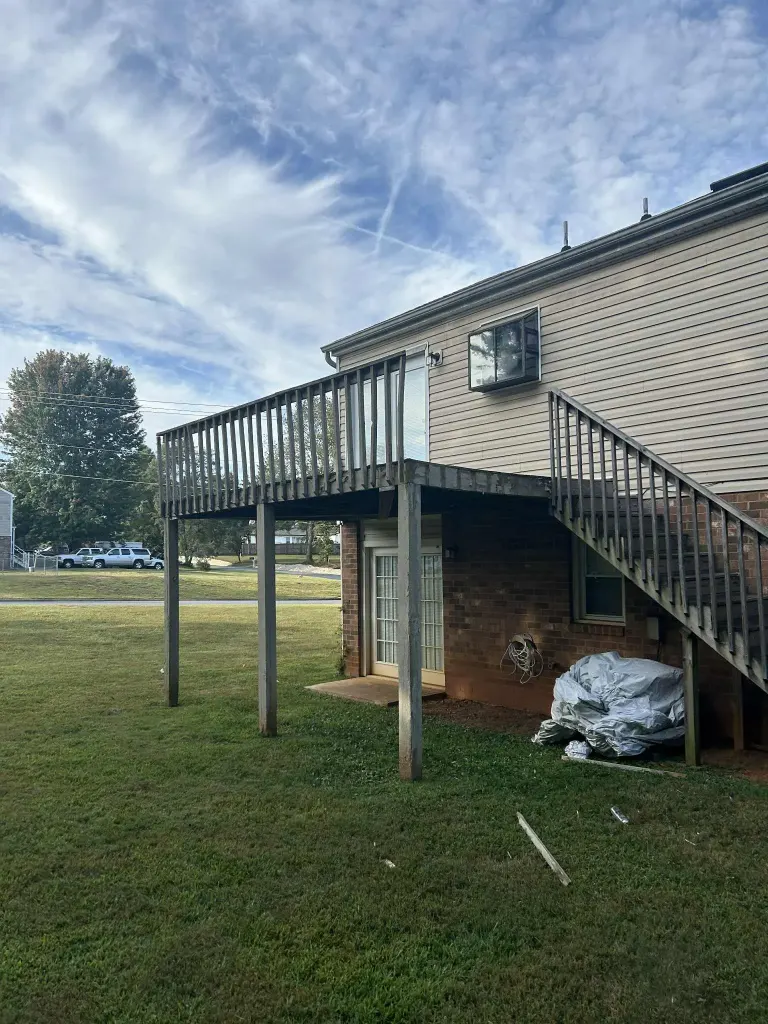
This one cannot wait. Stop using the deck until it has been inspected. A repair might mean removing boards to reach the ledger, replacing damaged wood, adding flashing and refastening, and it can mean opening some siding to see how far the water went. Cost and time depend on how far the rot has spread into the house framing, what cladding has to come off and how much of the deck needs temporary support. If the rim of the house itself is damaged, a structural engineer may need to weigh in. Rules on how decks attach vary, so your local permit office or a licensed professional is the one to tell you what applies. Damage to the wall may lead into siding and exterior repair.
Boards, Rails and Stairs
Boards that feel soft, spongy or cracked
Sun, standing water and shade all age decking, and the worst spots are usually under planters, at the ends of boards and anywhere that stays damp. A board that is splintered or weathered on top but firm underfoot is ordinary wear and can wait for a good-weather project. One that flexes or gives is a trip and a fall-through hazard, so block it off or put furniture over it until it is replaced.
Replacing a few boards is one of the simpler repairs, as long as the joists underneath are sound. Removing a board is a chance to check them, and what you find there decides the size of the job. New wood will not match old wood right away, which is worth knowing before you start. Lots of bad boards across the whole surface make resurfacing a better choice than spot fixes. Cost follows the decking material, the number of boards, the fastening method and what the framing turns out to look like.
A railing that moves when you lean on it
Treat this as more urgent than it looks, because people trust railings without thinking about it. Loose posts usually come from fasteners that have worked free, notched posts that have split, or rot at the base where the post meets the rim. Give each post a firm push from the deck side, standing well back from the edge. If it shifts, keep people away from that section, particularly children, and do not lean on it or sit on it.
A loose bolt on a healthy post is a small repair. A split or rotted post needs replacing, and several failing posts generally mean the whole rail system has reached the end of its useful life. Baluster spacing and height rules vary, so ask your permit office what applies if the rail is being rebuilt. Old painted railings in a pre-1978 home should be handled with lead-safe practices. Avoid sanding them dry.
Loose or tilting stairs
Stairs take the most punishment and often get the least attention. Stringers that sit on the ground rot from the bottom. Treads work loose from their cleats. The landing may have settled so the whole run has shifted. Look for rocking, soft wood at the base, cracked stringers and a handrail that comes along with you.
- Wait a little: one loose tread you can see is firmly supported otherwise. Mark it, and fix it soon.
- Do not wait: a stringer that is cracked, rotted or pulling away. Use another exit and keep people off.
- Worth a closer look: stairs that feel fine but rest directly on soil. They may be rotting where you cannot see.
Replacing a tread is quick work. A new stringer or a rebuilt stair is a bigger job, and the cost depends on height, the number of steps, the landing and whether a permit is involved. For other small items around the house, see handyman help.
Below the Surface: Rot, Rust and Old Lumber
Dark, crumbly wood near posts and joists
Rot favors places where water lingers: post bases, the tops of joists, the spots beneath a clogged gutter that overflows. Press a screwdriver gently into the suspect spot. Firm wood resists. Soft fibers that pull away do not. A little surface decay on a non-load-bearing piece is one thing. Rot in a post, beam or several joists is structural, so stop using that part of the deck and have it assessed.
Sistering a joist or swapping a post can make sense when the damage is limited. It stops making sense when the rot is widespread or the framing was undersized from the start. Keep in mind how water got there, because a repair that leaves the drainage alone will only begin the same cycle again.
Rust on hangers, bolts and connectors
Treated lumber can corrode ordinary metal, and old hardware may never have been meant for outdoor use. White powder or surface rust is a sign to watch. Flaking, swollen metal, snapped fasteners or hangers separated from the wood are serious, because these small pieces are what hold the framing together. Replacing connectors tends to be modest work where they can be reached. The bill grows when boards must come up to reach them or when temporary support is needed. Stop using the deck if a key connection has failed.
Old greenish lumber and what not to do with it
Decks built before the mid-2000s may be framed with lumber treated with CCA, a preservative that contains arsenic. It is usually not an emergency, but it does change how you should treat the wood. Do not sand it, power-saw it without protection or burn it, since dust and ash are the concern. Wash your hands after handling it and keep food off bare boards. Ask your local waste office how to dispose of it, because rules vary. If you are not sure what you have, tell whoever is doing the work before they start cutting.
Fix It or Start Over?
Repair tends to be enough when the framing is sound and the problems are limited to boards, a few rail parts or isolated connectors. Surface wear is usually repairable, while widespread rot in the framing can change the answer. Replacement starts to make sense when several of these are true: rot in many structural pieces, a failed ledger along with damaged posts, repeated repairs in different places, or a layout you would change anyway.
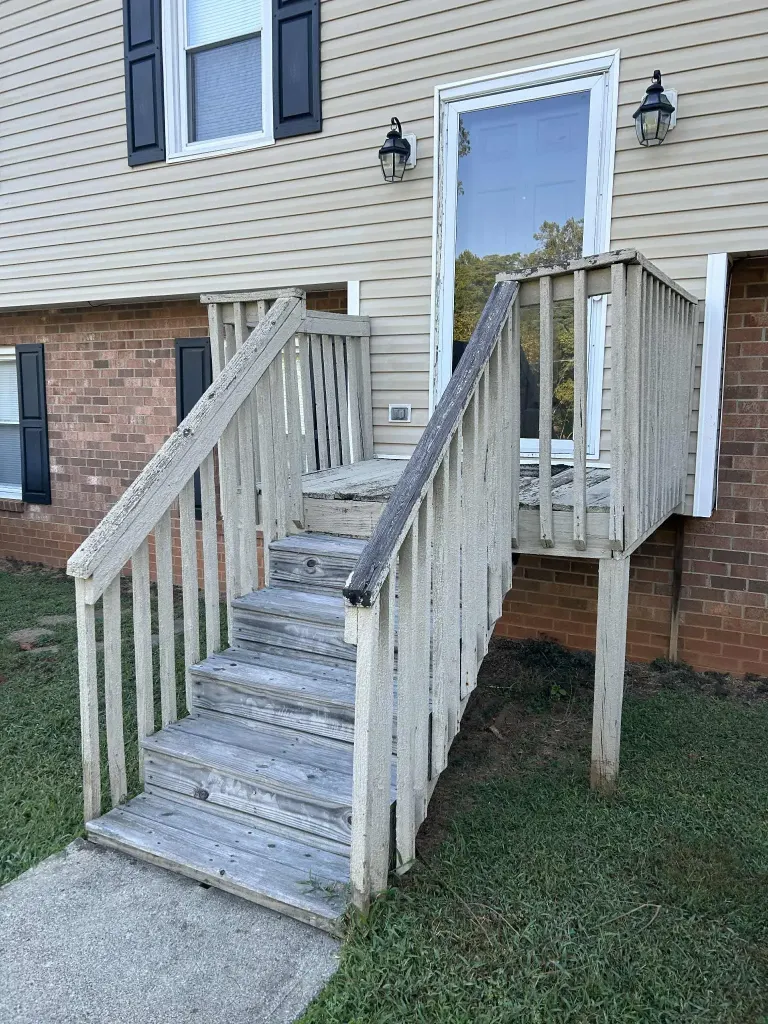
Sometimes the honest answer is a mix, such as keeping the footings and framing and putting on new surfaces and rails. A full rebuild is a separate conversation. Send us your list and we will confirm what can be included. If you want more room both indoors and out, it may also be worth looking at an addition instead.
What to Check Before Hiring Someone for Deck Work
- The underside: will they look beneath the deck and at the ledger, or only walk on top?
- Scope: does the written scope name the boards, connectors and fasteners, and spell out what happens if hidden rot appears once boards come up?
- Hardware: ask which fasteners and connectors they plan to use with treated lumber, and why.
- Flashing: if the ledger is touched, ask how water will be kept out of the wall afterward.
- Permits: ask whether this work calls for one and who handles it. Your local permit office has the final word.
- Old materials: ask how they will deal with old paint and treated lumber dust and waste.
- Credentials: rules vary by state and by job, so ask what applies and ask for proof of insurance.
When you are ready, send photos and a short description of what you are seeing. Clear pictures of the ledger, the posts and any stairs are the most helpful.
Deck Repair Questions
Should I repair my deck or replace it?
It depends on the structure. Surface wear is usually repairable, while widespread rot in the framing can change the answer. We give you a clear scope either way.
Do deck repairs need a permit?
Sometimes, depending on the work and your local rules. Your local permit office has the final word.
Can you send a price from photos?
Photos help us understand the job, so include them with your estimate request.
Do you take on deck repair Nashville, TN jobs, and jobs around Atlanta?
We are serving both areas. Send us your list and we will confirm what can be included for your property.
Is my deck safe for a gathering?
If it sways, has a gap at the house, or has a loose railing or soft framing, keep people off until it is inspected. Crowds put more load on a deck than daily use does, so do not treat a quiet summer as proof it can handle a party.
How often should a deck be inspected?
Look it over at least once a year, including from underneath. Check again after a big storm or if something starts to feel different.
Should I power wash or stain it first?
Hold off until repairs are done. Stain will not fix soft wood, and washing can hide or worsen damage. Avoid aggressive washing or sanding on old CCA lumber or old paint.
Serving the Nashville and Atlanta Areas
We provide deck repair within 40 miles of Nashville, TN and within 40 miles of Atlanta, GA. See the areas we serve, or call (615) 478-5705 in Nashville or (770) 669-1314 in Atlanta.
Let’s Build Something Great Together.
Ready to start your next construction or remodeling project? Tell us about your space and request a free estimate.