
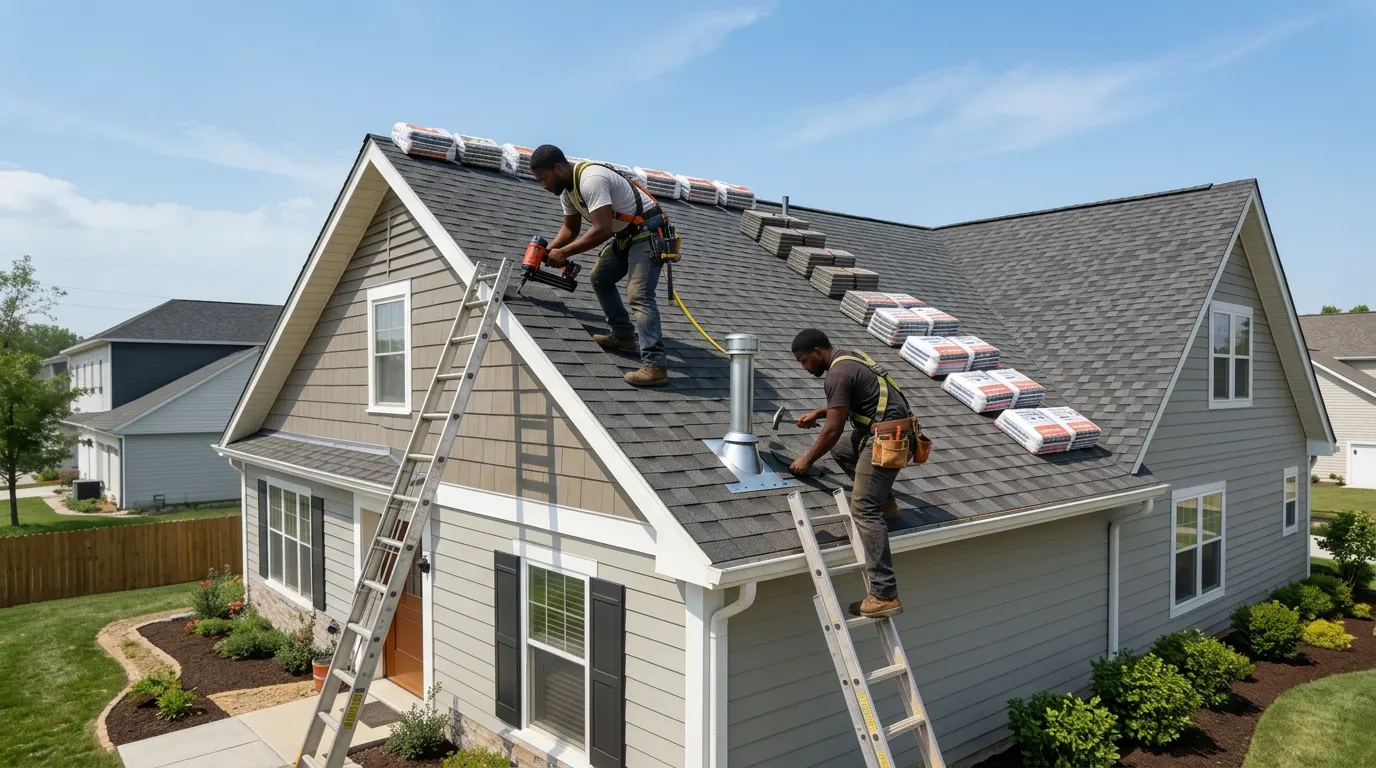
Fix the Source, Not the Symptom
Roof Leak Repair
It starts as a drip, but water spreads into insulation, drywall and structure. Here is what to do while it is raining, how the source gets traced and what to write down.
If Water Is Coming In Right Now
Do these things in order, and do not go up on the roof. Wet shingles are slippery, a storm makes them worse, and damaged decking can give way under your weight. A leak can wait for a professional. A fall cannot be undone.
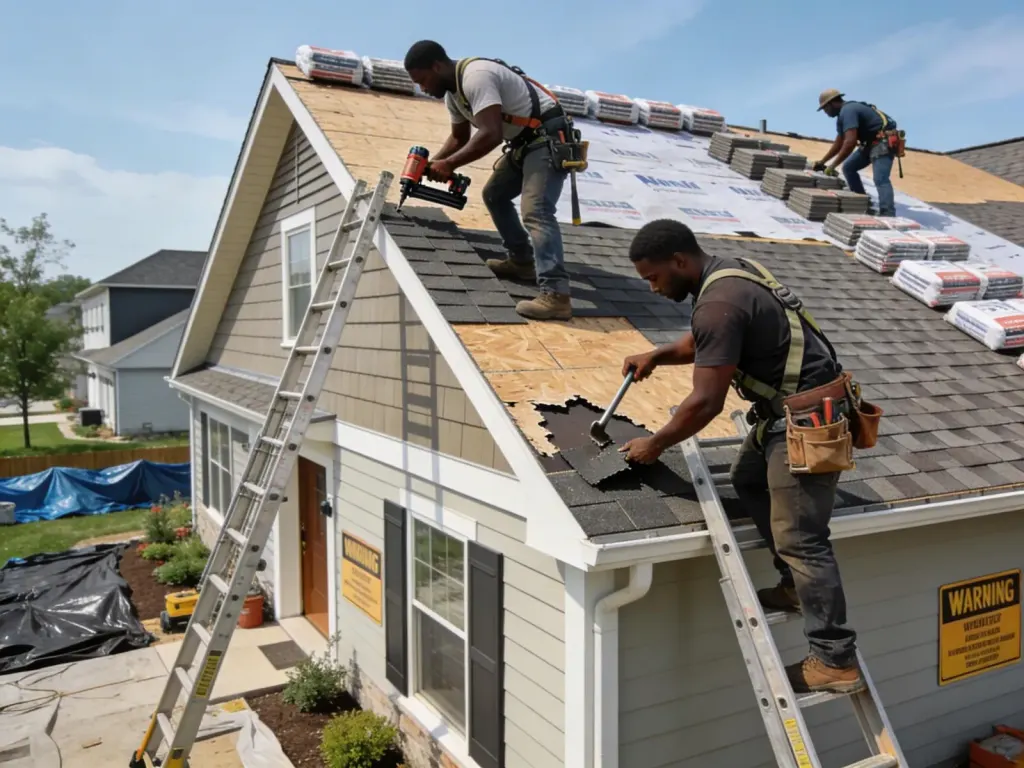
Check for electrical danger first
If water is running near a light fixture, outlet, breaker panel or anything plugged in, or if water is pooling near them, stay out of that area and call an electrician. Do not touch anything in the wet zone.
Look up at the ceiling
If it sags, bulges or has a large wet belly, keep everyone out of the room. Wet drywall and plaster are heavy and can drop without warning. Do not try to drain it from below. Call a professional.
Catch what you safely can
If the area is clear of electrical risk and the ceiling looks flat, put a bucket under the drip and lay down towels or plastic. A board or old cloth in the bucket quiets the splashing.
Move belongings
Pull furniture, rugs, electronics and papers away, and start with what is easiest to reach. Do not stay in the room if the situation changes.
Take pictures
Photograph the drip, ceiling and belongings now, while it is happening, so you have a dated record.
Call a roofer
Describe when it started and where you see the water. Ask whether a temporary cover is sensible while repairs are being planned. Leave the tarping to someone with the equipment for it.
Good roof leak repair begins once the rain has stopped and someone can look at both sides of the roof. Until then, your only job is to limit the damage indoors.
A Stain That Keeps Growing
Brown ring on the ceiling, nothing dripping
A stain is the record of water that has already traveled through the attic, soaked into the back of the drywall and dried. A single faded ring might be left over from an old problem that has since been fixed. Rings within rings mean it has been wet more than once. To tell the difference, draw a light pencil line around the edge, or take a dated photo, and check it after the next rain. If it has grown or feels damp, the leak is active.
This can usually wait a short time, but not for months. Hidden wet insulation does its damage quietly, whether or not the room below looks bad. Also remember the fix is two jobs: the opening on the roof first, and then the ceiling. Painting a stain before the source is dealt with only hides the evidence.
It only leaks in hard rain or wind
Intermittent leaks frustrate everyone. The usual explanation is that water is being pushed sideways or uphill, under shingles or behind metalwork, in conditions an ordinary shower does not create. It can also be condensation in the attic rather than rainfall, particularly if the damp shows up on cold mornings with no storm at all.
Keep a simple log: date, how hard it rained, wind direction if you know it, how long after the rain started, and which room. This helps more than most people expect. A repair person may run a controlled water test, wetting one area at a time from the bottom upward while someone watches inside.
The drip is nowhere near the likely cause
Water seldom falls straight down. It enters at one spot, runs along a rafter, a pipe or the top of a batt of insulation, and then falls wherever it finds a low point. That can put the stain several feet from the opening, sometimes in a different room. So replacing the shingles directly above the stain may miss the problem altogether. Tracing it means starting at the stain and working uphill.
- Flashing failures around chimneys, walls and valleys, covered in depth on our roof flashing repair page
- Damaged or missing shingles
- Vent or penetration issues, including cracked rubber pipe boots
- Storm damage such as lifted tabs, a limb strike or displaced ridge caps
- Exposed or backed-out nails
- Clogged gutters that back water up under the roof edge
Damp insulation or dark marks in the attic
The attic is where you get real answers, and it is the only part of this you may reasonably inspect yourself. Only go if you can do it safely: daytime, a good flashlight, standing or kneeling on joists or walkboards and never on the insulation or ceiling between them. Stay out if there is any sign of sagging framing or wet wiring.
What to look for
Dark trails on the underside of the decking, rusty nail tips, matted or wet insulation, daylight where there should be none, and drips along pipes or vents.
What it tells you
Trails and rust show the path water follows. Follow them uphill to find the area for a roofer to check from above, and take photos so they can see what you saw.
When to stop
Widespread or spreading mold, a soft or sagging deck, cracked rafters, or water on or near wiring. Leave the attic and call a professional. Do not try to clean or fix these yourself.
Older materials
Very old loose or pebble-like insulation can contain asbestos, as can some older ceiling textures. Have it tested before it is disturbed, even for a roof repair.

Patched Once Already, and It Came Back
A leak that returns after a repair usually means one of three things. The first patch treated the wrong spot. It treated the right spot with something temporary, such as roof cement smeared over a joint, which dries and cracks after a couple of hot summers. Or the roof has several weak points and the one repaired was only the first to go.
Ask to see photos of the earlier repair if you have them, and tell the next roofer exactly what was done. A second patch in the same place is rarely useful unless someone can explain why this one will behave differently. Metalwork that was smeared with sealant usually needs to be replaced and properly lapped.
A local repair is usually enough when you have one identifiable source, sound shingles around it and a dry deck. Replacement enters the conversation when leaks appear in new places every season, when the shingles crumble as they are lifted for the repair, or when several slopes are affected. If you reach that point, our page on replacing a worn roof walks through the choices.
The factors that shape a repair’s cost and time are how hard the source is to find, roof steepness and height, how much decking or framing got wet, whether matching shingles exist, and what needs to be repaired indoors. A detailed scope of work and clear pricing come before work starts, with the free estimate. That way you will know what is on the roof list and what is on the indoor list.
What to Write Down for Yourself and Your Insurer
Good notes save time with both a roofer and an insurance adjuster. Keep everything in one folder or phone album.

- Dates and times the water appeared, along with the weather
- Photos and short videos of the drip, ceiling, walls and floors, wide shots and close-ups
- Photos of damaged belongings before you move or discard them
- Roof photos taken from the ground only
- Attic photos if you could get them safely
- Receipts for buckets, tarps, drying equipment and anything else you buy
- Names, dates and notes from every call with your insurer or a contractor
If a storm caused the damage, roofing work can include help documenting it for your claim; our Nashville roofing overview has more on storm damage and insurance. If you are not sure the leak is covered, ask your insurer. That is their decision to make.
After the Roof Is Dry: The Inside Repairs
If water reached the inside of your home, we can also repair interior drywall and repaint. Wait until the framing and insulation have dried. Closing up wet materials is how a small leak turns into a smell and a second repair. Soaked insulation often loses its value and should be replaced, not just left to dry.
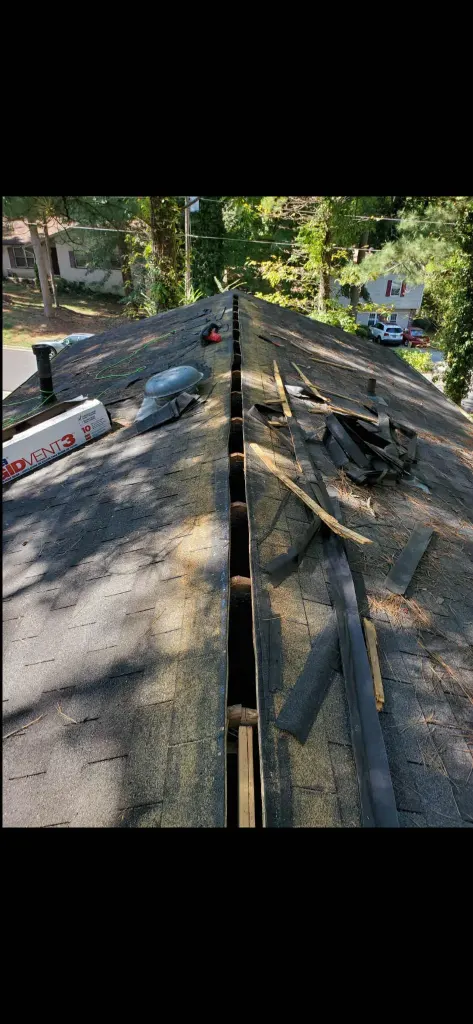
Two cautions on older houses. If the home was built before 1978, the paint on damaged ceilings and walls may contain lead, so scraping and sanding call for lead-safe practices. And if a stain shows up on old textured ceiling material, have that tested for asbestos before anyone cuts into it.
Choosing who fixes it
A leak call is a good test of how a contractor works, since the source is what you are paying them to find. Listen for these answers:
- They ask to see the inside as well as the roof, including the attic if it can be reached
- They explain where the water enters and show you a photo of it
- They tell you what they will replace, not only what they will seal
- They have proof of insurance for working on roofs, and are clear about any licensing that applies in your area
- They say what they will do if the first repair does not stop it
- They do not insist on a whole new roof without showing why
Twelve25 Construction is licensed and insured and works on homes and commercial buildings, with project managers keeping roof and interior repairs in the right order.
Leak Questions People Ask
Is a roof leak an urgent problem?
A steady drip or any water near electrical is urgent, and so is a sagging ceiling. A small dry stain is less urgent, but should be looked at before the next few rounds of rain.
Can I put a tarp on it myself?
We advise against it. Getting on a wet or damaged roof is how people get hurt. Ask a roofer about a temporary cover, and focus on protecting things indoors.
Why is it leaking when the shingles look fine?
Most leaks start at joints and openings, not in the middle of a field of shingles. Flashing, pipe boots and vents can fail while the rest of the roof still looks good from the street.
Could the water be coming from something other than the roof?
Yes. Plumbing lines, air conditioner drain lines and bathroom fan ducts can all drip into a ceiling. If the stain appears with no rain, also check with a plumber or your HVAC contractor.
Is a bit of mold on the ceiling something I can ignore?
Do not ignore it. Fix the moisture source and have the area looked at. If the mold is widespread or spreading, stop and call a professional instead of cleaning it yourself.
Will one repair solve it for good?
It should stop that leak if the source was correctly identified. It will not add life to worn shingles elsewhere, so ask for an honest read on the rest of the roof while someone is up there.
Serving Nashville, TN
We provide roof leak repair in Nashville, TN and nearby communities such as Franklin, Brentwood, Hendersonville, Murfreesboro and Mount Juliet. See all of the areas we serve or call (615) 478-5705.

Let’s Build Something Great Together.
Ready to start your next construction or remodeling project? Tell us about your space and request a free estimate.