Heating, Cooling, Air Quality and System Efficiency
HVAC Services in Nashville, TN and Atlanta, GA
One room roasts, the bedroom freezes, or the system quits on the hottest afternoon of the year. Start from what your house is doing, and this page will help you judge what it means and what to do next.
Stop First: Gas Smell or Carbon Monoxide
Two situations come before everything else here, and neither one is a repair question.
You smell gas
Leave the building now and take everyone with you. Do not flip light switches, start a car in an attached garage or make a call until you are well away from the house. From outside, call the gas utility or 911. Do not go back in, look for the source or relight anything.
A carbon monoxide alarm sounds, or several people feel ill at once
Carbon monoxide has no smell and no color. Headache, dizziness, nausea or confusion that eases when you step outside is a warning sign. Get everyone into fresh air, then call 911 or the fire department, and stay out until responders tell you it is safe. Do not silence the alarm and carry on. A furnace or other gas appliance should not run again until a licensed professional has inspected it.
Shut it off and call a professional
- A burning or electrical smell coming from the vents or the equipment
- Sparks, or a breaker that trips again after one reset. Do not keep resetting it.
- Water pooled around the indoor unit near wiring or outlets. Stay out of the water and leave the panel alone if the floor is wet.
- Scorch marks or soot around a furnace or flue
Do not open panels or test gas parts yourself. These are not do-it-yourself jobs.
Rooms That Never Feel Right
People searching for HVAC services Nashville, TN or HVAC services Atlanta, GA are rarely shopping for equipment. They want the back bedroom to stop being miserable. Both regions have long, hot, humid summers, so a system with a small weakness gets found out quickly.
One room roasts while another freezes
The equipment is often fine. Uneven rooms usually trace back to how air gets delivered: a duct run that is too long or too small, a crushed or disconnected section in the attic or crawl space, a closed damper, or too few return paths. Other culprits are thin attic insulation, big west-facing windows and an addition that was simply tied into the old system.
This can usually wait for a planned visit, since it is about comfort rather than danger. The fix might be as modest as resealing and balancing the ducts, or it might mean a new run, a zoning setup or a separate unit for the far end of the house. Cost and time depend on how reachable the ducts are, how many rooms are affected and whether walls or ceilings have to be opened. A new system rarely solves this on its own, because cold air still has to travel down the same bad path. If you are planning an addition or a finished basement, raise it early so the air plan is designed in.
Weak air at the vents, dust everywhere, a musty whiff when it starts
Hold a hand to each register. A strong blast in the hall and a faint sigh in the bedroom points at leaks or restrictions. So does dust that returns a day after cleaning, since leaky return ducts can pull air from the attic or crawl space. We inspect duct systems, seal or replace what has failed, and recommend duct cleaning only if the inspection shows it would help.
Replacement beats patching when the duct material is torn, flattened or badly sized throughout. In an older home, old duct wrap or insulation may contain asbestos, so have it tested before anyone disturbs it. If rerouting means cutting painted walls or trim in a pre-1978 house, lead-safe practices apply. Musty air can mean moisture in the system. If you see widespread or spreading mold on ducts or nearby framing, stop running the air and call a professional rather than scrubbing it yourself.
When the System Quits or Struggles
No cooling, or no heat, and nothing obvious is wrong
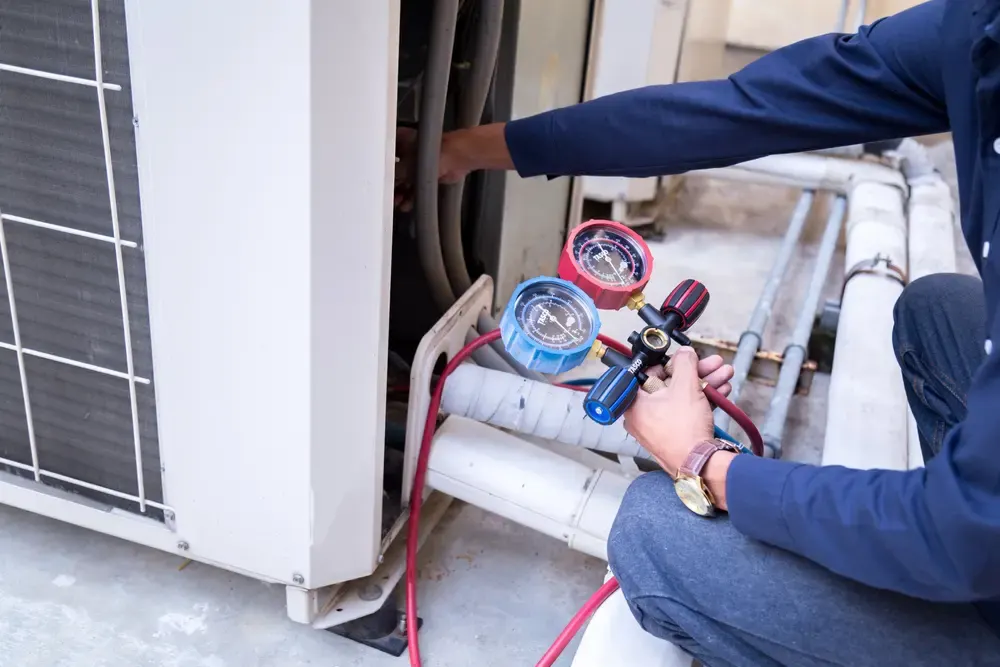
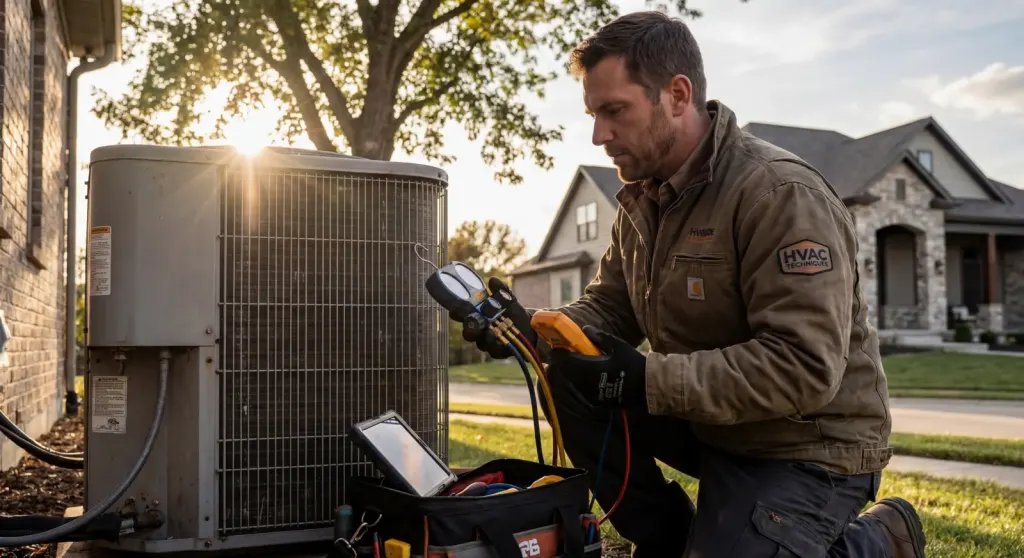
Three simple checks are safe for any homeowner: the thermostat setting and its batteries, the filter, and whether a breaker has tripped once. Past that, leave it to a technician. Common causes include a failed capacitor or motor, a clogged condensate line that has triggered a safety switch, low refrigerant from a leak, or a failed igniter on a furnace.
- Can wait a little: warm air on a mild day with no one at risk in the house.
- Should not wait: extreme heat or cold with infants, older adults or anyone medically fragile at home. Move them somewhere comfortable first.
- Turn it off now: ice on the indoor coil or the refrigerant lines. Running it frozen can damage the compressor.
Topping up refrigerant without finding the leak is a temporary answer. What it costs comes down to the failed part, its availability, and whether the system is old enough that the refrigerant itself has become hard to get.
It turns on and off every few minutes
This is short cycling, and it wears out components while leaving the house sticky. A dirty filter or frozen coil is a common cause, along with a thermostat in a poor spot, low refrigerant, an overheating furnace or equipment too large for the house. Change the filter first. If it continues for more than a day or two, book a visit, and sooner if the unit is also making noise or smelling hot. Repair suits a failed sensor or a misplaced thermostat. If the unit is simply oversized, the lasting answer is correct sizing at the next replacement.
The house feels sticky even when the thermostat says it is cool
High indoor humidity is common in hot, humid summers. An oversized air conditioner cools fast and shuts off before it has pulled moisture from the air. Leaky ducts, a damp crawl space, or poor bath and kitchen ventilation can add to it. Condensation on windows, a clammy feel and musty closets are the clues. It can wait for an appointment, but do not ignore it for a whole season, because damp air ends up in wood and drywall. Depending on the cause, the answer may be new airflow settings, duct sealing, added ventilation or humidity control equipment.
Bills and Noises That Tell You Something
Energy bills creeping up with no change in how you live
Compare the same month from the last two years, since weather and utility rates can explain part of it. If the jump is real, likely causes are a clogged filter, dirty coils, leaking ducts, poor insulation or simple age. None of it is urgent, so this is a good problem to solve in the off-season. A tune-up and duct test come first. New equipment and energy-efficient options deserve a look only after you know where the energy is going.
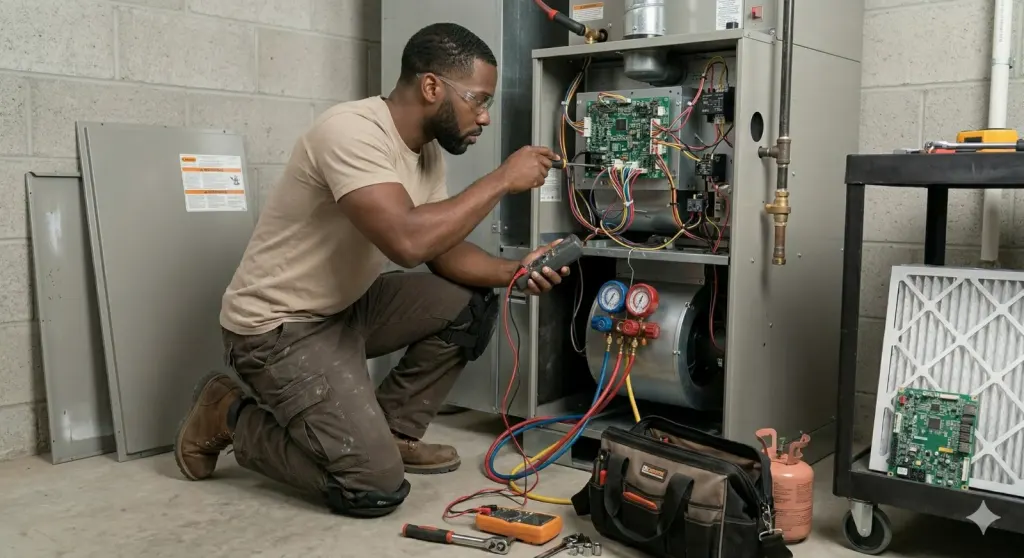
Strange sounds from the unit
Squealing or grinding
Often a worn motor or bearing. Shut the system off and book a visit, because a seized motor can take other parts with it.
Rattling or buzzing
It may be a loose panel or a failing electrical part. If you also smell something hot, shut the system down and call.
Banging when the furnace lights
Delayed ignition or ductwork flexing. Treat a loud bang from a gas furnace as a stop: turn it off and have it looked at before using it again.
Hissing near the lines
Possibly a refrigerant leak or a duct leak. Refrigerant work belongs with a trained technician.
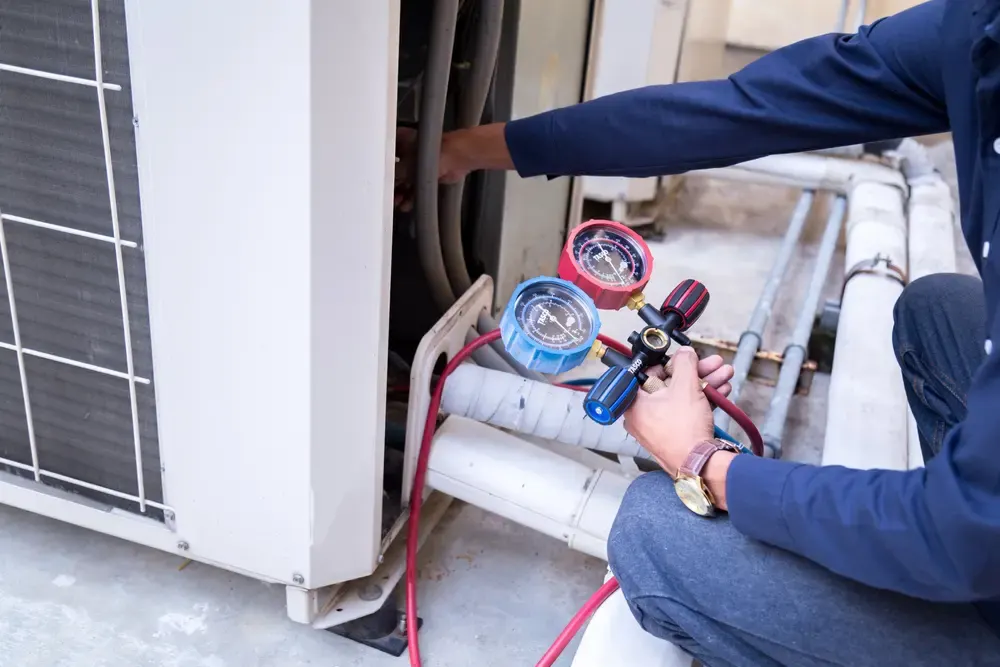
Repair It or Replace It?
A single failed part on a sound system in its middle years is usually a repair. Lean toward replacement when the system is over 10 to 15 years old, the repairs keep coming, the bills keep rising, or the same problem returns after being fixed. A cracked furnace heat exchanger found by a technician is a serious safety finding, and the unit should stay off until you have decided.
What moves the cost and timeline of a replacement: the equipment type and efficiency level, whether you are staying with gas or moving to a heat pump, how much duct work needs correcting, access to the attic or crawl space, and whether a permit and inspection are needed. Rules vary, so your local permit office or a licensed trade can tell you what applies. We can help with permits. Our HVAC work covers installation and replacement, furnace repair, heat pump installation, AC repair, ductwork, tune-ups, air filtration, humidity control and ventilation improvements, for residential and commercial properties, including business spaces.
What to Check Before Hiring an HVAC Contractor
- Sizing: ask how the size was worked out. A room-by-room load calculation means more than matching the old unit’s label.
- Ducts: will they measure airflow and inspect the ducts, or quote only the box outside?
- Paperwork: the written scope should name the equipment, the efficiency rating, what happens to the old unit and who handles any permit.
- Gas safety: on gas equipment, ask what combustion and venting checks are done at startup.
- Refrigerant: ask whether a leak will be found and repaired before anything is added.
- Credentials: licensing rules for the trade vary by state and city, so ask to see what applies and confirm insurance. Twelve25 Construction is licensed and insured.
How we work
Consultation and estimate
We evaluate your current system and your needs. Estimates are free, and you get a detailed scope and clear pricing before work starts.
System recommendation
Based on performance, efficiency and budget.
Installation or repair
Completed cleanly and professionally.
Final testing and walkthrough
We check that everything runs before we leave.
If the work touches more than heating and cooling, project managers coordinate it with plumbing adjustments and larger remodeling so you are not juggling several contractors. When you are ready, tell us what the house is doing.
HVAC Questions People Ask
How do I know if I need a new HVAC system?
If your system is over 10 to 15 years old, needs frequent repairs or your energy bills are rising, it may be time. Age alone does not decide it, so weigh it against the system’s condition.
How often should HVAC systems be serviced?
We recommend twice a year: once before summer and once before winter.
Can you fix uneven heating or cooling?
Yes. It is often caused by ductwork or airflow issues, which we diagnose and correct.
Do you offer HVAC for remodels and new construction?
Yes, tell us about the project and we will include the system in the scope.
Do I need a carbon monoxide alarm?
If you have gas appliances, a fireplace or an attached garage, it is widely advised. Local rules vary on placement and when alarms are needed, so check with your permit office or fire department and follow the alarm maker’s directions.
Why is my AC dripping water inside?
A clogged condensate drain is a frequent cause. Turn the system off if water is spreading, keep clear of any wiring or outlets it reaches, and have it checked before the damage reaches ceilings or floors.
Serving the Nashville and Atlanta Areas
We provide HVAC service within 40 miles of Nashville, TN and within 40 miles of Atlanta, GA. See the areas we serve, or call (615) 478-5705 in Nashville or (770) 669-1314 in Atlanta.

Let’s Build Something Great Together.
Ready to start your next construction or remodeling project? Tell us about your space and request a free estimate.