
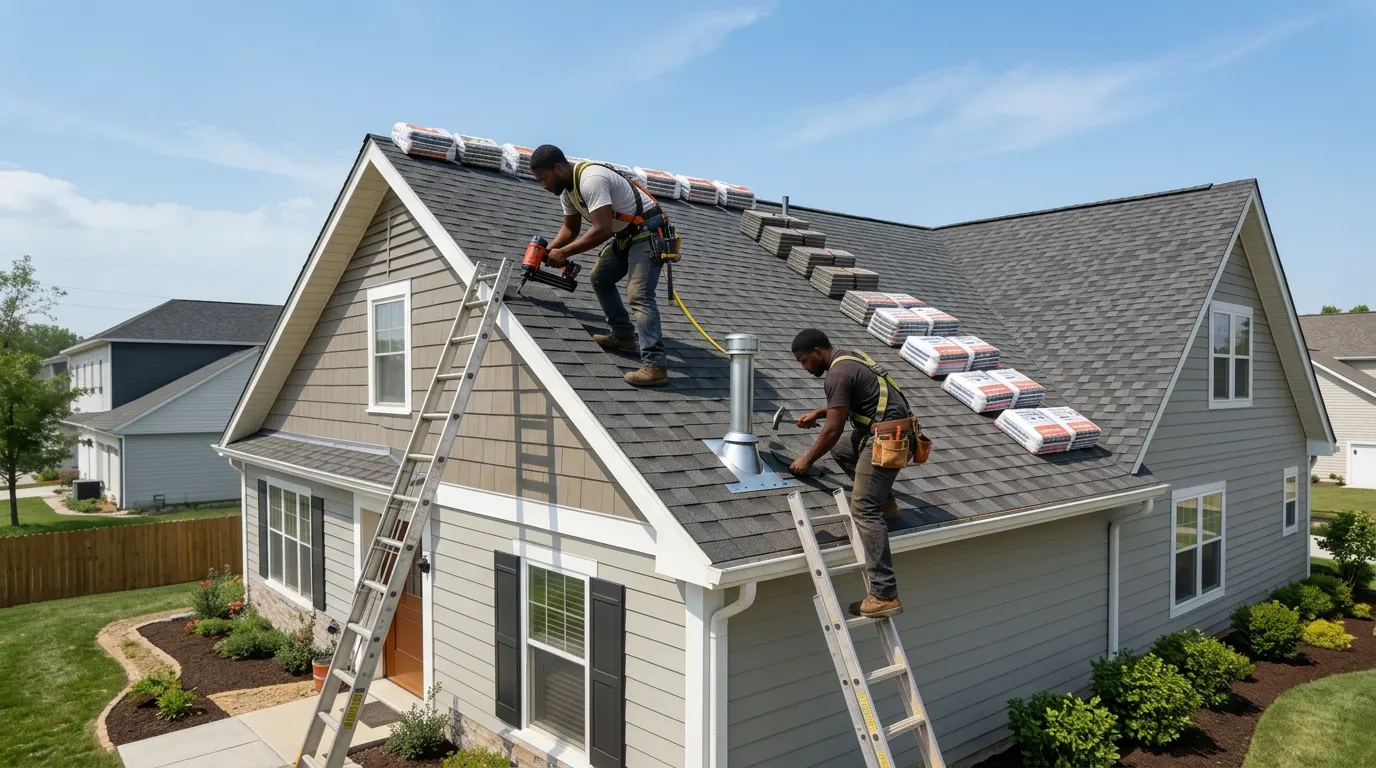
Roof Repair
Roof Corners, Edges and Flashing
Where roof planes meet, and where anything pokes through, is a common place for leaks to begin. Here is why those small details fail and what fixing them involves.
Why the Joints Fail First
A field of shingles is simple: each course overlaps the one below and water runs off. The trouble lives where that pattern has to stop, at a valley, a wall, a chimney, an edge or a pipe. Those spots depend on bent metal, careful laps and a few inches of overlap. They collect more water than the rest of the roof, and they move as the house heats and cools.
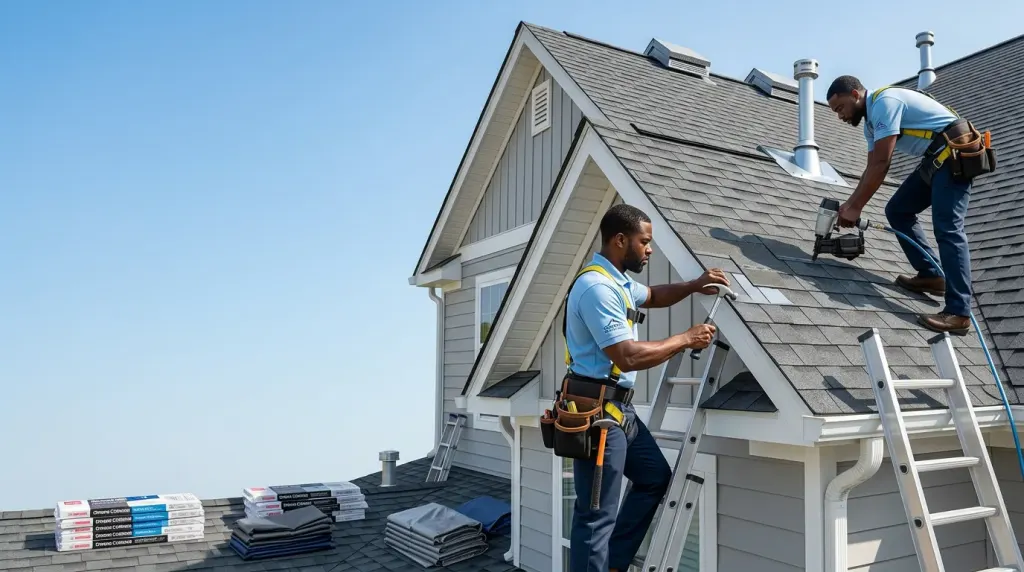
Metal corrodes or pulls loose. Rubber cracks in the sun. Sealant dries out, often long before the shingles do. Sometimes the original detail was simply skipped or done badly, and it takes years to show. That is why a roof with plenty of life left can still need roof flashing repair. We look at flashing condition, shingle damage, vents and penetrations and underlayment as part of a complete roof inspection.
All of this should be judged by someone on the roof, not by you on a ladder. If you already have water indoors, deal with that first using the steps for an active leak.
Five Spots and What Goes Wrong at Each
Water backing up where two slopes meet
A valley gathers the runoff from two whole roof sections and sends it down one narrow channel. Leaves and grit pile up there and slow the flow. Worn metal, a nail driven too close to the center or shingles cut too short will let water in, and the stain often shows up well below the valley itself.
Moss or debris alone can wait for a cleaning, as long as the ceiling below stays dry. A stain below a valley should not wait through another storm season. The repair lifts the shingles on both sides, renews the underlayment and the metal or woven detail, and relays the shingles. If the rest of the roof is near its end, that amount of work is a strong argument for doing the valley during a full replacement instead.
A stain on the ceiling beside the chimney
A chimney is a box the roof has to wrap around, and it moves differently from the framing. Proper flashing has two layers: step flashing woven in with the shingles, and counterflashing cut into the mortar and folded down over it. Failures include counterflashing that has pulled out of the joint, sealant standing in for metal, crumbling mortar and water ponding behind a wide chimney with no small diverter built on its uphill side.
Look at it from the ground with binoculars. Tar smeared heavily around the base means someone has been there before, and the underlying problem may still be there. Check it soon, since the wood around a chimney stays hidden while it rots.
Stop and call a mason or structural professional if the chimney leans, has large new cracks, or has bricks coming loose. If you suspect the flue itself is damaged, do not use the fireplace or connected appliance until a licensed trade has checked it.
Wet wall below where the roof meets the siding
Where a lower roof runs up against a wall, each shingle should have its own piece of step flashing tucked behind the siding. At the bottom of that run, a small kickout should steer water into the gutter, away from the wall. When that piece is missing, water sheds straight down behind the siding. The signs are peeling paint, soft trim, a stain on the inside wall below, or a dark streak on the siding itself.
Can it wait?
Not for long. You may not see the rot until it has spread through sheathing and framing.
What the fix involves
Removing enough siding and shingles to reach the joint, replacing damaged wood, adding correct flashing and closing the wall. Rotted sections can be handled as exterior repair work.
Older homes
On a house from before 1978, the painted trim and siding may contain lead, so disturbing them calls for lead-safe practices. Very old siding should be tested for asbestos before it is cut or removed.
Peeling paint or rot along the roof edge
Drip edge is the small metal strip at the eaves and rakes. It holds the edge of the shingles and carries water past the fascia and into the gutter. Without it, or with it installed badly, water curls back under and wets the deck edge and fascia board. Overflowing gutters do the same thing, so check them first, and see gutter cleaning if they are clogged.
Corners are especially exposed, because wind tends to lift shingles there first. A loose corner or edge section is usually a modest repair if caught early. Rotten decking along the eave turns it into carpentry. Drip edge is also hard to add cleanly without lifting the first courses, so many owners wait and have it done with the re-roof, as long as nothing is rotting in the meantime.
Drips around a pipe, fan or vent
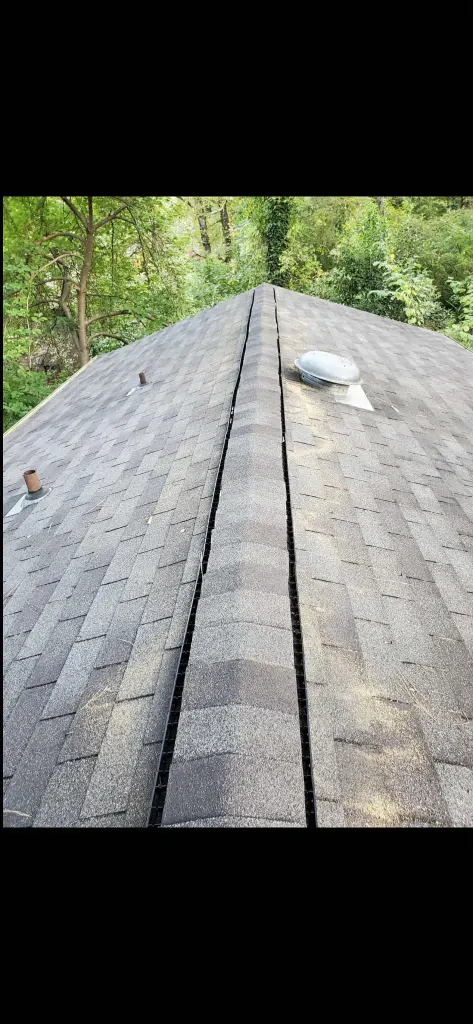
Each opening in the roof has a seal, and these are small parts doing a long job. The rubber collar on a plumbing vent commonly cracks years before the shingles wear out. Metal vents and roof fans get dented by hail or rust at the seams, and exposed nails on their flanges back out over time. Replacing a boot or vent is often quick, and it is one of the more clear-cut repairs in roofing.
Be careful with flues from gas furnaces and water heaters. Do not disturb those pipes. If one has been knocked loose or a roofer has moved it, have a licensed HVAC contractor check it. If you ever smell gas, leave the house and call the gas utility or 911.
Repair the Detail or Replace the Roof?
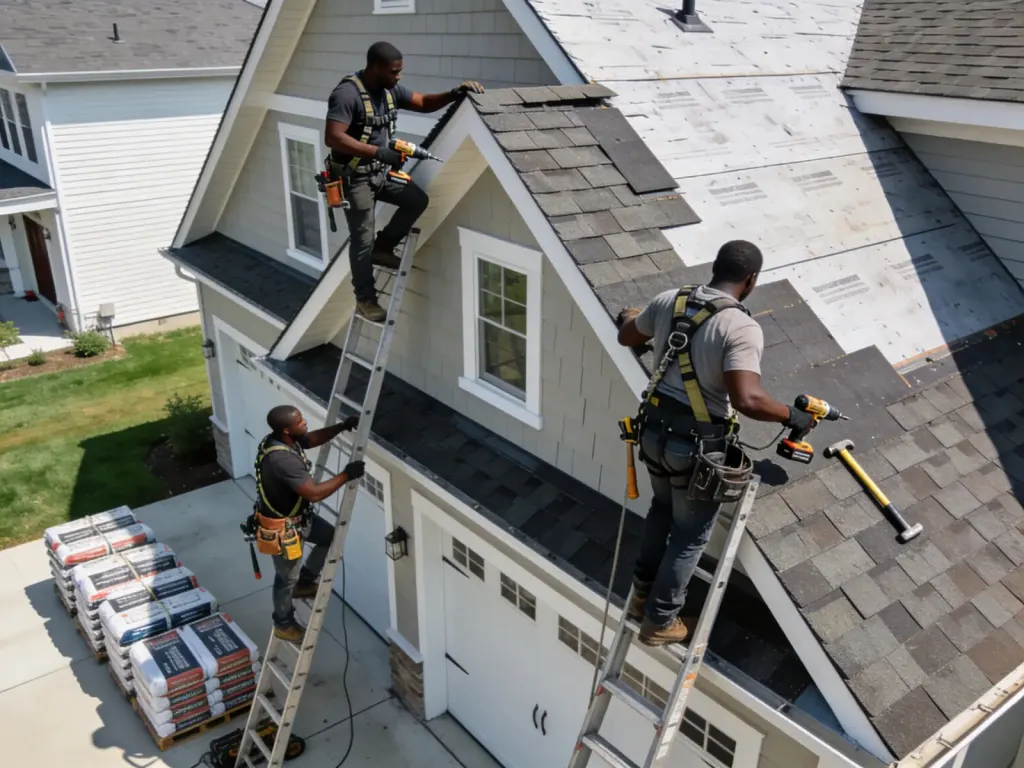
Flashing can be repaired on its own when the surrounding shingles are flexible enough to lift and relay. If they crack when they are lifted, the repair starts growing. Also weigh how many details are failing. One bad boot is a repair. Worn valleys, tired step flashing and cracked boots all at once suggest a roof that has reached the same age everywhere, and our roofing overview can help you weigh that decision.
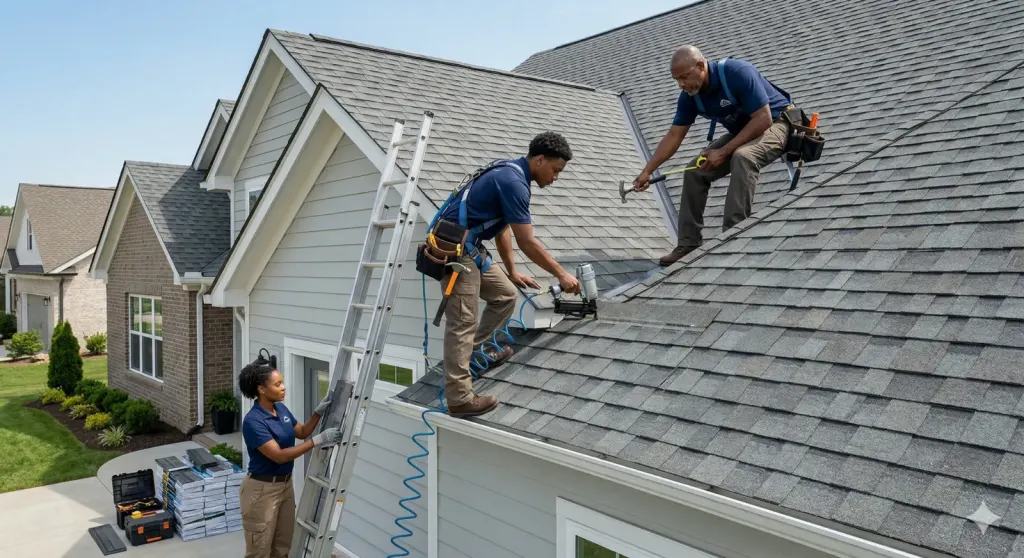
Cost and time depend on how much surrounding roof must come up, roof height and steepness, whether wood underneath has rotted, whether masonry or siding has to be opened, and whether your shingle is still available.
What to Ask a Roofer About Flashing
- Will you replace the metal, or only seal over it? Sealant alone rarely lasts as a permanent fix
- Will the step flashing be individual pieces, and will the counterflashing be cut into the mortar?
- Will you put in a kickout where the roof ends at a wall?
- Can I see before and after photos of the hidden parts?
- If a chimney or siding has to be opened, who repairs it?
Twelve25 Construction is licensed and insured and provides a detailed scope of work and clear pricing before work starts, so you can see exactly which details are included.
Flashing FAQs
What is roof flashing?
Thin metal or rubber pieces that direct water away from joints and openings, such as walls, chimneys, valleys and vents. Shingles alone cannot seal those spots.
Can flashing just be caulked?
As a short-term measure, sometimes. Sealant dries and cracks with sun and movement, so it should not be the final repair where metal has failed or was never installed.
Is old flashing reused when a roof is replaced?
Sometimes, and it is a common shortcut. Ask about it directly, since worn metal may not last as long as the new shingles around it. Ask for it to be spelled out in the scope.
Can flashing be repaired without replacing the whole roof?
Usually yes, if the shingles around it are in decent shape. The job covers only the affected area, plus enough surrounding material to lap everything correctly.
How do I know flashing is the problem and not the shingles?
Stains close to a chimney, wall, valley or vent are strong hints. To confirm it, someone needs to inspect it from the roof, and the attic underneath it if that can be reached.
Serving Nashville, TN
We provide roof repair in Nashville, TN and nearby communities such as Franklin, Brentwood, Hendersonville, Murfreesboro and Mount Juliet. See all of the areas we serve or call (615) 478-5705.

Let’s Build Something Great Together.
Ready to start your next construction or remodeling project? Tell us about your space and request a free estimate.