
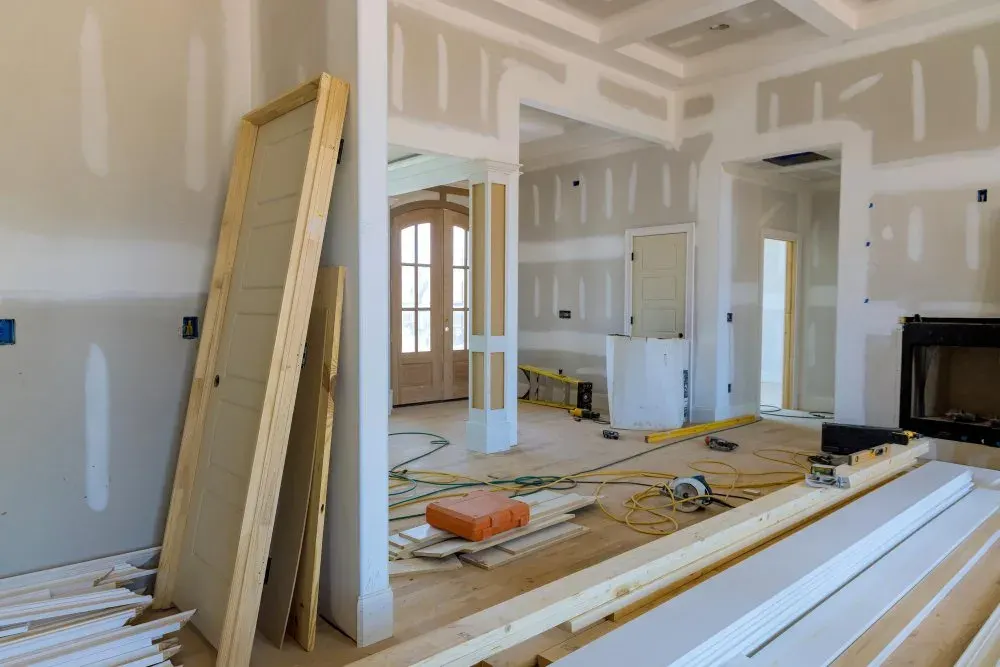
Cracks, pops, stains and patches
Drywall Repair in Senoia, GA: What Your Walls Are Saying
Nearly every home in this Coweta County city is a detached, owner-occupied house, and most are young. Marks on the walls usually have ordinary causes, but a few deserve a closer look.
Senoia at a Glance
- Location
- 32.0 miles south of central Atlanta (straight line)
- County
- Coweta County
- Population (2023 estimate)
- 5,929
- Housing units
- 1,985
- Median year homes were built
- 2005
- Owner-occupied homes
- 96%
- Detached single-family homes
- 100%
- Built before 1970
- 10%
- Built 2010 or later
- 27%
Sources: US Census Bureau 2023 Gazetteer, Vintage 2023 population estimates, and American Community Survey 2023 5-year estimates for the place. County is taken at the place’s center point; some communities extend into other counties.

Two towns under one name
Senoia has a long past and a great many new houses. A general history summary dates its first permanent settlement to 1860 and its incorporation to December 1866. That same summary notes that film and television have brought a good deal of attention to its downtown, including The Walking Dead, whose production moved to nearby Riverwood Studios after its first season.
The housing numbers tell the second half of the story. Of about 1,985 units, 54% were built between 1990 and 2009 and another 27% in 2010 or later. The median year is 2005. Only about 8% date from 1970 to 1989, and about 10% are older than that, split evenly between the 1950 to 1969 period and homes from before 1950. Census figures show essentially all units as detached single-family, and about 96% as owner-occupied.
So most searches for drywall repair Senoia GA come from people in fairly recent houses, with gypsum board walls and a set of very predictable marks. A smaller group lives in much older homes where the wall may not be drywall at all, and where the rules of the job are quite different. This page takes them one at a time.
A field guide to the common marks
Most wall trouble in a house from the last 35 years looks alarming and turns out to be routine. Wood framing dries and moves, fasteners shift, and paint shows it. Use these as a first read, not a diagnosis.
Small round bumps in a line
Nail pops. A fastener has backed out slightly as the framing dried or moved, and the compound over it has lifted. Common in younger homes. The repair is to re-secure the board, fill and repaint.
Hairline cracks from door and window corners
These corners concentrate movement in a wall. A thin diagonal crack is usually cosmetic. Re-taping gives a longer-lasting fix than smearing filler over the top.
A long straight line or peeling tape
A joint has let go, often in a place that has taken on humidity, such as a bathroom ceiling. Loose tape must come off and be redone, or it will return.
A brown ring on the ceiling
Water has reached that board from above: a roof leak, a bath, a condensation line from an attic air handler. Find the source first, because patching a live leak is wasted effort.
A doorknob-sized hole
Usually impact. A proper patch with backing, tape and feathered compound, followed by matching the wall texture, can hide this well. Fitting a door stop afterward keeps it from happening again.
Cracks wider than a pencil line, and growing
Cracks that keep widening, or that come with doors going out of square or gaps opening at the floor, are not a drywall matter. Have the structure looked at before anyone patches anything.
Marking a crack with a pencil and a date is a simple and useful test. If the line has not changed over a few months, it may simply be seasonal. Note it down with a photo, and that record helps anyone you bring in later.
Moisture comes first
A patch over a damp spot does not last, and it can hide something worse. The EPA’s mold and moisture guide points out that mold may grow on the back side of drywall, particularly where pipes leak or condense inside walls, and that opening up hidden mold can release many spores. If a wall smells musty or a stain keeps coming back, track down the water with our plumbing help or a roof leak check before ordering any repairs. A board that has stayed wet or gone soft generally needs to be cut out and replaced rather than sealed over.
Matching a patch in a newer house
The hardest part of a good drywall repair is making it vanish. Three things tend to give a patch away, and all three are worth raising before work begins.
- Texture. Many walls and ceilings have some kind of texture, and spot-matching it takes practice. Skim coating an entire wall can sometimes look better than chasing a single patch.
- Sheen. Flat, eggshell and semi-gloss paints reflect light differently, and an old wall has usually faded a bit. New paint on a patch can show even when the color code is right.
- Light. A window or a low-angle lamp across a wall shows every ridge. Check repairs in the light you actually live with, at the time of day you notice them.
For that reason, it often makes sense to paint a whole wall, corner to corner, rather than a small square. Interior painting and drywall work can be scoped together, so the patch and the paint are planned as one job. If you are going to be changing rooms anyway, for instance turning a bonus room into something else or remodeling a bath, do the wall repairs as part of that project rather than twice. Our bathroom remodeling page covers that sort of work, where water-resistant board and proper ventilation matter more than in other rooms.
Patch or replace the sheet?
Small damage almost always gets a patch. A larger section may be better cut back to the nearest studs and replaced, particularly in these situations: the paper face has torn over a wide area, the board has sagged between ceiling joists, a section has stayed wet, or several old repairs overlap and telegraph through the paint. Ceilings deserve extra care, because they hold more weight and show flaws in overhead light. Garage walls and ceilings may have fire-rated board where they meet living space, so tell whoever is doing the work if a patch is in that area, and replace it with a like product.
What to have ready when you ask for a price
- Photos of each spot, one close up and one from across the room, with something in the frame for scale
- The year the house was built, and whether any walls have been changed since
- Whether a stain is dry and old, or has grown since you first saw it
- What the room’s paint is, if you still have the can or its label
- Any plan to change lighting or wall color soon, since either one changes how much finish work is sensible
Older walls, and why they call for a slower start
About one in ten homes here predates 1970, and about one in twenty predates 1950. For those, slow down before cutting into anything. Three separate things can be hiding in or on the wall.
Find out what the wall is
A home from this period may have plaster over wood lath rather than gypsum board. Knock and look at an outlet edge or an attic side. Plaster repairs use different methods and skills, and in many older houses it is worth keeping where it can be stabilized.
Think about lead
The EPA estimates the chance of lead paint at about 24% for homes built from 1960 to 1977, 69% for 1940 to 1959 and 87% for those built before 1940. Under the EPA’s renovation rule, paid workers who disturb paint in pre-1978 homes have to follow lead-safe practices. Sanding is the concern, since dust spreads.
Think about asbestos
The EPA’s overview of asbestos lists textured paint and patching compounds among the products where it may be found. It is generally a hazard when disturbed. If you have an old textured ceiling and plan to scrape it, have it tested first.
Then ask about the district
Senoia has a Historic Preservation Commission that reviews certificates of appropriateness. Ask city staff whether your address is covered and what work counts. Interior patching may never come up, but a window or wall change might.
None of this is meant to scare anyone off an old house. It simply means a quote for a repair in a 1940s home should begin with some questions, where a repair in a 2010 home can begin with a tube of compound.
Permits and paperwork for wall work
A small patch is unlikely to raise a permit question in most places, but we would rather you hear it from the city than from us. Published permit guidance says permits run through the Building and Zoning Department at City Hall, 80 Main Street, using a CommunityCore portal, and that residential alteration permits are on the list. It says plans are required above a stated valuation unless the city waives them for certain work. Ask the city which work is exempt. The city’s own building page blocked our attempt to read it, so call to confirm any of this.
It becomes a real question when wall work is part of something bigger: moving a wall, adding a door, changing wiring or plumbing behind the board, or finishing off a new room. Before calling, write down what is being removed and what is going back. A clear description gets a clearer answer.
Outside the city limits, ask Coweta County instead, and just up the road Peachtree City, in Fayette County, runs a separate office with its own requirements. We serve Senoia for repairs of this size and for larger custom renovations. If you would like a second opinion on a crack, you can request a free estimate and send a few photos with a coin or ruler for scale.
Sources for Local Facts
- Wikipedia: Senoia, Georgia (general history)
- EPA: A Brief Guide to Mold, Moisture and Your Home
- EPA: Sources of Lead
- EPA: Renovation, Repair and Painting Program
- EPA: Learn About Asbestos
- City of Senoia: Certificate of Appropriateness
- Jaspector: Senoia, GA building permit guide (third party)
- City of Senoia: Building and Zoning

Let’s Build Something Great Together.
Ready to start your next construction or remodeling project? Tell us about your space and request a free estimate.