
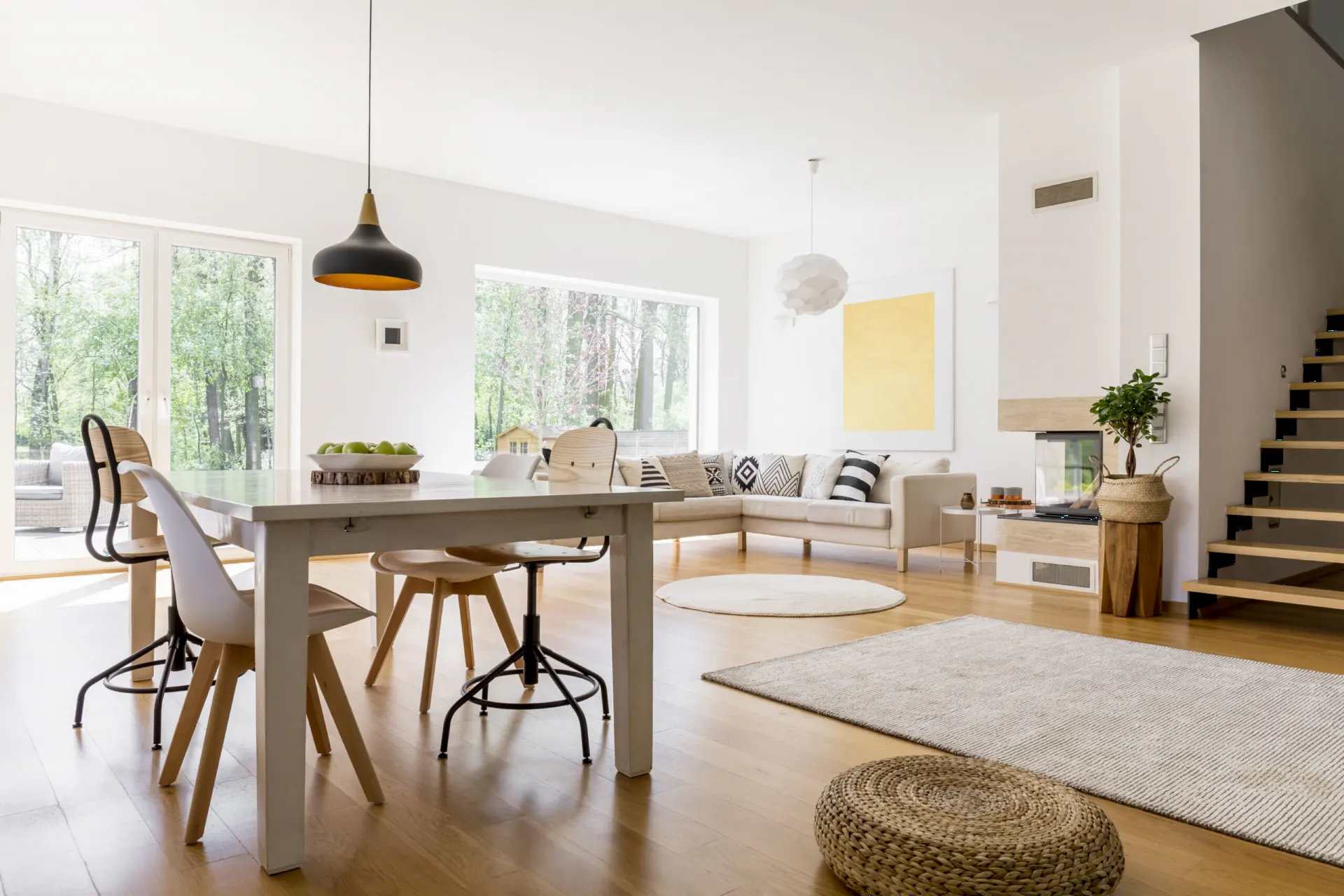
The first major update on a 1990s house
Home Remodeling in Stockbridge, GA
Nearly two-thirds of homes here were built in a single 20-year stretch. Those houses have now reached the age when finishes tire and floor plans feel dated, and this is how to plan a remodel around that.
Stockbridge at a Glance
- Location
- 17.5 miles southeast of central Atlanta (straight line)
- County
- Henry County
- Population (2023 estimate)
- 35,452
- Housing units
- 14,990
- Median year homes were built
- 1998
- Owner-occupied homes
- 54%
- Detached single-family homes
- 65%
- Built before 1970
- 5%
- Built 2010 or later
- 13%
Sources: US Census Bureau 2023 Gazetteer, Vintage 2023 population estimates, and American Community Survey 2023 5-year estimates for the place. County is taken at the place’s center point; some communities extend into other counties.

One 20-year window built most of this city
Stockbridge has an old name and young houses. A general history traces a post office to 1847 and a railroad depot to the 1880s, and it records 3,359 residents in 1990, 9,853 in 2000 and 25,636 in 2010. The Census figures on housing point the same way. Of about 14,990 units, 64% were built between 1990 and 2009. Another 19% date from 1970 to 1989, 13% from 2010 or later, and only about 5% before 1970. The median year is 1998.
So a typical home here is somewhere between 17 and 36 years old. That is a particular moment in a house’s life. It is rarely falling apart, and it was built with broadly modern wiring and plumbing. But cabinets, countertops, tubs, tile and fixtures are probably original or on a first replacement, and the layout reflects what builders were selling at the time. For people pricing home remodeling Stockbridge GA, the real question is usually not what is broken. It is what to change, in what order, and how far to go.
Where a house of this age usually asks for attention
Kitchen
Tired cabinets, worn laminate tops and a wall between kitchen and family room are common complaints in houses of this age. Check whether cabinet boxes are sound, since refacing or repainting can be enough. Our kitchen remodeling page and the Atlanta-area kitchen page go deeper.
Primary bath
A large tub that rarely gets used beside a small shower is a frequent target. Before tearing out, look for soft subfloor near the tub and the toilet. A bathroom remodel usually finds any hidden leak.
Flooring
Original carpet and sheet vinyl may have been replaced in patches. Running a single hard surface floor through the main level can tie a home together and show off new work.
Roof and exterior
A house from the 1990s or 2000s may be due for a first or second roof. If a new roof is coming, consider doing it ahead of interior work. Our roofing services and siding work cover that.
Mechanical systems
Water heaters, condensers and furnaces from this period are often near the end of their lives. It makes little sense to finish a beautiful room and then cut into it for ductwork a year later. See our HVAC page.
Bonus space
Unfinished attic rooms, or a rarely used formal dining room, can sometimes become an office or a bedroom without any change to the footprint. Ask about this before you assume an addition is necessary.
Those built from 1970 to 1989, about one home in five, may need a little more behind the walls. Older electrical panels, galvanized pipe, aluminum wiring and thin insulation can show up in that age range, and homes from before 1978 may have lead paint, which brings the EPA’s renovation rule into any paid work that disturbs it. Budget some reserve for what you find once a wall is open.
Before settling on a list, it helps to ask how long you plan to stay. Someone expecting to sell within a few years may want to refresh paint, floors and fixtures and stop there. Someone staying for fifteen years can reasonably move walls and spend more on the rooms they use daily. Neither is wrong, but the two plans look very different on paper.
An order of work that avoids doing things twice
A remodel goes better when it runs from the outside in and from the top down. Here is a general order. Your house may call for changes to it.
Stop water first
Fix roof leaks, clear gutters and regrade soil that slopes toward the house. New finishes do not tolerate moisture any better than old ones.
Then fix the systems
Decide on panel, plumbing and heating and cooling work while walls can still be opened. A plumbing upgrade costs far less during a demolition than after it.
Make layout decisions
Removing a wall is a structural question as well as a design one. Get that answered, and permit drawings ready, before choosing tile.
Order long-lead materials
Cabinets, windows and special tile can take a while to arrive. Having them on hand before demolition keeps your kitchen out of service for less time.
Rough-in, inspect, close up
Trades run, inspectors check, and only then does drywall go up. Skipping an inspection can mean opening finished walls again.
Finish from the ceiling down
Paint before flooring where possible, and fixtures last. Our interior painting and flooring work fit in at this stage.
If you can only afford part of this, do it in phases, and ask your contractor to leave things ready for the next one, for example by installing plumbing for a future bath. On our side, you get a written scope and clear pricing first, and a project manager to coordinate the moving parts. Our home remodeling page gives a broader look at what falls under that heading.
City rules that come into play on additions
Interior work rarely runs into land rules, but anything that adds footprint can. The city’s Unified Development Code has several provisions worth knowing. Treat these as questions to raise, not as final answers, since the city’s current text controls.
- Stream buffers. The code calls for an undisturbed natural buffer of 50 feet from the top of the stream bank on both sides, plus a further 25-foot setback where impervious cover is prohibited.
- Floodplain. It defines the regulatory flood as land with at least a 1% annual chance of flooding, and it has its own permit procedures. You can check your address at FEMA’s Flood Map Service Center.
- Stormwater fee. Single-family parcels pay according to a tier based on parcel size, with one billing unit defined as 2,000 square feet of impervious area. Amounts may change, so check your current bill.
- Private ponds and systems. The code says maintenance of private stormwater facilities stays with the property owner or the HOA. Find out who owns the pond behind your lot before you plan a patio that drains toward it.
The code’s chapter on procedures says permits are issued only for platted and recorded lots and not for lots described only by metes and bounds. If you have an older parcel, that is worth checking early. It also notes that grading without the proper erosion plan and permit is a violation, and that the fee doubles if grading began first. Finally, published permit guidance says permits run through the Community Development Department at 4602 North Henry Boulevard using an online portal, and that city notices attach added impact fee requirements to new construction and to additions over 1,000 square feet. The city’s website showed us only a title when we tried to read it, so please confirm all of this with that office.
If an addition looks costly once those are counted, finishing existing space or a lower-level finish may be a better route.
Storm repairs can become remodels
Henry County has seen damaging tornadoes recently. According to WGXA, citing the National Weather Service, a preliminary EF2 rating with estimated peak winds of 135 mph was given to a tornado on May 29, 2025, on a path of about 1.82 miles from near Bethlehem Road across Interstate 75 toward Highway 42. Homes on Fresh Laurel Lane lost siding and shingles and in some cases walls and roofs, and one was destroyed. FOX 5 reported an EF-1 tornado in north central Henry County on March 31, 2025. Neither report places damage within Stockbridge city limits. They are here as a reminder of the county’s exposure.
Further back, the National Weather Service surveyed an F1 tornado in Henry County on January 2, 2006, with trees falling on houses along Lake Haven Parkway and Turner Circle. That is a useful pattern to think about: much of what hurts a house in these events is a tree. If a large one stands within reach of your roof, have it looked at before you put money into a new kitchen below it.
If storm damage is the reason you are reading this, a claim sometimes opens the door to a wider project. Keep the insured repairs and any elective upgrades clearly separated in your paperwork, and photograph everything before work begins. We can write those up as distinct items in a scope, so that your adjuster and your budget each see what they need to see.
Rented, attached, or detached: three different remodels
Only about 54% of occupied units here are owner-occupied, and about 65% are detached. That leaves many rentals and attached homes, and the sensible scope is different for each.
An owner-occupant may reasonably spend on comfort and layout, thinking mainly about their own use of the space. A landlord usually does better with durable finishes, standard sizes, and repairs that make turnovers quicker; our handyman services may handle much of that. A townhome owner should read association documents before changing anything visible from outside, and check how shared walls affect plumbing and sound.
A commercial owner along the main corridors is in a separate category altogether, and our commercial construction page covers that kind of build-out. Wherever you fall, you can request a free estimate for a single room or a whole floor. We serve Stockbridge along with McDonough and Morrow, and each city there has its own office and rules.
Sources for Local Facts
- Wikipedia: Stockbridge, Georgia (general history)
- EPA: Renovation, Repair and Painting Program
- Stockbridge Unified Development Code, chapter 15 (third-party copy)
- Stockbridge Unified Development Code, chapter 8 (third-party copy)
- FEMA Flood Map Service Center
- Jaspector: Stockbridge, GA building permit guide (third party)
- WGXA: Henry County tornado report, May 2025
- FOX 5 Atlanta: Storm coverage, March 31, 2025
- National Weather Service: Henry County tornado, January 2, 2006
Let’s Build Something Great Together.
Ready to start your next construction or remodeling project? Tell us about your space and request a free estimate.