Original equipment, first decisions
HVAC Services Thompson’s Station TN Homes Will Need as First Systems Age
In a town where the median home dates to 2013, a lot of heating and cooling equipment is about to cross the age when it deserves a closer look. Here's how to think about that, and about the rest of a young house.
Thompson's Station at a Glance
- Location
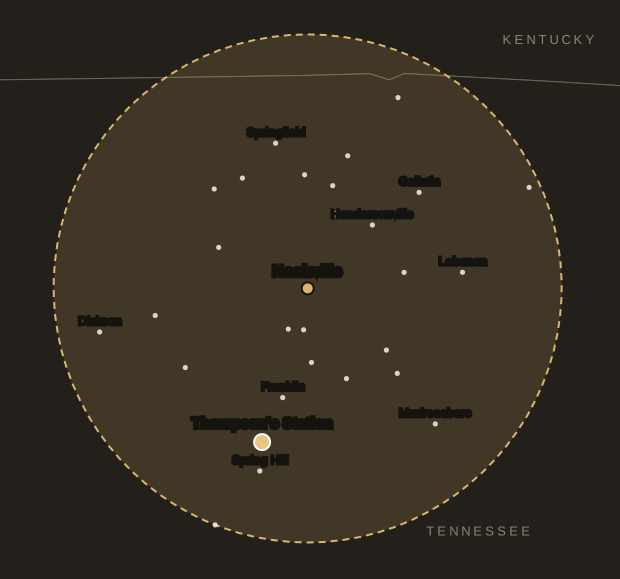
- 25.2 miles south of central Nashville (straight line)
- County
- Williamson County
- Population (2023 estimate)
- 8,580
- Housing units
- 2,743
- Median year homes were built
- 2013
- Owner-occupied homes
- 78%
- Detached single-family homes
- 68%
- Built before 1970
- 2%
- Built 2010 or later
- 67%
Sources: US Census Bureau 2023 Gazetteer, Vintage 2023 population estimates, and American Community Survey 2023 5-year estimates for the place. County is taken at the place’s center point; some communities extend into other counties.
Why the air handler comes up before the kitchen
Thompson’s Station has about 8,600 residents and 2,700 housing units, and 67% of those units were built in 2010 or later. Another 17% date from 1990 to 2009, 14% from 1970 to 1989, and 2% from before 1950. Nothing about the finishes in most of these homes is failing yet. The mechanical systems are a different story, because equipment ages on its own clock regardless of how fresh the paint looks.
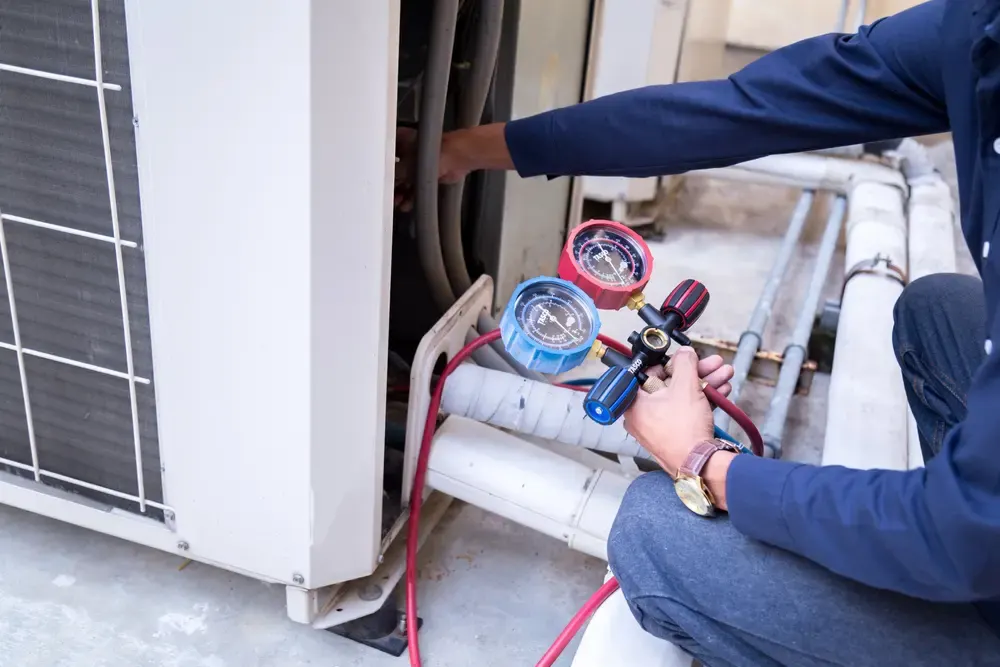
ENERGY STAR recommends having heating and cooling equipment evaluated by a professional once it’s more than 10 years old, or sooner if the house isn’t staying comfortable. A home finished in 2013 passed that line a few years ago. A house from 2018 will get there soon. That doesn’t mean anyone should replace a unit that’s running well; it means the question should be asked deliberately, before a breakdown forces the choice in the middle of a heat wave.
If you’re looking for HVAC services Thompson’s Station TN homeowners can use to plan ahead, this page lays out what’s reasonable to check on your own and what to hand off. Our HVAC services cover the rest.
Reading your system by its age
Find the install date
Look at the data plates on the outdoor unit and the indoor air handler or furnace. Manufacturers often encode the date in the serial number. If you can’t decode it, a photo of the plate is enough to ask about.
Do the monthly chore
ENERGY STAR’s maintenance checklist says to inspect, clean or change air filters about once a month. It costs little and it’s the one item nearly every owner can handle.
Look at the condensate drain
The same checklist flags this line. A clog can cause water damage and affect indoor humidity. If your air handler sits in an attic or above a finished room, a plugged drain could ruin a ceiling, so learn where it is.
Book seasonal check-ups
ENERGY STAR suggests a pre-season contractor check each year: cooling in spring, heating in fall. Keep the service records with the house, because they’ll be useful when replacement comes up.
Fix leaks before buying bigger
Ducts running through an attic, crawlspace or garage can lose conditioned air. ENERGY STAR says to seal those first with mastic or metal-backed tape, then insulate them, and notes that sealing can improve efficiency by as much as 20 percent. Uneven rooms can be a duct problem, and new equipment won’t cure that.
One more point about comfort complaints in newer houses: a second floor that won’t cool or a bonus room that stays stuffy isn’t necessarily a sign of a worn system. It may be a question of duct layout or insulation, and it’s worth having someone look before you decide what to replace.
Repair or replace? Questions to bring to the conversation
A technician’s recommendation is easier to weigh when you’ve thought about these beforehand. None of them has one right answer, and a straight answer about your own equipment should come with a reason attached.
- How old is the system, and is this its first major failure or the third one in two summers?
- Is the problem a part, or is the part a symptom of something else, such as low airflow from a clogged filter or a leaking duct?
- Are the indoor and outdoor units the same age? In a house that has had only one half replaced, matching them may affect the choice.
- Would the house need the same capacity today? Added insulation, new windows or a finished room can each change what’s needed, so ask how sizing was determined instead of assuming the old number still holds.
- Where’s the air handler, and what would a leak there damage? An attic installation above a finished ceiling may justify more caution than one in a garage.
- How long do you plan to stay? That can reasonably tilt a decision between a repair now and new equipment.
Projects that change the heating and cooling load
Remodels and HVAC are tied together more often than owners expect. A finished lower level, a converted attic, a sunroom or a new addition adds space the original system was never asked to serve. Extending ducts onto an existing unit might work, or it might leave every room a little worse off. Raise the question during design, when moving a register or adding a separate zone costs far less than it would after the drywall is up. Water heating belongs in the same talk: plumbing work such as a new bath or a relocated heater can overlap with mechanical space, and in a compact townhome, closets don’t have much room to spare.
Townhomes and shared walls
Only 68% of Thompson’s Station’s units are detached houses, and owners occupy 78% of homes. That means a sizable share of attached or multi-unit housing. Attached homes change the HVAC and remodel conversation in practical ways:
- Outdoor units may sit in shared or tightly spaced areas, so swapping one for a differently sized unit can raise placement questions an association wants to weigh in on.
- Roofs, siding and exterior walls may belong to or be managed by an association, which changes who decides and who pays for roofing work or exterior repairs.
- A shared wall limits where new ducts or plumbing can go, which affects a bathroom rework more than you’d expect.
- Noise and odors travel differently, so bath and kitchen ventilation matter. EPA advises running a fan or opening a window while showering.
Read your association documents first, and ask for anything that requires approval in writing.
How the town handles permits
The Town of Thompson’s Station has its own Building and Codes Department under Community Development, which reviews permit requests and conducts inspections. Applications run through GeoCivix, the town’s electronic plan review system, and inspection requests go through it too. A few things stand out from the town’s pages:
Broad definition
The Permit Applications page says a building permit is required to construct, alter, repair, enlarge, move, renovate or demolish a building or structure, and that staff use the 2021 IRC. It lists fence, pool and minor improvement permits for items such as decks, sheds and retaining walls.
Two sign-offs
A permit isn’t issued until both the Town Planner and the Building Codes Official have signed off. So land use questions and building questions both need answers.
Other inspectors
Per the department’s page, the State handles electrical inspections and the County handles septic. A project that touches either involves an agency beyond the town.
Working hours
The Community Development page gives construction hours as 7 a.m. to 6 p.m., Monday through Saturday, with none on Sundays or code-regulated holidays.
The town’s pages don’t say specifically which HVAC changes need a permit, so don’t assume either way. Ask the permit technician at the town office about your exact job, such as a like-for-like swap versus new ductwork.
Boundaries need checking as well. The same page warns that the 37179 ZIP code extends into the City of Spring Hill, and that some addresses with Thompson’s Station or Franklin mailing labels lie in other cities. If you’re unsure, confirm the jurisdiction before you submit. Neighboring Spring Hill runs its own separate process. So does Franklin.
An old name on a new town
Most of the houses here are recent, but the place isn’t. The Battle of Thompson’s Station was fought on March 5, 1863, ending in a Confederate victory after a Union brigade was surrounded. The town’s general information page points to its own history section, with material on the battle and on rebuilding the depot.
For owners, the older buildings raise specific concerns. Homes from before 1978 fall under EPA’s lead-safe rule for paid work that disturbs paint, and that can include cutting into walls to run new ducts. If your home is part of the 14% from the 1970s and 1980s or the small pre-1950 group, tell any contractor the build year up front.
Water, septic and radon
The USGS keeps a stream gauge on the West Harpeth River near town, on a drainage area of only about 36 square kilometers, which suggests how close this area is to the top of that stream system. Small streams can respond quickly to heavy rain, so look up your parcel using FEMA’s flood map resources before planning an addition or finished lower level.
The town lists a Wastewater department, while the County inspects septic. Which of those applies to you matters if you’re adding a bedroom or a bath, so find out early; septic capacity can limit a plan, and only the proper office can answer. That goes for additions and finished basements alike.
Williamson County is shown in Zone 1 on EPA’s radon map, and EPA says every home should be tested regardless of zone. HVAC and tighter newer construction both affect how air moves through a house, so testing fits naturally alongside any system change.
We serve Thompson’s Station for HVAC, remodeling and smaller repairs, with free estimates. Tell us the age of your system and what isn’t working right, and we can talk through what makes sense. Start at our estimate request page.
Sources for Local Facts
- Town of Thompson’s Station: Building and Codes
- Town of Thompson’s Station: Permit Applications
- Town of Thompson’s Station: Community Development
- Town of Thompson’s Station: General Town Information
- ENERGY STAR: Heat and Cool Efficiently
- ENERGY STAR: Maintenance Checklist
- USGS gauge record: West Harpeth River near Thompson Station, TN
- Wikipedia: Battle of Thompson’s Station
- EPA: A Brief Guide to Mold, Moisture and Your Home
- EPA: Renovation, Repair and Painting Program
- EPA: Map of Radon Zones, Tennessee
- FEMA: Flood Maps

Let’s Build Something Great Together.
Ready to start your next construction or remodeling project? Tell us about your space and request a free estimate.