
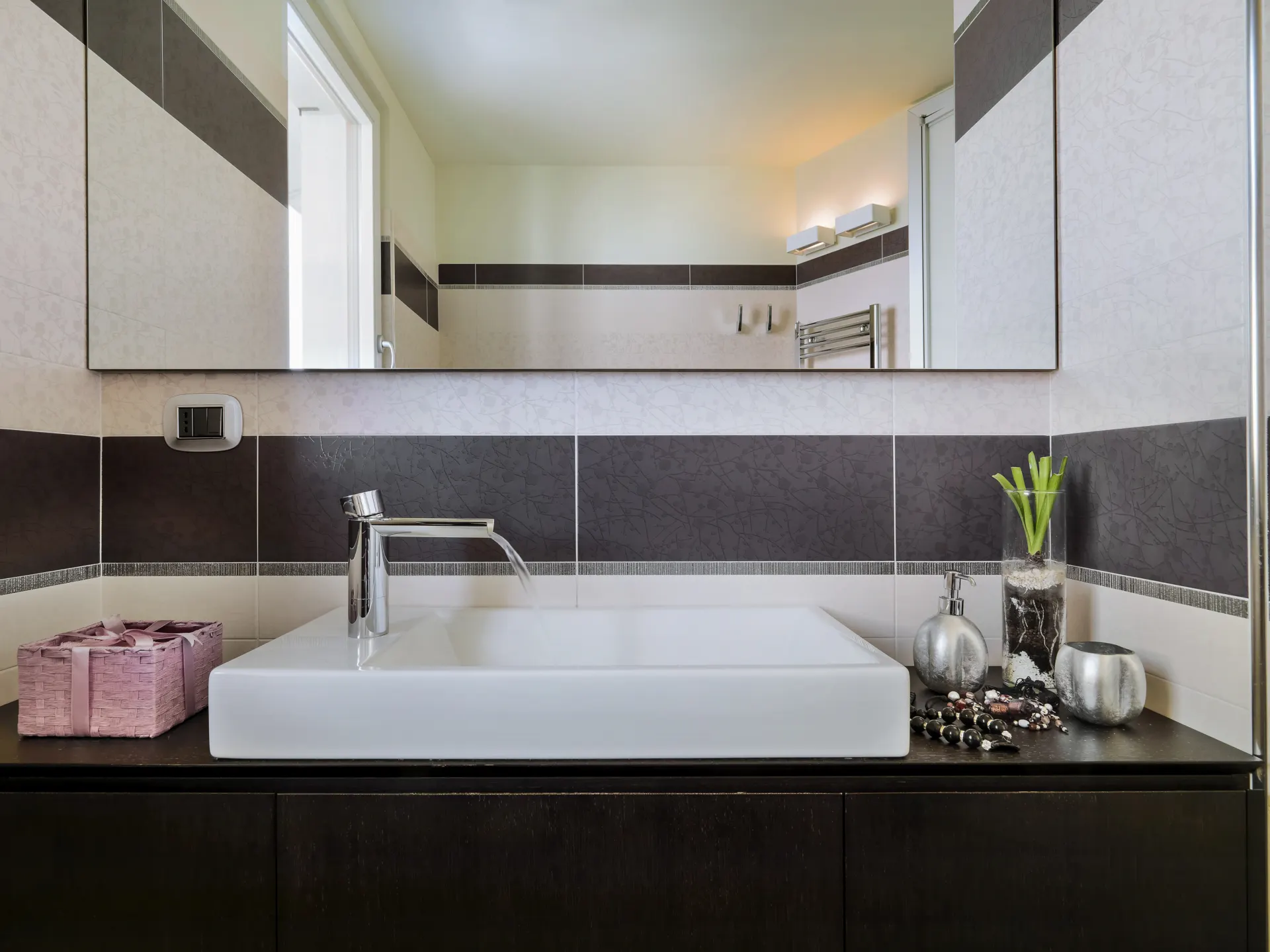
The first real bath update
Bathroom Remodeling in Alpharetta, GA Homes of the 1990s
More than half of Alpharetta's homes went up between 1990 and 2009, so many of their bathrooms are reaching the age when original parts start to wear out together. We serve the city with bathroom remodels, from a single shower to a full primary suite.
Alpharetta at a Glance
- Location
- 23.2 miles north of central Atlanta (straight line)
- County
- Fulton County
- Population (2023 estimate)
- 67,056
- Housing units
- 25,994
- Median year homes were built
- 1996
- Owner-occupied homes
- 68%
- Detached single-family homes
- 57%
- Built before 1970
- 4%
- Built 2010 or later
- 16%
Sources: US Census Bureau 2023 Gazetteer, Vintage 2023 population estimates, and American Community Survey 2023 5-year estimates for the place. County is taken at the place’s center point; some communities extend into other counties.

A boom that aged all at once
Census counts tell Alpharetta’s story in a few numbers. The city, chartered in 1858, had a population of 3,128 in 1980, 13,002 in 1990 and 34,854 in 2000. Today’s estimate is about 67,000. Housing data shows the same surge: about 56% of homes date from 1990 to 2009, and the median year built is 1996. Another 25% were built from 1970 to 1989, and just 4% are older than that. The newest group, from 2010 onward, makes up 16%.
When so many houses are built within a span of 20 years, they tend to need the same work around the same time. A bathroom finished in 1998 has had close to three decades of daily showers. Its caulk has been redone a few times, if it has been done at all. Its fan is likely original. Its tile and vanity might be sound yet dated, and the valve inside the wall has never been opened.
That is a different situation from the much older homes elsewhere in metro Atlanta. Only about 4% of Alpharetta’s homes predate 1970, so most remodels here will not begin with very old drains or wiring. A 1990s bath more often fails through water getting past a tired seal. So the remodel decision here usually comes down to whether the room still has good bones and how much hidden wear you want to deal with while the walls are open.
Signs an original bath has run its course
A worn bathroom gives plenty of warning, and most signs can be checked in one visit with a flashlight:
- Grout that stays dark or crumbles at the shower curb and lower wall courses, where water sits longest
- A soft spot in the shower floor, or a tile that moves under your foot
- Staining on the ceiling below an upstairs bath, especially directly under the shower or the tub overflow
- A jetted or large soaking tub that nobody uses, whose access panel or pump has never been checked
- Mold on the ceiling or at the top of the walls, often a sign the fan is too weak or too rarely used
- Swelling at the bottom of a vanity cabinet, or laminate lifting near the sink
- A shower valve that scalds or chills someone when a toilet flushes elsewhere in the house
- A toilet that rocks, which can mean a failed wax ring or a subfloor beginning to soften
Any one of these can be a repair. Several at once usually point to a remodel. Two or more of the water-related ones suggest that someone should look behind the finish rather than simply replace it. A shower pan that has leaked for years can damage framing below it, and the extent of that damage is only clear once the tile comes off, so it is sensible to leave a contingency in the plan.
What is worth changing, and what is worth keeping
An upgrade to a bathroom from this era usually falls into one of three sizes. Which one fits depends on the condition of the room and on how long you plan to stay in the house.
Refresh
New vanity top, faucets, lighting, mirror, fan and paint, with the existing tile kept and re-grouted. This suits a sound room with a dated look. No wet-wall work means less disruption, though older valves stay in place.
Shower-focused
Remove a tub or old stall, rebuild the pan and waterproofing, and install a new valve with temperature balance. This is the job many owners of two-story homes consider when an upstairs stall has begun to leak. Much of the value sits in what you will never see.
Full gut
Everything down to studs and subfloor, which is the time to rethink layout, add a linen closet, widen a door, relocate a toilet or add blocking for grab bars. It takes the longest and calls for a second usable bathroom during the work.
If a house has a big, rarely used corner tub, many owners ask about removing it for a larger shower. There is no single right answer, because a primary bath is one piece of how buyers later view a house, and resale opinions differ. Consider keeping one tub somewhere in the home, particularly if you have young children or expect to sell soon. Also check the room’s floor structure if you are thinking about a heavy stone tub or a large steam shower.
Questions to ask about the waterproofing
Tile is not the waterproof layer in a shower. Tile and grout let some moisture through, and what stops it is the pan and wall system underneath. Since a rebuilt shower is the most common reason for opening up a bath of this age, this is where a proposal deserves the most scrutiny. Ask which waterproofing method will be used on the floor, the walls and the niche. Ask how the curb and the bench are handled, as those corners are frequent trouble spots. Ask whether the pan will be tested for leaks before the tile goes in, and whether you can see it. Ask where the drain connects to the membrane. A clear, specific answer to those questions tells you more about the finished room than a tile sample does.
Planning for the next few decades
Many owners of 1990s houses have now lived in them for a long time, and some would like to stay on. A remodel is the cheapest moment to prepare a bath for that, because the extras are mostly hidden and take little effort while the studs are exposed. Solid blocking in the shower and beside the toilet lets a grab bar be added later without tearing out tile. A low or zero-threshold shower entry is easier to step over, though a curbless floor needs careful framing and drainage. Wider doors, lever handles, better lighting at the mirror and a slip-resistant floor all help without making the room look clinical. If a parent may move in, think about whether a downstairs powder room could become a full bath, since that may matter more than anything done upstairs.
Water use and air movement
Depending on age and model, an original fixture may use more water than today’s labeled options, and a remodel makes the change simple. The EPA’s WaterSense program says standard showerheads use 2.5 gallons per minute, while labeled models use no more than 2.0. Its statistics page also estimates that replacing old toilets with WaterSense models can save an average family about 13,000 gallons of water a year. Your results depend on the fixtures you are replacing and on how your household uses them.
Moisture matters just as much. The EPA’s mold and moisture guide recommends keeping relative humidity under 60%, and Georgia’s summers do not make that easier in a room that sees daily showers. Check that the fan actually vents outdoors rather than into the attic, and ask whether a quieter or more powerful one would get used more. A humidity-sensing or timer switch is a small addition that keeps it running after the shower is off.
Bathroom remodeling Alpharetta GA permit basics
First, be sure you are in the city. A mailing address is not proof of municipal limits in north Fulton, so look up your parcel on the city’s resources page, which links to its AlphaGIS zoning map. If it falls inside Alpharetta, the city’s Construction and Inspections section and its Apply page are the official starting points.
The Apply page directs permit applications and fee payment to the Permitting Portal. It also says inspection requests are called in to the City Inspections Division at 678-297-6080, from 7:30 to 8:30 a.m. on the day the inspection is needed. If that schedule has changed, the division can tell you, and its staff can also speak to what your particular project requires.
As a rule of thumb, ask about a permit when work moves a drain, changes supply lines, adds a circuit, relocates a wall or alters a window. Swapping a mirror or painting a wall generally falls lower on the list of concerns. Your homeowners association might also have rules on dumpsters and work hours in the neighborhood, even when the work is entirely inside the house.
Measure and photograph
Record the existing layout, the plumbing wall, the window and the fan location. A rough sketch with dimensions speeds up every later conversation.
Decide on scope
Choose between a refresh, a shower rebuild or a full gut, and write down what stays.
Pick materials early
Order tile, valves and vanities before demolition if you can, as a missing item can stall a room you need.
Plan the disruption
Figure out which bathroom everyone will use during the work and where tile boxes and fixtures will wait.
Related work while the room is open
A bathroom rarely remodels in isolation. Our bath renovation services are the center of this kind of job, and these often come up at the same time:
- Plumbing work to replace aging shutoffs, supply lines or a water heater that is close to the same age as the bath
- Drywall repair in the room below if an upstairs leak has stained or softened a ceiling
- Hallway or bedroom flooring so that the new finish does not stop at a mismatched threshold
- A kitchen update, which may be worth planning alongside the bath when both date to the original build
Owners in neighboring Johns Creek and Milton live with homes of a similar generation, though each city has its own permit office. When you are ready, you can arrange a free consultation and receive a detailed scope and clear pricing before any work starts.
Sources for Local Facts
Let’s Build Something Great Together.
Ready to start your next construction or remodeling project? Tell us about your space and request a free estimate.