
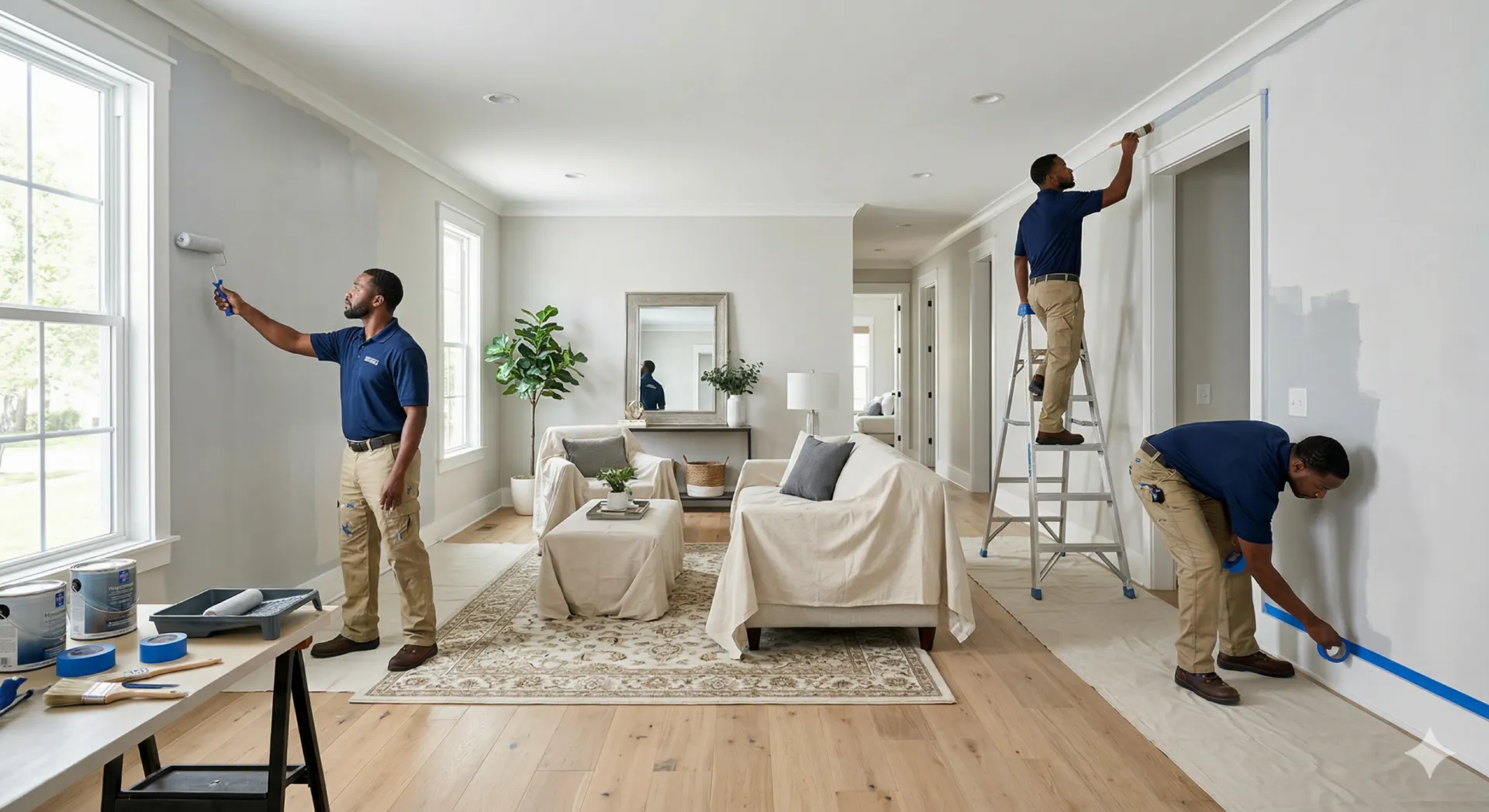
Walls from the planned years
Interior Painting in Peachtree Corners, GA Planned-Era Homes
More than half of Peachtree Corners went up between 1970 and 1989, and few homes have been added since. We serve the city with interior painting, ceiling and drywall repairs, and repaints for offices and tenant spaces around Technology Parkway.
Peachtree Corners at a Glance
- Location
- 17.5 miles northeast of central Atlanta (straight line)
- County
- Gwinnett County
- Population (2023 estimate)
- 42,136
- Housing units
- 18,232
- Median year homes were built
- 1988
- Owner-occupied homes
- 52%
- Detached single-family homes
- 45%
- Built before 1970
- 4%
- Built 2010 or later
- 4%
Sources: US Census Bureau 2023 Gazetteer, Vintage 2023 population estimates, and American Community Survey 2023 5-year estimates for the place. County is taken at the place’s center point; some communities extend into other counties.

A single generation of houses
Housing here is unusually concentrated by era. In Peachtree Corners, about 52% of homes date from 1970 to 1989, and another 39% from 1990 to 2009. Only 4% are from before 1970, and only 4% from 2010 or later. The median year built is 1988. Paul Duke conceived the community in the late 1960s around an office park, Technology Park Atlanta, and neighborhoods were developed through the 1970s. Residents voted to incorporate in 2011, and municipal operations began in July 2012.
So the neighborhoods are decades older than the city. For an interior painter, it means that many walls and ceilings carry several layers of history, along with the patching, wallpaper removal and color changes that past owners left behind. About 45% of units are detached houses and about 52% of occupied homes are owned, so this page considers both the owner who plans to stay and the landlord with a townhome or apartment to repaint.
The 1978 line runs through this age band
Census data groups homes from 1970 to 1989 together, but one date inside that band matters a lot. EPA’s lead renovation rule applies to paid work that disturbs paint in housing built before 1978. A house from 1975 and one from 1982 might look alike from the curb yet fall on opposite sides of it. County tax records or your deed will give you the year, so check before someone starts scraping.
If the home predates 1978, the concern is dust from sanding and scraping, not intact paint under a fresh coat. Painted windows, door jambs and stair parts see the most friction, so they deserve the closest look. Paid contractors need to meet EPA’s training and work-practice requirements, and owners working on their own homes are generally exempt unless the home is rented or used for childcare. Ask how a painter would contain and clean up the dust; a clear answer tells you a lot.
Ceilings raise a related question. The Consumer Product Safety Commission’s asbestos guidance says asbestos may be present in textured paint and in joint compounds, and that their use was banned in 1977. It warns against sawing, sanding, scraping or drilling those materials and says material in good condition is usually left alone. For a textured ceiling in a house from the mid-1970s, the sensible order is to test first, then decide. Painting an intact ceiling is a different job from scraping it smooth.
Interior painting Peachtree Corners GA: what walls of this age need
Beyond those two rules, here is what tends to appear in rooms that have stood for 40 or 50 years. Each one affects the preparation, the quote and the finished look.
Nail pops and seam cracks
Framing settles and lumber moves over the years, so fasteners can show through as small round bumps. Seams may crack at corners. Each needs resetting, taping or filling rather than just another coat.
Old wallpaper remnants
A previous owner may have painted over wallpaper or left glue on the drywall. That residue can reactivate under water-based paint and cause it to bubble, so it may require an oil-based or shellac primer.
Oil-based trim
Trim brushed with alkyd paint decades ago can resist latex. Scuff-sanding (see the lead date above) and bonding primer give a topcoat something to hold onto.
Smoke and kitchen film
Grease near a range and residue from old fireplaces or smoking can bleed through new paint. Cleaning and a stain-blocking primer come first.
Uneven patch history
Decades of repairs may flash through a new coat, especially with sheen. Skim-coating a problem wall may look better than a fifth round of spot patches.
Old color strategy
A dark accent wall from a past owner takes extra coats. Plan on primer, and tell your painter about any wall that has been changed recently.
Ceilings first, then the rest
When a home has aged this much, the ceiling often sets the tone more than the walls. A slightly yellowed ceiling can make a new wall color look wrong. If a home has spray texture that is intact and tests clear, some owners simply repaint it with a flat product using a thick-nap roller and light pressure, because heavy wet coats can loosen old texture. Others prefer it gone. Removing it, or covering it with new drywall, is a much larger job than painting, and our drywall services can handle that part if it is the right call.
Stains should also be diagnosed before anything else. A ring on the ceiling may be an old roof leak that has already been repaired, or it may be active. A roof leak check is often worth arranging before you repaint the room below, because a new ceiling is the wrong place to discover the problem still exists.
After that, the usual order is ceilings, then walls, then trim. Some painters reverse those last two, but what matters most is that the sequence is agreed upon and that everyone knows where the cut lines fall. With high stairwells or vaulted family rooms, ask how access will be managed before the job begins.
Color in rooms of this period
A house laid out in the 1970s or 1980s often has separate rooms and smaller doorways, rather than one long open floor. That can work in your favor. A separate dining room can take a deeper color without fighting the kitchen, and a closed-off den can go dark without shading the whole level. The catch is the connecting hallway, which sees every room’s color at once and benefits from a quiet neutral.
Also pay attention to what is staying. Orange-toned oak trim, cream tile and brass fixtures all push wall colors around, and a cool gray that looked crisp on a phone screen may turn lifeless next to them. Tape large samples to more than one wall, then look at them morning and evening. North-facing rooms and rooms shaded by mature trees get less warm light, so a color can read darker than the chip suggests. If the trim will also be painted, decide that first, as a change from stained wood to white alters every other color choice in the room.
Getting a room ready for the painter
A little preparation by the household can make the job smoother. Agree in advance on who does each of these, so that nothing gets missed:
- Empty shelves and take down pictures, keeping hardware in a labeled bag
- Move small furniture out and shift large pieces to the center of the room
- Point out doors that stick, cracks that have been growing and any spot that has been wet
- Tell the painter about any old paint cans left in the basement or garage, as they can be useful for matching and for identifying past coats
- Keep pets and children away from open cans, wet trim and any work on older painted surfaces
- Decide where to keep a labeled quart of each new color for future touch-ups
Offices and tenant spaces
Peachtree Corners grew around a technology campus, and commercial space is part of the city’s identity. A repaint in an office or small retail unit runs on a different rhythm from one in a house. Occupied suites often need evening or weekend access. Durable finishes matter in corridors, and low-odor products help where people are working nearby. Landlords and tenants should also settle who is paying for what under the lease and whether the building has rules about colors or materials.
If you are turning over a suite, painting may be just one piece. Our commercial improvement work covers office and tenant build-outs, along with drywall, flooring and ceilings.
The permit picture at City Hall
The city’s Building Permit page says its Building staff inspects residential and commercial structures built or remodeled in the city, and lists permit types including roof, trade, deck, and remodeling and additions. Applications go online through the BS&A system. Plans need to cite the code editions listed on that page, and if the property is in the Chattahoochee River Corridor, additional information is required before a permit is issued.
That page does not address painting, and it links to a separate explanation of when a permit is needed. A repaint rarely raises the question, but when a wall is being moved or a kitchen redone at the same time, it may. Contact Community Development at City Hall, 310 Technology Parkway, or call 678-691-1200 for an answer on your own project. Also check with your homeowners association if you plan to change anything that can be seen from outside.
Questions before you pick a color
The home was built in 1977. Do I have to test before repainting?
Federal rules focus on paid work that disturbs paint, and whether you test is a choice that depends on the scope. If scraping or sanding is planned, testing or assuming lead is present are the usual approaches. Ask the contractor which they follow and why.
We want to smooth out our textured ceilings. Is that simple?
Not always. Test any older texture first, and expect it to be messy if it is removed. A skim coat or new drywall over it may be an alternative. Each approach has tradeoffs, so ask to see both priced in the proposal.
We rent out a townhome from the 1970s. What should we think about?
Choose durable, washable finishes and keep a record of paint products by room. If the home predates 1978, the lead rule applies to the paid work even if you own the property. Your association might also control doors and exterior items.
To go further, see our interior painting page, or look at handyman help for sticking doors and small repairs that should come before the painter arrives. Nearby Norcross and Dunwoody have their own permit offices. When you are ready, ask for a free estimate and a written scope.
Sources for Local Facts
Let’s Build Something Great Together.
Ready to start your next construction or remodeling project? Tell us about your space and request a free estimate.