
From Leather City houses to new builds
Interior Painting for Buford, GA Homes
Buford has been a town since 1872, and more than one home in five dates from before 1970. Painting one of those rooms is a different job from freshening a 2015 house, and the difference starts well before the first coat.
Buford at a Glance
- Location
- 34.3 miles northeast of central Atlanta (straight line)
- County
- Gwinnett County
- Population (2023 estimate)
- 18,273
- Housing units
- 5,896
- Median year homes were built
- 1994
- Owner-occupied homes
- 70%
- Detached single-family homes
- 70%
- Built before 1970
- 22%
- Built 2010 or later
- 24%
Sources: US Census Bureau 2023 Gazetteer, Vintage 2023 population estimates, and American Community Survey 2023 5-year estimates for the place. County is taken at the place’s center point; some communities extend into other counties.

An old factory town with a new outer ring
The city’s historical page records incorporation in 1872, the change to City of Buford in 1896, and a past as the Leather City, when Bona Allen, Inc. made shoes, saddles, harness and other goods. It also notes the Bona Allen Mansion, built in 1912 and 1913, on the National Register of Historic Places. The Atlanta Journal-Constitution describes the old complex on West Main Street, Tannery Row, now home to a restaurant, businesses and artist studios.
Census data shows that history in the housing. Some 7% of homes were built before 1950 and 15% from 1950 to 1969. A further 22% date from 1970 to 1989, while 32% were built from 1990 to 2009 and 24% in 2010 or later. The median year built, 1994, hides how uneven this is. About 70% of homes are detached and 70% are owner-occupied.
For interior painting Buford GA owners can’t treat every house the same way. The first question for your job isn’t color. It’s how old the walls are, and that determines what preparation is safe and necessary.
The 1978 line matters more here than in many suburbs
Paint containing lead was common in older homes, and the danger comes less from an intact wall than from dust created by sanding, scraping or cutting into it. Children and pregnant women are especially vulnerable. With 22% of Buford’s homes built before 1970 and some of the 1970 to 1989 group also predating the federal cutoff, this is a practical concern for a sizable number of households, not a footnote.
EPA’s Renovation, Repair and Painting rule covers paid work that disturbs paint in homes, childcare facilities and preschools built before 1978. Homeowners working on their own residence are generally exempt, but the rule does apply if you rent out part or all of the home, run a childcare center there or renovate homes to sell for profit. Landlords and property managers of older rentals are covered too.
What this means if you own a pre-1978 house:
- Don’t dry-sand or heat-strip old paint before you know what’s in it.
- Ask anyone you hire how they will contain and clean up dust, and how they plan to test or treat the surfaces.
- Pay attention to friction points. Window sashes, door edges and stair treads are where old paint keeps wearing, and where dust can form.
- Protect the rest of the house. Sealing off the room and covering floors and vents matters more in an old house than a new one.
- If you have young children in the home, ask your doctor or the local health department about testing and precautions.
What each era of wall tends to need
The right preparation varies more than the paint itself. These are rough guides by the age of the home; your own walls may vary.
Before 1950 (7%)
Original walls in this group may be plaster rather than gypsum board, though only an inspection of your house can confirm it. Look for hairline cracks, bulges and many layers of old paint. Loose areas have to be stabilized first. Oil-based paint from earlier decades may need a bonding primer.
1950 to 1969 (15%)
Expect earlier drywall or plaster-type wall systems, along with glossy trim coats. Flaking along kitchen and bath ceilings is common wherever humidity has built up. Old enamel may need to be dulled and primed properly, keeping lead precautions in mind.
1970 to 1989 (22%)
Textured ceilings and paneling are more common in this period. Painting over paneling takes a primer and a decision about the grooves. Have old textured ceilings tested before disturbing them, since some materials from that time may contain asbestos.
1990 to 2009 (32%)
Often a first full repaint after years of touch-ups. Nail pops and seam lines may show up in the raking light from a two-story foyer. Flat paint hides these well, while washable finishes make them more obvious, so repairs need to be sound. Our drywall repair work handles these first.
2010 and later (24%)
Builder flat paint often scuffs easily and may have been applied thinly. The surface may need little repair, but a quality scrubbable finish generally makes the biggest difference here. Early settling cracks at corners are normal and easy to fill.
A stain tells you something, so don’t paint it yet
Most interior stains and failures have a cause, and paint alone will not fix it. A brown ring on a ceiling, blistering near a window or peeling around a tub all mean that moisture is getting in or staying too long. Fix the source first, then seal any stain with a stain-blocking primer, and then paint. Here’s what commonly leads to what:
- Ceiling rings below a roof or attic: flashing or shingles. See roof leak repair.
- Paint peeling in bathrooms: too little ventilation, so run the fan longer or have it replaced. A semi-gloss or bath-rated finish helps, but it won’t solve the humidity.
- Bubbling low on a wall: a plumbing leak or moisture from outside. Our plumbing services can track the former down.
- Dark spots in corners of exterior closets or rooms: cold spots and condensation. Clean, dry and improve airflow, and have the cause reviewed if it returns.
- Yellowing in kitchens and on old trim: grease or aged oil-based coatings. These need cleaning and the right primer to keep new paint from failing or discoloring.
- Lines on a wall that show through new paint: uneven old coatings or patches that were not sealed. A primer coat over the whole wall usually solves this.
In older houses, follow the same logic when a damp basement stairwell or a crawl-space smell accompanies the paint damage. Look down as well as up, and don’t let a nice coat of color cover up an active problem.
Choosing sheen and color in rooms of different ages
Sheen is a practical choice more than a style decision, and it’s where many paint jobs succeed or disappoint. A flatter finish hides imperfections. A shinier finish cleans up better but reveals every wall flaw. Older walls and big expanses of drywall in tall rooms often call for flat or matte. High-traffic halls and kids’ rooms benefit from an eggshell or a washable matte. Trim and doors usually work in satin or semi-gloss.
For color, test a large sample on at least two walls and look at it at different times of day. A room with old wood floors, deep trim or small windows reads differently from an open new-build great room. In an older home, try leaving original woodwork unpainted if it’s in good condition, as stripping it later is messy and, given the lead concern, potentially hazardous. That’s a decision worth making before anyone opens a can.
What a painting quote should tell you
Paint is a labor-heavy job, so the description of the work says more than the brand name on the bucket. When comparing proposals for a Buford house, check that each one answers these points in writing:
- Exactly which surfaces are included: walls, ceilings, trim, doors, closets, and window frames each change the price.
- How many coats, and whether a primer is included. A strong color change, a patched wall or a stain usually needs more than one extra step.
- Who repairs nail pops, cracks and loose tape, and to what level. A wall can be painted beautifully and still look bad if the repairs behind it were rushed.
- How furniture, floors and fixtures will be protected, and who moves what. Covers on old wood floors deserve special attention.
- For a pre-1978 home, how the lead rule will be followed and how the room will be cleaned at the end.
- What ventilation is planned. Low-odor products help, but fresh air still matters in a smaller, closed-up room.
Then it’s your turn. Clear small items out of the room and take down art, curtains and outlet-mounted items if you can. Keep the leftover paint, labeled with the room and date, since a matching touch-up later is far easier from the original can. Allow some time before you scrub new paint, and follow the can’s instructions, because a surface can feel dry long before the finish has fully hardened.
Permits, county lines and what else we can do
Painting alone usually doesn’t raise permit questions, but ask if your project also moves walls, replaces wiring or changes plumbing. Published permit guidance says the City of Buford’s Inspection Department issues permits and conducts inspections inside city limits, which extend into both Gwinnett and Hall counties. Treat that as a starting point and call the city before relying on it. Also confirm whether your address falls inside city limits at all, and if the property is part of a historic listing, ask what review applies before changing original features.
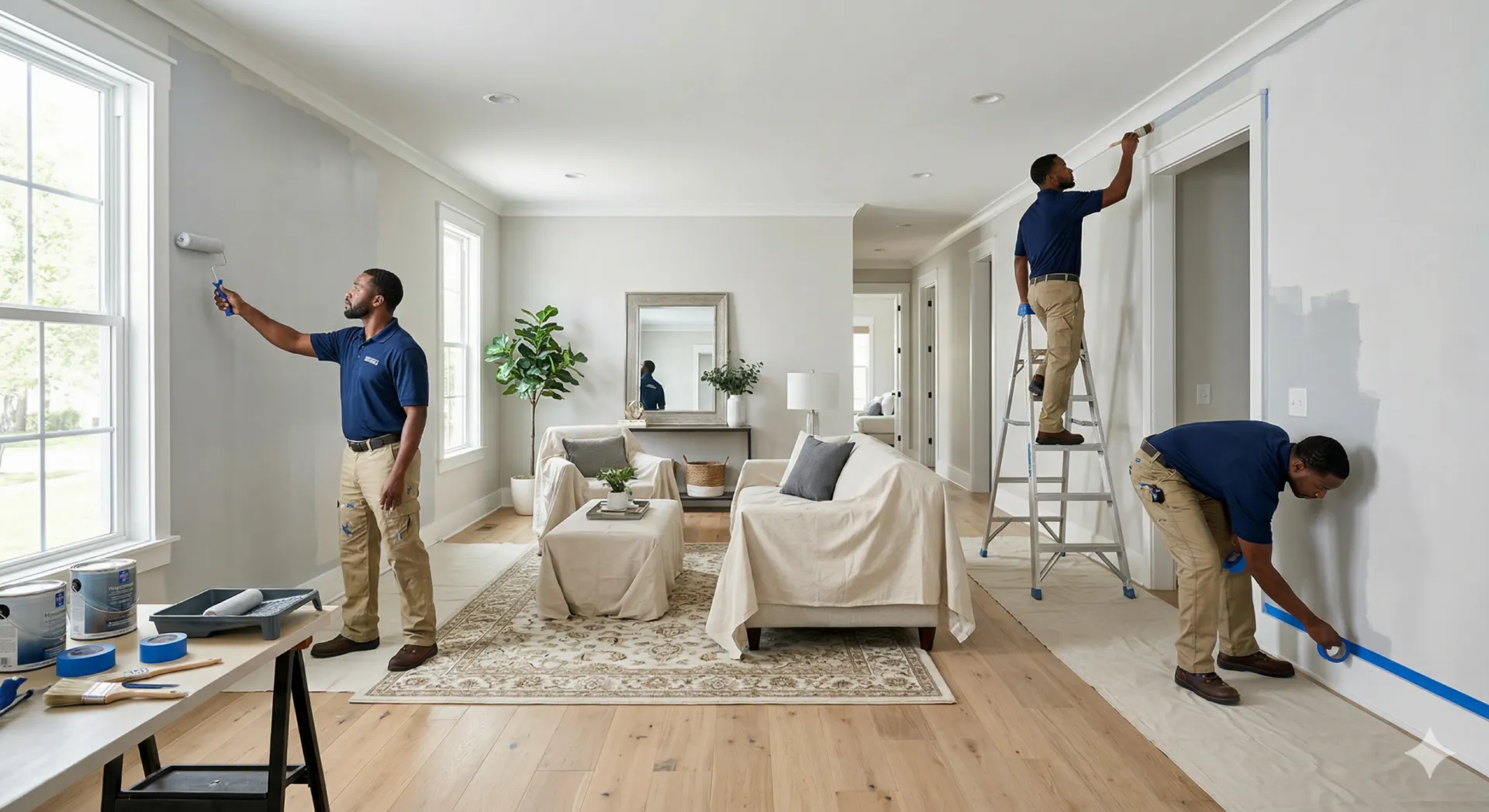
We serve Buford with interior painting services for individual rooms and whole houses, and a free estimate includes a detailed scope of work with clear pricing before work starts. Since paint is often one step in a larger update, it can pair with new flooring, kitchen or bathroom work. Larger reworking of an older house falls under our custom renovations, and shop or office repaints fit within our commercial construction services.
Our house near downtown Buford dates from the 1950s. Can we repaint without testing for lead?
Painting over sound old paint with little disturbance carries less risk than scraping or sanding, but most prep does disturb it. Testing tells you what you’re dealing with, and a paid contractor has to follow EPA’s lead-safe rule for this age of home.
We own a Buford rental. Does the homeowner exemption apply to us?
No. EPA says the rule applies to landlords and to owners who rent out part or all of a pre-1978 home, so plan the turnover with that in mind.
Our walls in a 2018 house already look worn. Is that normal?
Often, yes. Thin builder paint and flat finishes show scuffs quickly. Good cleaning, spot priming and a durable washable finish generally solve it without major repairs.
Sources for Local Facts

Let’s Build Something Great Together.
Ready to start your next construction or remodeling project? Tell us about your space and request a free estimate.