

City water, gas and sewer on the Highland Rim
Plumbing Portland TN: What Your City Utility Covers and What Falls to You
Portland runs its own water, natural gas and sewer systems, and most of its homes date from 1990 to 2009. That combination shapes what plumbing questions come up, and who answers them.
Portland at a Glance
- Location
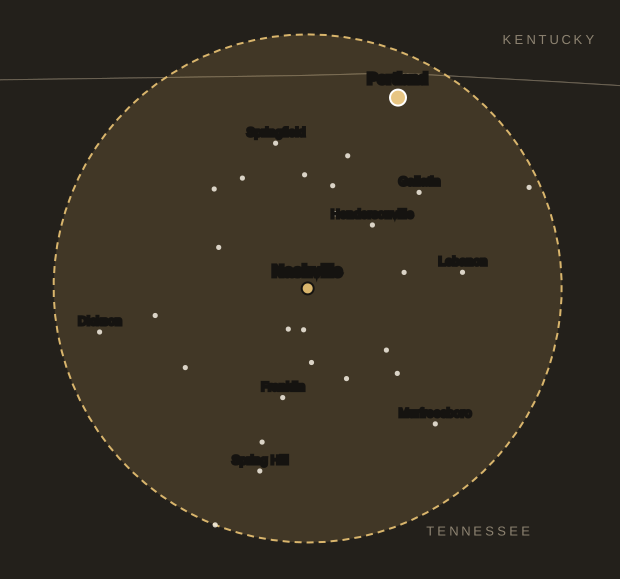
- 33.2 miles northeast of central Nashville (straight line)
- County
- Sumner County
- Population (2023 estimate)
- 13,578
- Housing units
- 5,190
- Median year homes were built
- 1995
- Owner-occupied homes
- 64%
- Detached single-family homes
- 71%
- Built before 1970
- 12%
- Built 2010 or later
- 10%
Sources: US Census Bureau 2023 Gazetteer, Vintage 2023 population estimates, and American Community Survey 2023 5-year estimates for the place. County is taken at the place’s center point; some communities extend into other counties.
Your water comes from Drakes Creek
Portland treats its own surface water, which is worth knowing as an owner. The 2024 Portland water quality report says the supply comes from Drakes Creek and the City Lake, with occasional purchases from the White House Utility District and the Westmoreland system. The city’s utilities page says the treatment plant, in service since October 2002, can process 3 million gallons per day, and that the Water Distribution Department maintains over 277 miles of underground line and 8 storage tanks for about 8,352 customers.
Natural gas is a city service too, with about 4,425 customers and 251 miles of pipe, and so is sewer, with about 3,750 customers and over 100 miles of line. Compare those last numbers. There are more than twice as many water customers as sewer customers, which suggests that many homes on city water are not on city sewer. We cannot tell you which is true of your address, so ask the Department of Utilities. It makes a real difference if you are thinking about adding a bathroom, since a septic system has a limited capacity and a sewer connection has its own requirements.
Where the city’s job ends
The Water Distribution page lists what its crew handles: meters, mains, taps, meter boxes and hydrants, along with locating lines and repairing leaks, plus responding to calls about pressure. It does not spell out exactly where the utility’s responsibility ends and yours begins, so a call to the department is the right first step when a leak appears near the meter. Inside the house, the pipes and fixtures are generally the owner’s concern.
A few other points from the city’s material are useful to owners:
- Backflow prevention devices are the responsibility of the property owner, including installation, operation and maintenance, according to the Water Distribution page.
- Leak adjustments on a water bill are available once per calendar year. You need receipts for parts or labor, a specific description of the repair, and usage back at your normal average, so save that invoice.
- The 2024 water quality report says the city’s service line inventory went to the state ahead of the October 2024 deadline and shows no known lead service lines.
- That same report points out that lead can also come from materials in home plumbing, which the utility cannot control. In an older house, fixtures and solder are worth asking about.
Most water heaters, sinks and washing machines have a cut-off valve, the city notes. Now is a good time to find yours and the main shutoff, and to confirm they actually turn. A valve that has not moved since the house was built may not close when you need it.
What a 1990s or 2000s house tends to need
About 55% of Portland’s roughly 5,200 housing units were built between 1990 and 2009, with a median year of 1995. Another 23% date from 1970 to 1989, while just 10% have gone up since 2010 and 12% predate 1970. So the typical Portland house is roughly 20 to 35 years old, which is an awkward age for plumbing: too new to need a total repipe, old enough that original parts are starting to fail.
Here is what plumbing in Portland, TN, houses of that age tends to involve, and what to look at yourself:
Water heaters
A tank lasting about ten to fifteen years is common, so a home from this period may be on its second or third. Check the date on the label, look for rust at the base, and make sure the pan and drain line work if it sits above a finished floor.
Supply lines and shutoffs
Braided hoses and small stops under sinks and behind toilets are cheap parts and common sources of slow or sudden leaks. Replacing them on a schedule is sensible.
Older pipe materials
If your house dates from the early to mid 1990s, find out what its supply lines are made of. Gray polybutylene was used in some homes of that time and has a poor record. Copper or PEX is usually not a concern on its own.
Toilets and running water
A toilet that runs on and off can waste a surprising amount of water. Dye in the tank is a simple test, and the fix is usually inexpensive.
Bills give the first clue to a hidden leak. Turn off everything in the house and watch the meter. If it moves, something is running. The city’s site links to a page on this, and our plumbing services page lists the repair work we take on.
Symptoms and what they usually point to
A short guide helps you decide whether something can wait. These are common causes, not a diagnosis, and a house can always surprise you.
Why is the pressure low at only one faucet?
A clogged aerator or a partly closed stop is the usual cause, and both are simple fixes. If the whole house is low, check the main valve, then call the Department of Utilities, since the city handles pressure checks at the meter.
Why does one drain run slowly while the rest are fine?
That usually means a local clog near that fixture. When several drains slow down together, or a toilet gurgles when the washer empties, the trouble is further down the line or in the vent, and on a septic system it may be the system itself.
What does a sewer smell in the house mean?
Start with the easy one: a dry trap in a seldom-used shower or floor drain. Run water for a minute. If the smell stays, a failed wax ring or a vent problem may be the reason, so have it looked at.
Is rusty or discolored hot water a bad sign?
If it shows only on the hot side, the water heater is the likely source, and an aging tank may be nearing the end. If it shows on both sides, call the utility, since it could have a cause outside the house.
How should we prepare for a hard freeze?
Disconnect hoses, protect outdoor spigots, and insulate pipes in crawl spaces and unheated garages. Know where the main shutoff is, and leave cabinet doors open on exterior walls during the coldest nights.
Gas, heat and the rest of the mechanical picture
Since the city also supplies gas, many homes here may be running gas appliances or furnaces, though others are all-electric. If you smell gas, leave first and use the city’s gas leak reporting information from outside. Do not treat it as something to look at yourself.
Houses from this period are also due for equipment changes. A heat pump or furnace from the early 2000s is well along in its life, and its replacement can raise questions about duct size and condition. If you are adding a gas line for a range or a generator, the city has a Gas Service Load and Location Request Form and availability forms for homeowners, so check capacity first. Our HVAC services cover the heating and cooling side.
Bigger changes often tie together. A new bathroom means drain, vent, water and possibly heating work, along with waterproofing and tile. That is where our bathroom remodeling and home remodeling services help, with plumbing and mechanical in the same scope. Before starting a larger job, we provide a detailed scope with clear pricing.
Permits and inspections in Portland
The Building Codes Department at 100 S. Russell Street issues permits for new construction and remodels, including plumbing and mechanical work, and the city uses the 2018 International Codes. Its online permit portal went live in January 2026, and the page says it does not replace in-person or paper filing. Inspection requests have a daily cutoff, so check the page and the inspection line before planning a pour or closing up a wall.
The page also reminds everyone to call 811 before digging. That is especially relevant here, with city water, gas and sewer lines all running underground. Outdoor projects such as a deck footing, a fence or a new water line can all cross those lines, so mark them before the first shovel.
A permit question comes up for most jobs beyond simple repairs. Ask the department directly. Some of the city also falls outside the Sumner County line: Portland reaches into Robertson County, so check which county records your property if you are looking at septic or other county-level matters.
Local context for a longer view
The city grew from a farm settlement on the Highland Rim that was first called Richland. A railroad depot opened there in 1859, and the name changed to Portland on April 10, 1888, after mix-ups with another Tennessee town. Today it is known for strawberries and for manufacturing plants. It remains further out than most Nashville suburbs, at about 33 miles northeast of downtown and about 12 miles from White House.
Census estimates put median home values here below those in many closer suburbs. About 64% of occupied homes are owner-occupied, and about 71% of units are detached single-family, so there are also plenty of rentals and attached units whose owners have plumbing to maintain. A landlord should treat supply lines, water heaters and shutoffs as routine turnover checks, because a slow leak in an empty unit can run a long while before anyone notices.
If you are buying here, add three questions to your list. Is the house on city sewer or septic? What are the supply lines made of? How old is the water heater? Answers to those cost nothing, and they can prevent the most common surprises in the first year of ownership.
Sources for Local Facts

Let’s Build Something Great Together.
Ready to start your next construction or remodeling project? Tell us about your space and request a free estimate.