
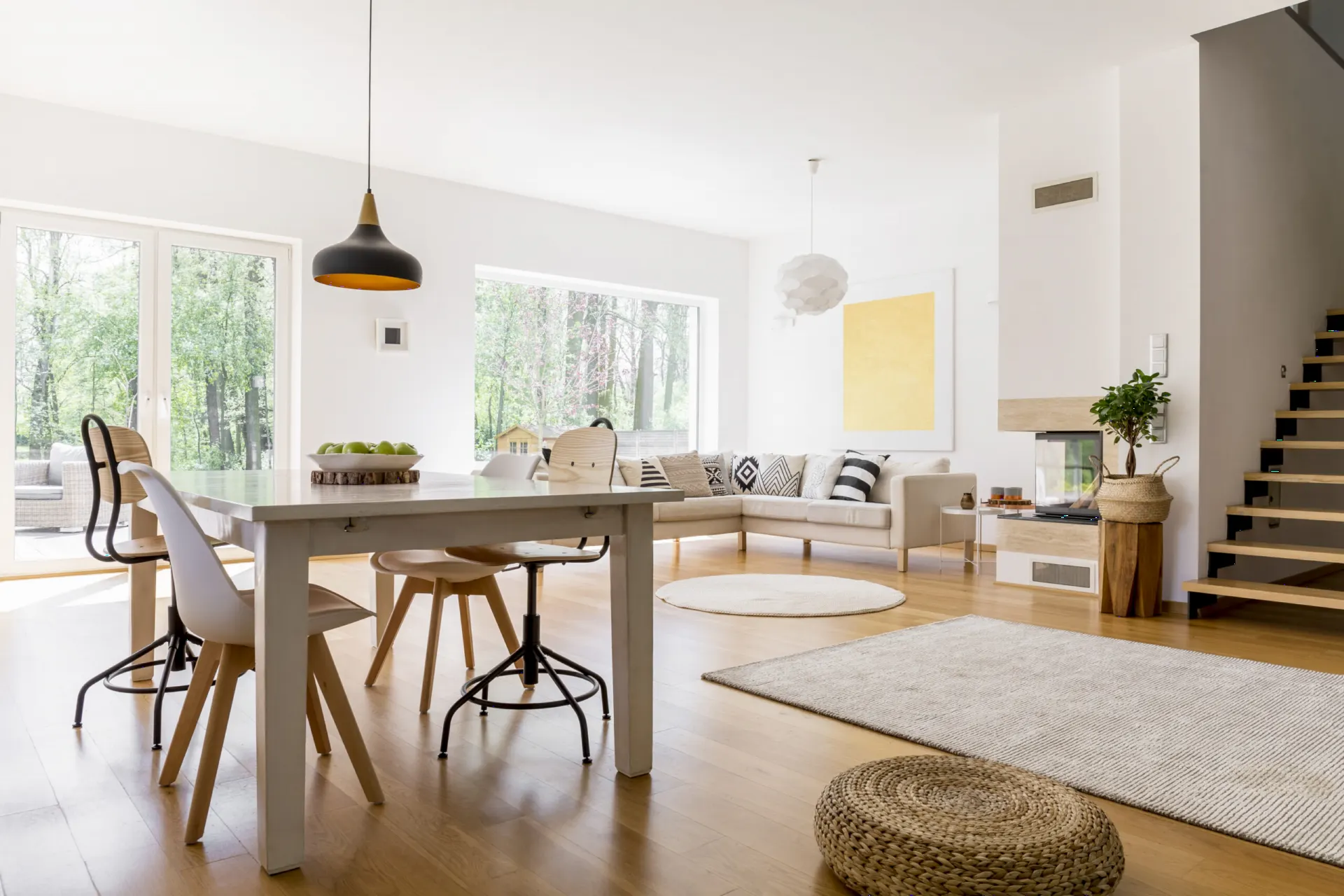
Decks on owner-occupied houses
Deck Repair for Snellville, GA Homeowners
Snellville is overwhelmingly a city of detached, owner-occupied houses, many from the 1970s through the 2000s. Plenty of those homes have a deck old enough to deserve a careful look, and the city draws a clear line on when repairs need a permit.
Snellville at a Glance
- Location
- 23.2 miles east of central Atlanta (straight line)
- County
- Gwinnett County
- Population (2023 estimate)
- 22,067
- Housing units
- 7,492
- Median year homes were built
- 1989
- Owner-occupied homes
- 81%
- Detached single-family homes
- 91%
- Built before 1970
- 3%
- Built 2010 or later
- 5%
Sources: US Census Bureau 2023 Gazetteer, Vintage 2023 population estimates, and American Community Survey 2023 5-year estimates for the place. County is taken at the place’s center point; some communities extend into other counties.

The permit question, answered up front
Snellville is unusually plain about this. Its Building Permitting page says new decks, porches, porticos, balconies and stoops need a permit, as do structural repairs or enlargements. Non-structural deck or porch repairs do not. Screened porch and sunroom additions need one too.
So replacing a few cupped deck boards or a run of worn stair treads probably falls on the no-permit side, while replacing a post, a beam or the ledger that ties the deck to the house probably does not. Those examples are our plain reading of the page and not an official ruling, and the Building Department within the Department of Planning and Development has the final word for your address. A quick question to that office is easier than an awkward one later, particularly if you plan to sell.
Why so many decks here are reaching this stage
Of the roughly 7,500 housing units in the city, 91% are detached single-family homes and about 81% are owner-occupied. Census year-built data shows 49% from 1970 to 1989 and 42% from 1990 to 2009, with the median at 1989. Few homes are very old, and few are new: only 5% were built after 2010.
We can’t tell you from those numbers how many have decks or when any given deck was built. Some were built with the house, and others were added or rebuilt later. Still, the reasoning is simple. A wood deck sits outdoors through every wet winter and humid summer, and a house that has reached 35 or 50 years has likely seen at least one round of deck work, not all of it done with care. If you bought your home from a previous owner, you may have no idea who built what you are standing on. That is the normal starting point for anyone looking into deck repair Snellville GA homeowners might need, and it is why inspection comes before quoting boards.
A walk-through you can do on a dry afternoon
Bring a flashlight and a screwdriver. Press the screwdriver into wood at the spots listed below. Sound lumber resists it. Decayed wood lets the tip sink in or breaks away in soft fibers.
Where the deck meets the house
Look for the ledger, the board fastened to the wall that carries one side of the deck. Check for rust streaks, gaps, soft wood and missing flashing above it. This connection deserves the most attention of anything on the list, so have a professional look if you can’t see it clearly.
Posts at grade
Check the bottoms of posts where they meet soil or concrete. Look for rot, leaning and footings that have shifted. Posts buried directly in soil tend to stay damp.
Joists and beams from below
Probe joist ends and spots beneath boards where water sits. Look for sagging spans, undersized repairs and rusted hangers.
Stairs and landings
Rock each stringer by hand, step on each tread, and check the bottom landing, which often sits in splash water and leaf litter.
Rails and guards
Lean firmly against the top rail at several points, staying alert in case something gives. Any looseness is a safety matter, especially on a high deck.
Surface boards
Splits, raised fasteners and cupping are more of a nuisance than a hazard unless the board has gone soft, but they do trap water and shorten its life.
If a walk-through turns up movement in a rail, a stair or the ledger, stay off that part of the deck until someone has looked at it. Our deck repair page outlines that service, and you can ask for a free estimate with your photos and notes.
Repair, rebuild or something different
Not every tired deck should be patched. A rough way to sort the options:
Spot repair makes sense when
The damage is limited to a few surface boards, a tread or a section of rail, and the framing underneath passes inspection. Under the city’s language this kind of non-structural work usually stays simple.
Partial rebuild makes sense when
A few posts or joists have failed, but the ledger and most of the frame are sound. Treat this as structural work and ask about the permit before starting.
Full replacement makes sense when
The ledger connection is suspect, decay is widespread, or the design never worked well. A new deck needs a permit and is a good moment to change the size or stairs.
A different structure makes sense when
You really want shade or bug-free evenings. Screened porches and sunrooms are treated as additions, so they bring their own review. Our additions page covers that kind of project.
Think about the house as well as the deck. If the wall behind it shows water damage, or the door threshold has been leaking into the floor below, fix those together. Damage at the door may call for siding work or new flooring inside, and it is better to know that before the new boards go on.
Keeping water off the frame
Most deck failures come back to moisture, so the cheapest repair is often upstream. An overflowing gutter that pours onto a deck will shorten its life no matter what the boards are made of, which is one reason gutter cleaning belongs in the same conversation. The EPA’s moisture guide recommends keeping gutters clean and repaired and making sure the ground slopes away from the foundation.
Soil matters as well. A University of Georgia article describes how clay stays wet much longer than sandier soil and warns that water from downspouts and air conditioners should drain away from the foundation. A downspout emptying under a deck into clay soil keeps the bottom of those posts damp for days after each rain. Rerouting it costs little.
- Sweep leaves from between boards, since packed debris holds moisture against the joists below.
- Keep planters on feet so water can run off beneath them.
- Move firewood and stored items off the boards and out from under the frame.
- Clean and reseal on whatever cycle the coating maker recommends, based on how the surface is actually wearing.
- Trim shrubs back so air can move under the deck.
Paint, stormwater and other things worth checking
Painted rails on an older deck need a moment’s thought. Homes built before 1978 may have lead-based paint, and that may extend to exterior features original to the house. The EPA’s renovation program applies to paid work that disturbs paint in pre-1978 homes. Since about half of this city’s housing dates from 1970 to 1989, some houses fall on each side of that line. If yours is close, bring it up before sanding or stripping starts.
Enlarging a deck, or swapping it for a concrete patio, also raises a stormwater question. The city’s Stormwater and Drainage page says Public Works maintains infrastructure within city limits, including rights-of-way, ditches, detention ponds and easements, and it links to a Stormwater Utility Credit Manual. Before building over a low spot or near a ditch, check your plat for easements. Public Works is the office to ask about a drainage problem, and the page gives you a way to report one.
The same permit page also lists retaining walls over 48 inches, which often come up alongside a deck on a sloped lot. It lists fencing, interior painting, tiling and flooring among the work that does not need a permit, while furnace, HVAC and water heater replacements do. If you are planning several projects together, that list is worth reading in full.
What a useful deck quote spells out
Two quotes for the same deck can describe very different jobs. Before comparing numbers, make sure each one answers these questions in writing.
- Which boards, posts, joists and rail sections are being replaced, and which are staying?
- How is the ledger being handled: left alone, inspected, or re-fastened and re-flashed?
- What happens if the framing beneath the old boards turns out to be worse than it looked?
- Does the price include a permit if one turns out to be needed, and who applies for it?
- What material will the new parts be, and how will they match or be finished alongside the old ones?
- How will old material be hauled away, and how will plantings and the lawn be protected?
Hidden framing is the usual source of disagreement, since nobody can fully inspect a joist until the boards are off. A sensible quote deals with that possibility openly and sets out how extra work gets approved. We’re licensed and insured, and we put the scope and pricing in writing before anything starts.
Beyond the deck
We serve Snellville for deck work and for the larger projects that tend to follow it on a house of this age. Owners who plan to stay put often move next to a kitchen or bathroom update, since original finishes from the 1980s and 1990s are now well past their prime.
If you live near Grayson or Loganville, remember that the permit rules quoted here come from Snellville’s own Building Department. Your city, or Gwinnett County if you live outside any city limits, may draw the lines differently.
Sources for Local Facts
Let’s Build Something Great Together.
Ready to start your next construction or remodeling project? Tell us about your space and request a free estimate.