
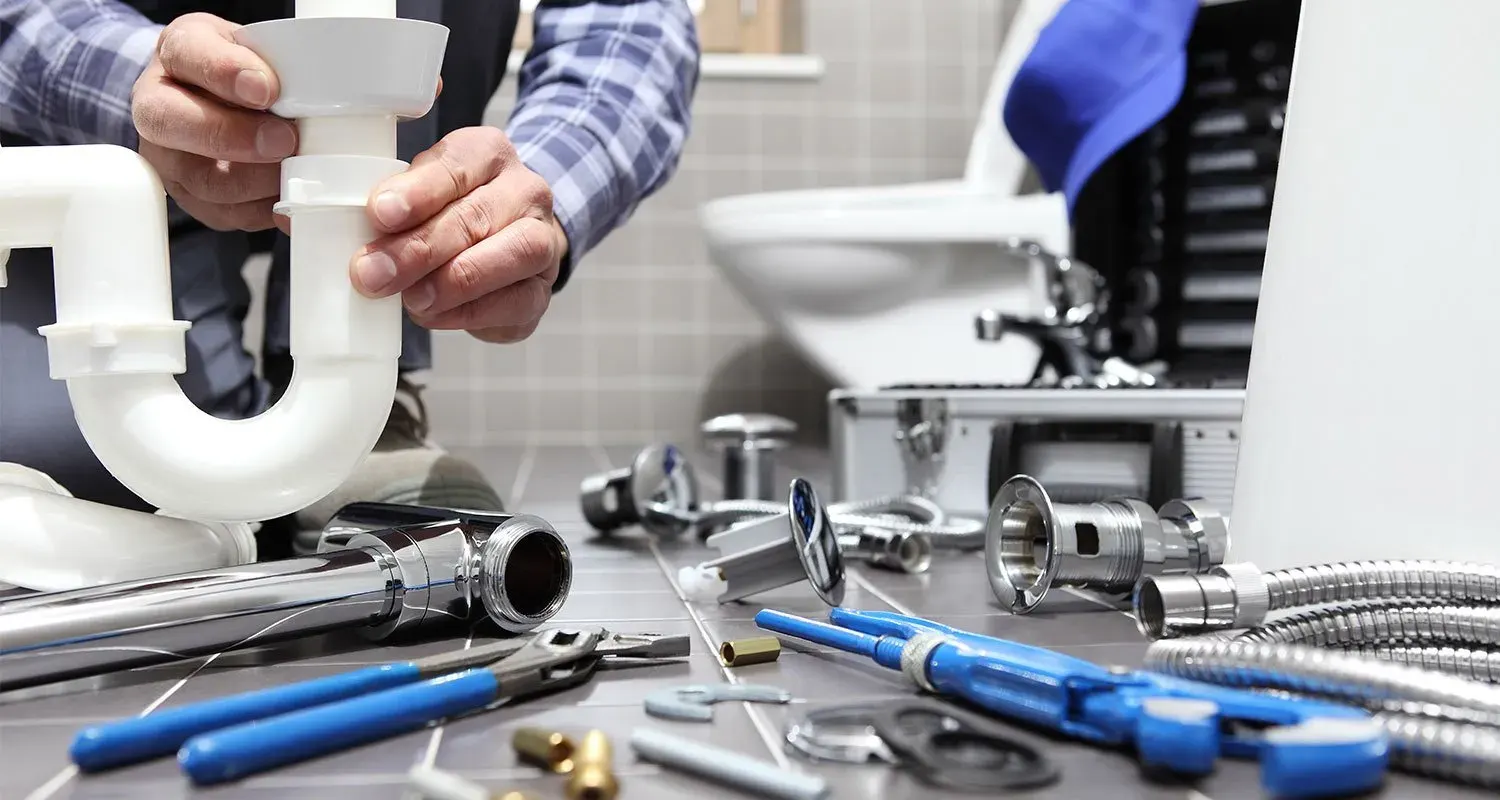
City water, 1990s to 2000s houses
Plumbing for Loganville, GA Homes
More than half of Loganville's homes date from 1990 to 2009, and the city runs its own water and sewer lines. Fixtures and water heaters from that building period are at an age when small plumbing problems tend to appear.
Loganville at a Glance
- Location
- 28.9 miles east of central Atlanta (straight line)
- County
- Walton County
- Population (2023 estimate)
- 16,516
- Housing units
- 5,440
- Median year homes were built
- 2003
- Owner-occupied homes
- 70%
- Detached single-family homes
- 79%
- Built before 1970
- 8%
- Built 2010 or later
- 24%
Sources: US Census Bureau 2023 Gazetteer, Vintage 2023 population estimates, and American Community Survey 2023 5-year estimates for the place. County is taken at the place’s center point; some communities extend into other counties.

What the city’s water system looks like
Before thinking about your own pipes, it helps to know what they connect to. The city’s Water Distribution division reports about 89 miles of distribution lines, 1,360 valves, 1,104 hydrants and two storage tanks, supplied by three wholesale water providers, with use of around 1.4 million gallons a day. Water is sampled weekly at the Water Quality Control lab and monthly at state labs. Its Sewer Collections division looks after roughly 81 miles of sewer lines and 24 lift stations that serve areas inside the city limits.
Two points follow for anyone looking into plumbing Loganville GA homes might need. One, the sewer page describes service inside the city limits, so a Loganville address doesn’t by itself prove you are on city sewer. Check your bill, and if you can’t tell, ask. A house on septic has different rules about drains and additions. Two, this is a place that grew around modest utilities: the city’s history records a town of about 500 people at the time of the 1898 railroad charter and lists water and sewer systems among the improvements that came later, as cotton faded. The county line matters here too. Census mapping places the city’s center point in Walton County, and it is worth confirming your own parcel’s county when you look up records.
What this housing stock tends to need
Census figures put the median home at 2003. About 54% of homes were built from 1990 to 2009, 24% in 2010 or later, 14% from 1970 to 1989, and about 8% before that. Some 79% are detached single-family homes and about 70% are owner-occupied.
That profile points to plumbing that is mostly sound in its main lines but aging at the fixture level. Parts with rubber seals, moving valves and heating elements wear out long before pipes do. The following are general patterns for houses of this age, and not findings about any specific Loganville home.
Water heaters
A tank installed during a 2000s build has probably been replaced at least once, and a replacement from that first round may be nearing its own end. Check the age on the label, and look for rust or dampness at the base and fittings.
Toilets
Flappers and fill valves are consumable parts. The EPA suggests replacing flappers at least every five years, and many houses here have gone far past that.
Shutoff valves
Fixture stops and the main shutoff can seize after sitting unused for twenty years. It’s better to discover a stuck valve on a calm afternoon than during a leak.
Supply hoses
Flexible connectors at sinks, toilets and washing machines don’t last forever. Look for bulges, rust at the crimp and any dampness.
Shower valves and tile
A slow leak behind a shower wall can go on for a long time without being seen. Soft grout, loose tile and staining in the room below deserve attention.
Hose bibs and irrigation
Outdoor connections and sprinkler systems can leak out of sight. They may also tie into the backflow topic below.
For the older 8%, the list is different and can include old supply piping and paint questions. If your house dates from before 1978, keep the EPA’s lead-safe rule in mind if plumbing access requires opening painted walls.
A leak check you can do this weekend
The EPA’s WaterSense program gives some simple tests and figures. It estimates that the average household’s leaks can waste more than 9,300 gallons of water a year, and that fixing easily corrected leaks can save about 10% on water bills.
Read the meter twice
Pick a two-hour period when no water will be used, and note the reading before and after. EPA says that if the meter changes, you probably have a leak.
Test the toilets
Add food coloring to each tank and wait ten minutes without flushing. Color in the bowl means the flapper or seal is leaking.
Watch for drips
A faucet dripping once per second can waste more than 3,000 gallons a year, EPA says. Also listen near showerheads and check under each sink with a flashlight.
Look at winter use
EPA’s rule of thumb is that a family of four using more than 12,000 gallons in a cold month may have a serious leak. Pull a January or February bill for comparison.
Go outside
Check hose connections and irrigation lines. A small hole in an irrigation line, around 1/32 of an inch, can lose about 6,300 gallons a month.
If the meter moves and you can’t find the cause, the leak may be underground or inside a wall. That’s the moment to bring in plumbing help, because finding the leak’s location is most of the job. The city’s utilities page lists an after-hours line, a general number and an online issue form, which is useful if you suspect a problem on the city’s side of the meter.
Backflow, permits and the paperwork side
The city has a specific backflow prevention program, meant to protect drinking water from contaminants entering through cross-connections or pressure changes. It oversees installation and inspection standards for backflow devices. An irrigation system, a commercial kitchen or a fire line can raise this question. If your property has an assembly, or you are adding something that might need one, ask the program what applies before work begins.
On permits, the city’s permits page lists a Plumbing Permit application and says residential and commercial plumbing permits can be completed online. Mechanical, electrical, roof, fence, pool and deck permit forms appear there too, along with a building plan submittal form. The Planning and Development Department handles building permits and conducts building inspections within the city limits.
Ask the city which plumbing jobs trigger a permit. Replacing a faucet and moving a drain are clearly different kinds of work, and a water heater replacement falls somewhere you should ask about. Call the department for a straight answer, and make sure it is settled who pulls the permit before a job begins. If your property is beyond the city limits, ask your county’s building office instead.
When plumbing is part of a bigger plan
Plumbing problems often come to light during other work, and other work is a good time to solve them. Here’s how that tends to play out in a house from the 1990s or 2000s:
- A bathroom remodel is the natural moment to replace an aging shower valve and shutoffs while the wall is open.
- A kitchen remodel that moves the sink or dishwasher means new drain and vent routes, which should be planned along with cabinets.
- Finishing a basement with a bath raises questions of drain slope and whether a pump is needed, and any existing dampness has to be dealt with first.
- Adding on may affect a septic system if you have one, so learn where the tank and field are before designing.
- New flooring over a damp subfloor just hides the trouble, so fix any leak and let things dry beforehand.
The EPA’s moisture guide is direct about the order of operations: fix the source of water, then clean and dry what it touched. Skipping that order is how the same stain returns. We serve Loganville with plumbing and remodeling work under one scope if you would like that, with clear pricing set out in advance.
Drains, shutoffs and being ready for a bad day
Most water damage gets worse because nobody could stop the flow quickly. Take ten minutes to find your main shutoff, confirm every adult in the household can reach and turn it, and label it. Do the same for the water heater’s cold supply valve, and turn each one gently once a year so it doesn’t seize.
Drains give early warnings if you listen for them. One slow sink usually means a local clog in that fixture’s trap or branch. Several fixtures slowing at once, gurgling from a toilet when the washer drains, or water rising in a tub all suggest a problem further down the line, and that calls for a professional look before anyone pours in chemicals. Keep cooking grease out of the kitchen drain, and only flush what belongs in a toilet. The city’s sewer division maintains its own lines, and the utilities page lists how to report trouble, so if a neighbor’s drains are backing up too, mention that when you call.
Radon and the wider local picture
An unexpected item on the city’s permits page is a Radon Application among the building forms. We didn’t find details about what the form covers, so ask the department if you are building or adding on. The EPA ranks radon just behind smoking as a cause of lung cancer and advises testing, with a fix recommended at 4 pCi/L or above. Testing kits are not a plumbing job, but they are a sensible step before you finish a lower level.
If you are close to the Gwinnett side, nearby Grayson and Snellville have their own rules and utility arrangements. Read your water bill to see who serves you, since that decides whom you call first when something leaks. For anything else on your list, our handyman work can handle minor repairs that don’t need a dedicated plumbing visit.
Sources for Local Facts
- City of Loganville: Water Distribution
- City of Loganville: Sewer Collections
- City of Loganville: Utilities
- City of Loganville: Permits
- City of Loganville: Planning and Development
- City of Loganville: History
- US EPA WaterSense: Fix a Leak Week
- US EPA: A Brief Guide to Mold, Moisture and Your Home
- US EPA: Lead Renovation, Repair and Painting Program
- US EPA: Health Risk of Radon

Let’s Build Something Great Together.
Ready to start your next construction or remodeling project? Tell us about your space and request a free estimate.