
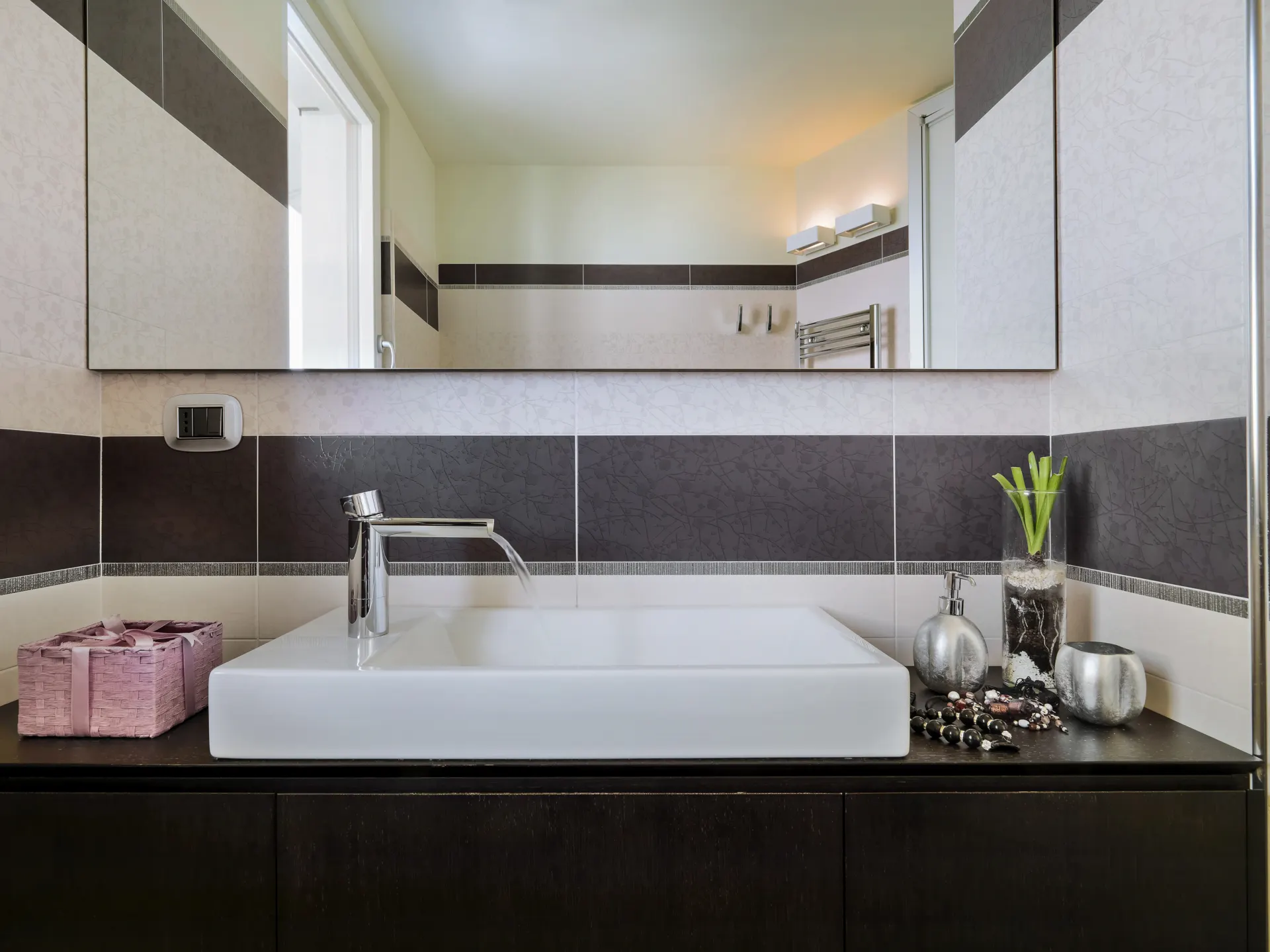
Baths from the 1990s and 2000s
Bathroom Remodeling in Stonecrest, GA
More than half of the housing here went up between 1990 and 2009, which puts a great many original bathrooms at an age when tile, valves and fans start asking for attention.
Stonecrest at a Glance
- Location
- 14.7 miles east of central Atlanta (straight line)
- County
- DeKalb County
- Population (2023 estimate)
- 60,677
- Housing units
- 24,053
- Median year homes were built
- 1999
- Owner-occupied homes
- 53%
- Detached single-family homes
- 58%
- Built before 1970
- 6%
- Built 2010 or later
- 13%
Sources: US Census Bureau 2023 Gazetteer, Vintage 2023 population estimates, and American Community Survey 2023 5-year estimates for the place. County is taken at the place’s center point; some communities extend into other counties.

Why a 25-year-old bathroom is the local story
Stonecrest is a young city wrapped around somewhat older houses. Voters approved it in November 2016 and it held its first elections in March 2017, says this general overview, but Census figures show a median construction year of 1999, with 55% of homes dating from 1990 through 2009. Add the 13% built since 2010 and more than two thirds of the housing is newer than 1990. A further 25% came in the two decades before that. Only about 6% is older.
That profile produces a very particular kind of bathroom project. These are not gut jobs driven by galvanized pipe or lead paint in most cases. They are rooms that were finished once, by the original builder, and have now seen a quarter century of daily showers. The grout has been cleaned more times than anyone can count. The shower valve may drip. The vent fan is loud and moves little air. A molded tub surround, if that is what you have, may have dulled. If the layout still works, bathroom remodeling Stonecrest GA homeowners consider is often a matter of replacing surfaces and fixtures rather than moving walls.
With around 53% of homes owner-occupied and 58% detached, the rest split among rentals and attached housing. Owners planning to stay can think in decades. An owner preparing a rental will care more about durability and fast cleaning. Both benefit from opening the walls only where there is a reason to.
Signs worth looking for before you pick tile
Showroom choices are the enjoyable part, so it is tempting to begin there. Spend ten minutes on these first, because they decide whether your project is cosmetic or something bigger.
- Press gently on the floor around the toilet and in front of the tub. Any give can mean a damp subfloor.
- Look at the ceiling below an upstairs bathroom for staining, even faint and old-looking rings.
- Check the caulk line where a tub meets the wall. Gaps there let water behind the surround every single day.
- Run the fan and hold a sheet of tissue near it. If the tissue does not stick, little air is moving.
- Turn each shut-off valve under the sink and behind the toilet. Valves that have not moved in 25 years sometimes refuse, or leak once they do.
- Look inside the vanity at the trap and supply lines for mineral crust or water marks on the cabinet base.
EPA’s moisture and mold guide makes a point worth keeping in mind here: fixing the water source comes first, since cleaning mold without solving the moisture usually means it returns. It also recommends drying wet materials within 24 to 48 hours. A bath with a weak fan and long, hot showers keeps its surfaces wet much longer than that, so ventilation belongs in the budget and should not be treated as an accessory.
Fixtures: where the water numbers actually change
If your bathroom dates from around 2000, its toilet was probably made to the 1.6 gallon federal standard, not to the 6 gallon flush of much older models. So the savings from a new toilet are real but more modest than advertising can make them sound. Here is what EPA publishes for each fixture type.
Toilets
EPA’s WaterSense toilet page lists 1.6 gallons per flush as the federal standard and 1.28 or less for labeled models, about 20% less. Older units can use as much as 6 gallons.
Showerheads
Standard heads run about 2.5 gallons per minute, while WaterSense models are limited to 2.0 and must still pass spray and coverage tests. Less hot water also means less energy.
Sink faucets
EPA gives about 2.2 gallons per minute for a standard bathroom faucet and 1.5 or less for a labeled one, a cut of at least 30%.
For most homes of this age, the showerhead is the cheapest of those changes and can be done without any remodel at all. The toilet is worth changing when it is being moved, runs constantly, or does not suit the new look of the room. Also run EPA’s dye test: add a few drops of food coloring to the tank and see whether color reaches the bowl within 10 minutes. A failing flapper is a small repair that a plumbing visit or even a homeowner can often take care of, with no redesign needed.
Three levels of project, in plain terms
Refresh
Same layout, same plumbing locations. New vanity and top, faucet, mirror, lighting, fan, paint and possibly a new floor. Good for a powder room or secondary bath that is sound but tired. Tile or luxury vinyl plank both work on the floor if the subfloor is solid.
Wet-area rebuild
The tub or shower comes out and goes back in with a new waterproofed assembly, usually along with a replacement valve. Here is the point where a surround from the late 1990s gives way to tile or a solid panel system. This is also when hidden damage appears, so leave room in the plan for it.
Reconfigure
Walls or drain locations move. A frequent request, where a home has one, is giving up a large corner tub that rarely gets used in favor of a bigger walk-in shower. Slab or floor framing affects how easily drains can shift, and this step can bring in a permit, drywall work and new lighting. It may make sense as part of wider whole-home remodeling.
Choices that are hard to undo later
- The waterproofing layer behind shower tile. Tile and grout are not the waterproof part, so ask exactly what is behind them and how corners and niches are sealed.
- Valve location. Reaching the controls without stepping into cold water is a daily pleasure, and moving a valve later means opening the finished wall.
- Floor slope in a walk-in shower. Drainage depends on it, and correcting it afterward means starting over.
- Fan ducting. A fan should vent outdoors, not simply into the attic, and the run should be as short and straight as the house allows.
- Electrical placement. Think about outlets inside a vanity, lighting at face height beside the mirror, and a separate switch for the fan.
Rental owners, who make up a sizable share of the local picture, may want different answers from owner-occupants: simple fixtures with parts that are easy to find, solid surfaces that clean quickly, and shut-off valves that are easy to reach.
Before any demolition, we write up the scope and pricing so you can compare levels side by side rather than discover the differences partway through. Twelve25 is licensed and insured, and estimates are free.
Accessibility can be part of the plan without looking clinical
Nothing in the Census numbers here measures the age of residents, so we won’t guess at it. Still, a home bought in the late 1990s may well have the same owners today, and a wet-area rebuild is by far the cheapest time to think ahead. Blocking inside the walls, added while they are open, lets grab bars go in later wherever they are wanted. A curbless or low-curb shower needs planning at the floor level. Wider doorways involve framing, so they deserve a decision early. A comfort-height toilet and a handheld shower wand are simple choices that suit people of nearly any age.
These details are easy to include and hard to add later. Even if nobody in the household needs them now, a sensible shower layout tends to work for everyone, including anyone who later buys the home.
Older homes in the mix, and the 1970s and 1980s group
The roughly one in four homes built from 1970 to 1989, plus the small number from before then, call for a few extra questions. Some bathrooms have already been updated once, possibly with new tile set over old. Layers add height at the door threshold, and they can hide problems. Paint in anything from before 1978 may contain lead, and EPA says about three quarters of such homes still contain some. Paid work that disturbs those surfaces comes under the federal lead-safe renovation rule.
Flooring is another point to check. EPA lists vinyl floor tiles, sheet flooring backing and adhesives among the places asbestos may be found, and exposure generally happens when such material is disturbed during repair or remodeling. If an old layer turns up under the current floor of an older bath, stop and have it tested rather than scraping it out.
Permits go through the city’s online portal
Stonecrest has its own Building and Permitting Division, which lists building, trade, roof, remodeling and additions, and demolition permits among its types. Applications go through the CitizenServe portal or by PDF form, and the city says inspection requests must go through the portal, not by phone, text or email. The page also offers a homeowner affidavit and an authorized agent form. Zoning questions go to a separate Planning and Zoning department.
Whether your specific bath needs a permit depends on the scope, so ask the division. Replacing a vanity is one thing; moving a drain or rewiring a circuit is another. Trade work such as plumbing and electrical may carry its own permit, so confirm that as well.
The city covers about 38 square miles of southeastern DeKalb County, bordering Lithonia and the Rockdale County line, so check that a property truly falls inside Stonecrest before applying. A neighbor in Conyers or Stone Mountain answers to a different office. We serve this part of the region, roughly 15 miles east of central Atlanta, and you can start with a short note through our contact page.
Sources for Local Facts
- City of Stonecrest: Building Licenses and permitting
- City of Stonecrest: Planning and Zoning
- U.S. EPA WaterSense: Residential Toilets
- U.S. EPA WaterSense: Showerheads
- U.S. EPA WaterSense: Bathroom Faucets
- U.S. EPA WaterSense: Fix a Leak Week
- U.S. EPA: A Brief Guide to Mold, Moisture and Your Home
- U.S. EPA: Lead Renovation, Repair and Painting Program
- U.S. EPA: Learn About Asbestos
- Wikipedia: Stonecrest, Georgia (general history)
Let’s Build Something Great Together.
Ready to start your next construction or remodeling project? Tell us about your space and request a free estimate.