Older boards, newer boards
Deck Repair in Covington, GA
More than half of the homes in Covington were built before 1990, so plenty of backyard decks here are carrying decades of Georgia weather. Start with this walk-through.
Covington at a Glance
- Location
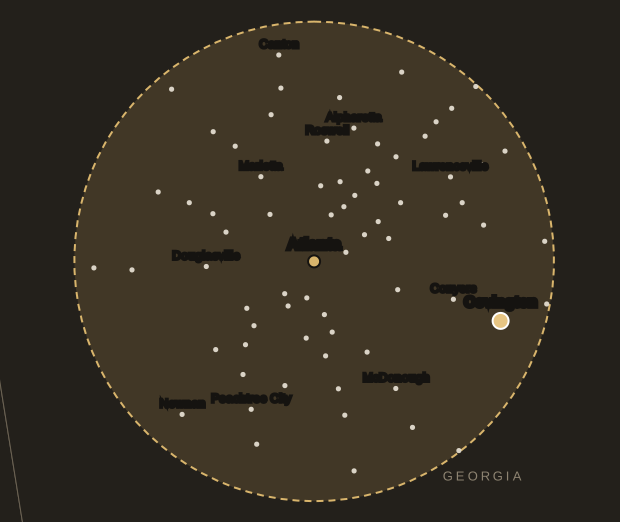
- 32.7 miles east of central Atlanta (straight line)
- County
- Newton County
- Population (2023 estimate)
- 14,677
- Housing units
- 5,967
- Median year homes were built
- 1987
- Owner-occupied homes
- 46%
- Detached single-family homes
- 71%
- Built before 1970
- 23%
- Built 2010 or later
- 12%
Sources: US Census Bureau 2023 Gazetteer, Vintage 2023 population estimates, and American Community Survey 2023 5-year estimates for the place. County is taken at the place’s center point; some communities extend into other counties.
Take this walk-through before you call anyone
You can learn most of what you need about a deck in twenty minutes with a flathead screwdriver and a flashlight. If you are thinking about deck repair Covington GA homeowners often begin with the boards, because those are what they see. The structure underneath matters far more, so start there and work upward.
Go under it first
Look at where the posts meet the ground or footing. Wood sitting directly in soil or in a puddle-prone spot deserves suspicion. Push the screwdriver gently into the bottom few inches. Solid wood resists. Soft, crumbling wood does not. EPA suggests the same simple screwdriver probe for hollow spots when checking for termites.
Find the ledger
The ledger is the board that fastens the deck to the house. Look for rust streaks, dark staining on the siding below it, gaps between board and wall, and whether you can see bolts or only nails. Water getting behind this connection is a common cause of hidden damage, both to the deck and to the house framing behind it.
Check hangers and beams
Joist hangers should sit tight with fasteners in place. Rust that flakes when touched, or a joist pulling away from its hanger, should go on your list. Look along each beam for sagging, and for splits where it rests on a post.
Shake the railing
Grip the guardrail at a few points and push firmly, without leaning your full weight. Movement at a post base is a much bigger issue than a loose top rail. A wobbly post usually traces back to how it was fastened to the rim.
Walk the stairs
Look for stringers that have pulled from the deck, treads that bounce, and a handrail that moves. Stairs often take water and foot traffic hardest and tend to fail first.
Finish with the surface
Only now look at the boards. Cupping, splinters and popped fasteners are annoying, but on their own they are often the simplest part to fix.
Stop using a deck or a section of stairs if you find soft structure, a ledger pulling away, or a rail that gives way. Then get it looked at before the next gathering, not after.
What the local housing numbers suggest
According to Census estimates, 30% of homes in Covington were built from 1970 to 1989, 13% from 1950 to 1969 and 10% before 1950. Another 35% date from 1990 to 2009 and 12% from 2010 on. The median year built is 1987. Around 71% of homes are detached single-family houses, which is a higher share than in neighboring Conyers, so private backyards and rear decks are plausibly a common sight, though the Census does not count decks directly. Only about 46% of homes are owner-occupied, so many decks are also the responsibility of a landlord rather than the person using them.
Age matters in two different ways. A deck may have been added years after the house, so a 1950s home might have a 1990s deck, and a 1990s home could have boards replaced twice. Do not assume that the structure and the surface are the same age. Check for permit records or ask the previous owner, if you can.
Season affects what you will find as well. A deck that looks fine in a dry October can show its problems in a wet spring, when boards stay dark for days and shaded corners grow slick with algae. Try looking at it the day after a heavy rain. Which areas are still wet? Water that lingers against the house, or around a post base, tells you where to look harder. Slippery boards are also a real hazard in their own right, and gentle cleaning usually addresses them.
Rentals deserve a specific note. When a deck is the landlord’s to maintain and the tenant’s to use, problems such as a loose rail can sit unreported. If you own a rental property, a yearly look with the checklist above is reasonable, and if you rent, tell the owner in writing when something moves that should not.
Treated lumber from before 2004
Much older pressure-treated wood contains chromated copper arsenate, known as CCA. EPA’s overview of wood preservatives says manufacturers voluntarily canceled virtually all residential uses effective December 31, 2003, and that CCA-treated wood is no longer used in most residential settings, including decks and playsets. So a deck built before that point may well contain it, and homes from before 1990 make up most of the older structures around town.
This doesn’t mean a sound old deck has to be torn out. It does change how people handle repairs:
- Do not burn scraps or old boards, whatever the wood. Ask your waste hauler or local solid waste office how to dispose of treated lumber.
- Wear a dust mask and gloves when sanding or cutting older treated wood, and clean up the dust.
- Avoid heavy power washing and sanding that removes wood fibers; it strips material and raises dust.
- If you are replacing only a few boards, tell the person doing the work when the deck was built, so they can handle the old material with care.
- Keep fasteners and hangers compatible with whatever new treated lumber is used, since some treatments corrode certain metals faster.
When repairs reach most of the framing, the question of whether to rebuild comes up. We would rather point out which parts are sound than sell a new deck that is not needed, and you can see the kind of repairs we handle on our deck repair page.
Termites, water and the ground under the deck
A deck touches the ground, which is why it is often where moisture and insects get their chance. EPA’s termite guidance advises keeping soil around the foundation dry with proper grading and drainage, maintaining gutters and downspouts, keeping shrubs off exposed wood and not stacking firewood against the house. Each of those applies directly to the space below a low deck.
A few places are worth a closer look. A downspout that empties below the deck keeps footings and posts wet for days. Lattice skirting can trap leaves and block airflow. Planter boxes placed against the house and stacked lumber stored underneath make easy bridges between soil and wood. Having a gutter cleaning done helps here too, since overflowing gutters tend to soak exactly the spot where the ledger meets the wall.
If you spot mud tubes on a post or foundation, or see swarmers in spring, call a licensed pest professional for treatment before the wood is rebuilt. EPA says soil barrier treatments and baits should be applied by trained professionals. Repairing the framing without solving the cause just gives termites new material.
Historic districts have an extra question
Around one home in ten predates 1950, and Covington has a substantial historic core. The North Covington Historic District, listed on the National Register in 2000, runs around North Emory and Odum Streets and the Georgia Railroad, with Greek Revival and Queen Anne buildings among its listed styles. The city’s website lists a Historic Preservation Commission under Planning and Development.
National Register listing and local design review are not the same thing, and we are not going to tell you what applies to your address. The sensible step is to ask the city whether your property falls inside a locally designated area and whether a change to a porch, deck or rear elevation needs historic review before any permit. A rear deck on a historic house may be treated quite differently from a repair of a front porch that faces the street, and material choices may come up.
Older houses can also present a structural wrinkle: walls and foundations may not offer a clean surface for a modern ledger, and some decks work better as free-standing structures. That is a decision for the design stage, not something to improvise.
Permits through Planning and Development
Building permits inside the city are handled by the Planning and Development department at 2194 Emory Street NW. Its forms page lists a general building permit application, a residential accessory structure form, a trade permit form and an inspection list, but no deck-specific form, so ask staff which one fits your repair. The city’s construction codes page lists the 2024 International Residential Code with Georgia amendments among the codes it enforces.
A permit question depends on scope. Changing a few deck boards is a different conversation from rebuilding stairs or replacing a ledger, and the department can tell you where your job lands. Addresses outside the city limits, in the wider Newton County area, go to the county instead. The city also has an Engineering department with stormwater and land disturbance pages, and a tree preservation page, which may become relevant if a rebuild enlarges the footprint or crowds a mature tree.
Which of our services fits
- A soft board, loose rail or sagging step usually fits a handyman visit.
- Ledger, framing or stair rebuilds are structural deck repairs and benefit from a written scope.
- Damaged siding or trim behind the ledger is exterior repair work, and it ought to be fixed at the same time.
- A roof over the deck or a screened enclosure moves the job into home addition territory.
We serve Covington, about 33 miles east of central Atlanta, along with nearby Social Circle. Estimates are free, and you will see the scope and pricing in writing before work begins.
Sources for Local Facts
- U.S. EPA: Overview of Wood Preservative Chemicals
- U.S. EPA: Termites, How to Identify and Control Them
- National Park Service: North Covington Historic District (NRIS 00000526)
- City of Covington: Planning and Development contacts
- City of Covington: Building forms
- City of Covington: Construction codes
- City of Covington: City website
Let’s Build Something Great Together.
Ready to start your next construction or remodeling project? Tell us about your space and request a free estimate.